Category
Visualizers
Building and using Novus Visualizers: reading audio with the Web Audio API, the 13 engines and their 78 modes, the Classic editor and node-based Studio, beat-synced rendering, and exporting release-ready video in the browser with WebCodecs.
29 articles
About the Visualizers thread
Turning a track into video is a rendering problem wearing a music-theory costume. This cluster covers both halves: how audio is analysed in the browser with the Web Audio API and FFT, and how that analysis is turned into motion across the 13 engines in Novus Visualizers (Particles, Trails, Bloom, Character Motion, Radial, Spectrum, Bars, Tunnel, Waveform, Logo, Lattice, Terrain, and Stage Lights), each carrying 6 modes, for 78 in total.
The recurring theme is that beat sync is not one thing. Locking every element to the same kick drum produces something that pulses uniformly and reads as cheap. The articles on multi-band sync work through splitting bass, mid, and treble onto different layers so a visualizer responds to the actual arrangement, which is the single change that most reliably separates an amateur result from a releasable one.
Export is treated as a first-class topic rather than a footnote. Rendering happens locally via WebCodecs, which means no queue and no upload, but it also means the constraints are your device's, and knowing where they bite is the difference between a finished video and a stalled tab.
What this topic covers
- Reading audio in the browser: FFT, frequency bands, onset detection, and what the numbers actually represent
- The 13 engines and their 78 modes: what each is good at, and how to mix them across layers
- Classic Editor vs the node-based Studio Workstation, and which one suits which job
- Multi-band beat sync: driving separate layers from bass, mid, and treble
- Release formats (vertical shorts, Spotify Canvas, lyric videos) and exporting with WebCodecs
Who it's for
Musicians and labels producing release assets, video editors who want audio-reactive motion without After Effects, and anyone interested in real-time graphics on the web platform.
29 articles in this thread, newest first. Every one is free to read with no signup.
Beyond the articles: Novus Visualizers
Turn a track into a beat-synced video: 78 modes, in the browser. The articles above are commentary; the pages below are the reference material, documentation for how the app works, a tool map listing every surface in it, and step-by-step tutorials.
- Documentation →The full technical reference for Novus Visualizers: what it does, how it works, and its limits.
- Tool map →Every tool and page in the app, each with a description and a direct link.
- Tutorials →Step-by-step walkthroughs, from a first run through to the advanced workflows.
- Open the app →Free, in your browser, with no signup for the core workflow.
4 articles in this threadReset filters
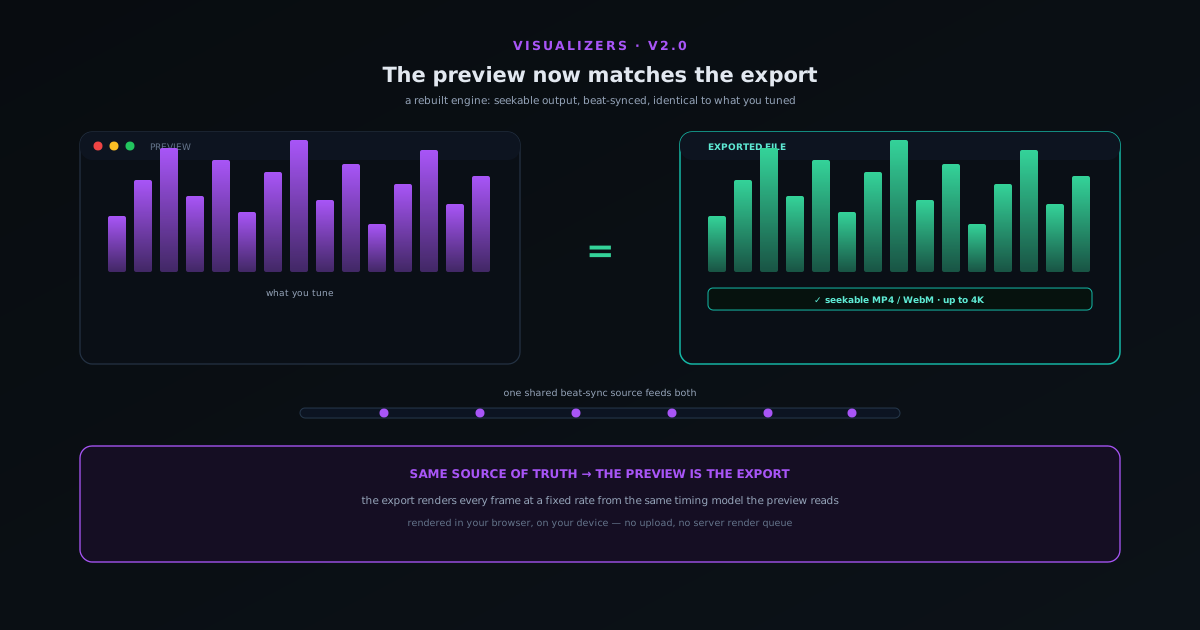
Visualizers · Jun 15, 2026
Why the preview now matches the export: rebuilding a music-visualizer render engine
A deep dive into the v2.0 export engine: why preview and export drift apart in the first place, what "seekable" means and why scrubbing used to break, how beat-sync stays locked between the live preview and the rendered file, why every mode is now visually distinct, and what an honest in-browser render pipeline owes the user.
Novus Visualizers
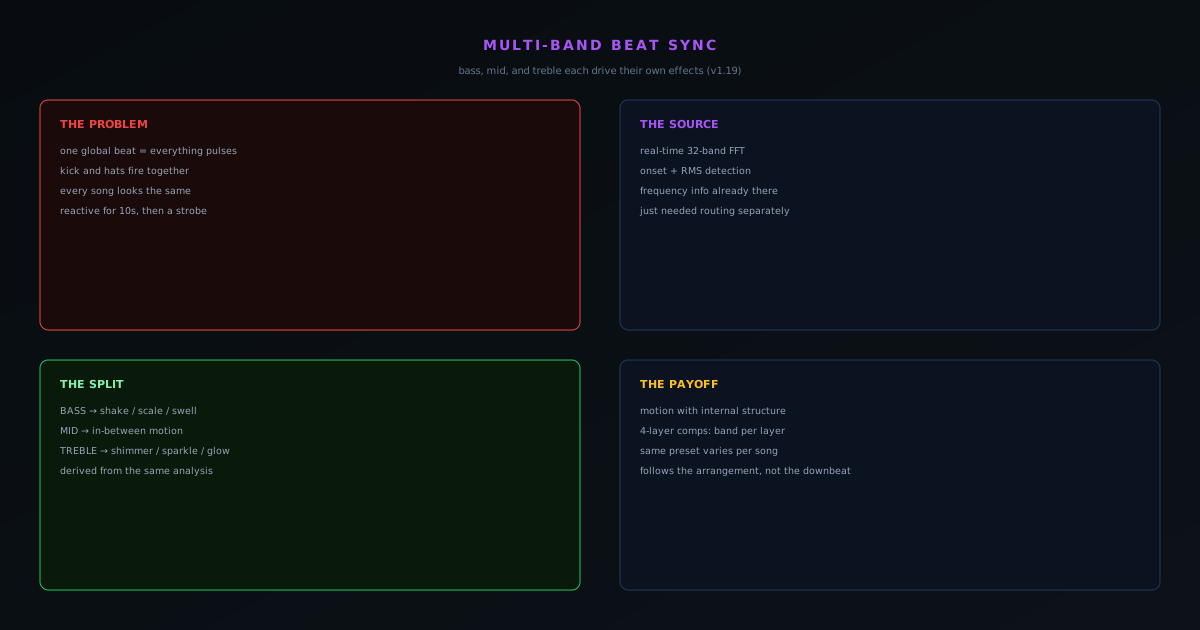
Visualizers · Jun 4, 2026
Multi-band beat sync: triggering bass, mid, and treble independently
Why splitting the audio into bands makes a visualizer feel like it is actually listening to the music.
Novus Visualizers
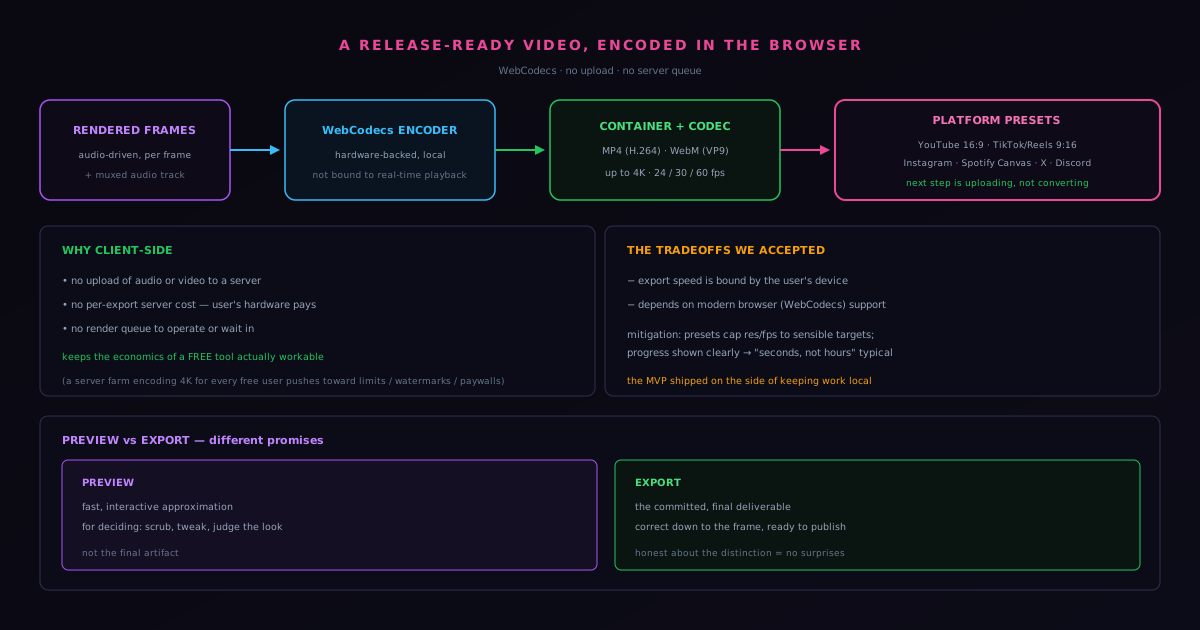
Visualizers · May 28, 2026
Exporting a release-ready video in the browser, and the tradeoffs we accepted
What "release-ready" means when the encoding happens in your browser, and the compromises that made shipping it possible.
Novus Visualizers
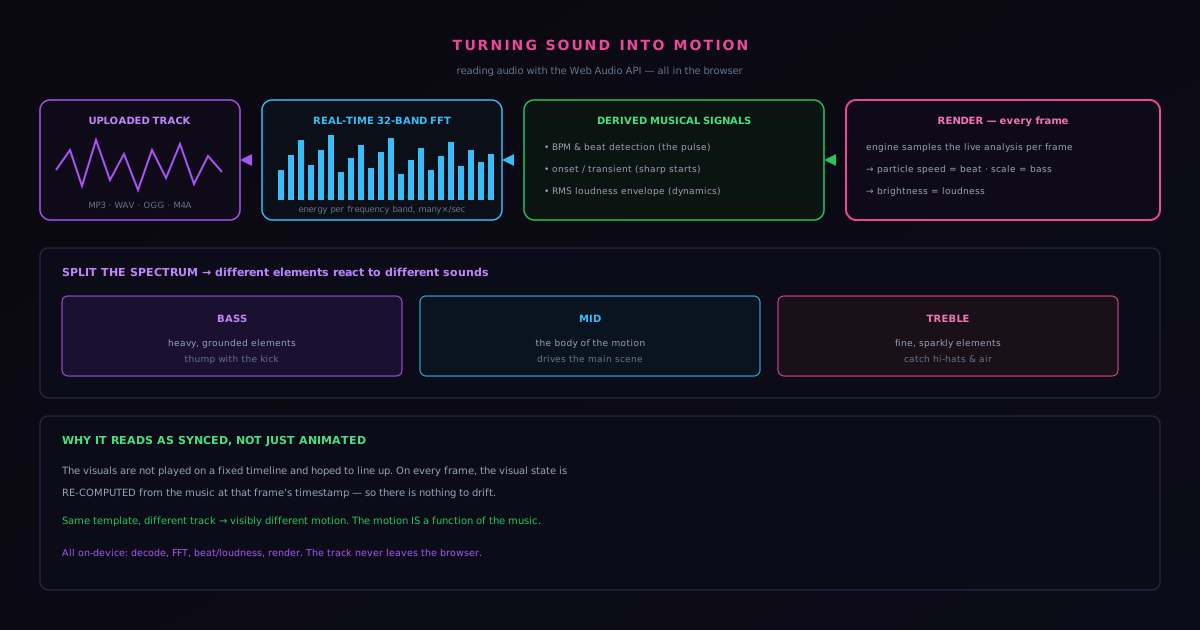
Visualizers · May 27, 2026
Turning sound into motion: reading audio with the Web Audio API
The bridge from a raw audio file to motion that actually responds to the music, explained at the level of the signal.
Novus Visualizers