Novus Learn
Practise for a real job aptitude test with Novus Learn
Prepare for a gated hiring assessment using the 376 career aptitude practice suites in Novus Learn: find the right suite by sector or by skill construct, practise timed, review every explanation, and know when familiarity has plateaued and you should stop.
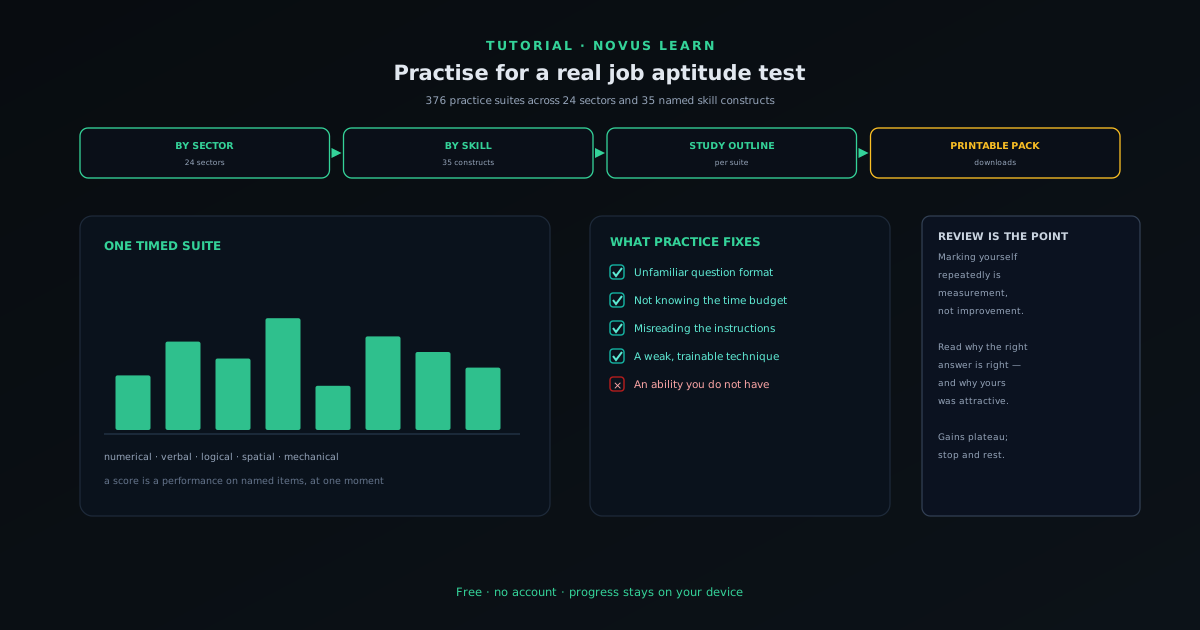
If a job you want has a timed assessment in front of it, the format itself is an obstacle independent of whether you can do the work. Novus Learn ships 376 career aptitude practice suites, filterable by sector and by skill construct, precisely so that unfamiliarity stops being a disadvantage. It is free, needs no account, and keeps your progress on your device.
This tutorial is about preparing properly rather than grinding. The gains from practice arrive fast and then plateau, so the sequence matters more than the volume: identify the construct being tested, practise it timed, read every explanation, and stop while you are still rested. What practice cannot do is manufacture an ability you do not have, which is exactly why practising is fair rather than a loophole.
Contents
Two ways to finish
By sector
Start from the industry you are applying into and work through its suites.
By skill
Start from the named construct (numerical, verbal, logical, spatial) the employer is testing.
- 1
1. Identify the construct, not just the job
Open learn.novusstreamsolutions.com/aptitude. Before browsing, work out what is actually being tested. Job listings and assessment invitations frequently name it outright (numerical reasoning, verbal comprehension, logical or inductive reasoning, spatial rotation, mechanical reasoning) and where they do not, the role usually implies it. That single piece of information is worth more than hours of undirected practice, because it turns a large library into a short list.
This matters because a score is only interpretable if you know what it is a score about. "You got 74 percent" means nothing on its own. "You answered 74 percent of timed numerical-reasoning items correctly, where each item requires pulling figures from a table and computing a ratio inside a minute" is a statement you can act on, because it points directly at what to train.
- Read the assessment invitation for the construct name; it is often stated.
- A score without a named construct is decoration, not information.
- 2
2. Find the right suite by sector or by skill
The directory at /aptitude/tests lists all 376 practice suites and filters two ways. /aptitude/sectors organises them by industry across 24 sectors, which suits you when you know the field but not the specific instrument. /aptitude/skills organises them by construct across 35 skills, which suits you when the invitation named the construct and you want to drill exactly that.
Use the skill filter when you can. Sector browsing is a good way to discover what a field tends to test, but it inevitably includes suites aimed at constructs your particular employer is not measuring. Once you know the construct, filtering by skill removes everything irrelevant and roughly doubles the value of each session.
Filter by construct rather than by job title; it is the difference between practice and busywork. - 3
3. Practise timed, in short sessions
Run the suite under the clock. This is not optional detail: the time pressure is a substantial part of the difficulty of a real assessment, and practising untimed trains a different and easier skill. Short, timed sessions build the pacing instinct that stops you spending four minutes on an item worth the same as one you skipped.
Practise on a screen, with the timer visible, without pausing, in one sitting. The gap between relaxed practice and a live test is where otherwise well-prepared people stumble, and closing it costs nothing except doing the practice under the conditions you will actually face.
- Timed, uninterrupted, on a screen: match the real conditions.
- Short sessions beat long ones; pacing is a skill of its own.
- 4
4. Review every explanation: this is where the value is
Getting an item wrong teaches almost nothing by itself. The transfer happens when you read why the correct answer is correct and, just as importantly, why the answer you chose was attractive. Distractors in a well-built item are designed around specific, common reasoning errors; identifying which one caught you is how you stop making it.
Every suite in Novus Learn carries explanations, and that is the reason to use a practice tool rather than a page of questions. If you are using something that marks you and moves on, you are measuring yourself repeatedly rather than improving. Where a suite offers a study outline at /aptitude/tests, read it before the second attempt rather than after the fifth.
- 5
5. Use the study outlines and printable packs
Each suite has a study-outline page, and there are downloadable packs for working away from the screen. The outline is the fastest way to see the shape of what is being tested before you spend a session discovering it item by item, and it is particularly useful for constructs you have not met before.
Printable packs suit a different mode of work: slower, annotated, without a clock, where the goal is understanding a method rather than rehearsing under pressure. A sensible rhythm is to learn the method on paper and rehearse the pacing on screen, rather than trying to do both at once.
- /aptitude/tests/<suite>/study-outline: the shape of what is tested.
- /aptitude/tests/<suite>/downloads: printable packs for method work.
- 6
6. Know when to stop
The benefit curve from familiarity is steep and short. Most of what practice gives you (knowing the format, the timing, the instructions, the common item types) arrives in the first few sessions. After that, additional items produce very little, and the night before a test they produce fatigue, which measurably costs you more than the last twenty questions gain.
A good stopping rule: when two consecutive timed sessions on the same construct produce similar scores and no new category of mistake, you have taken what practice has to offer. Rest, then arrive rested. Being alert is worth more marks than being drilled.
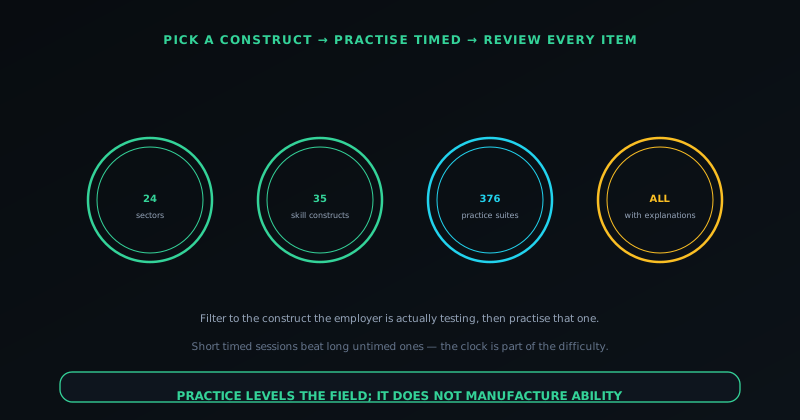
Practice removes a disadvantage; it does not invent an ability
Employers who use these instruments know practice effects exist and know they plateau. What practice reliably does is remove the penalty for never having seen a test like this before, which is why it levels the field rather than tilting it. Find the construct, drill it timed, read every explanation, and stop once you have stopped learning something new.
Frequently asked questions
Quick answers to common questions about this topic.
How many aptitude practice suites does Novus Learn have?
376 career aptitude practice suites, filterable across 24 sectors and 35 named skill constructs, each with explanations and a study outline, plus downloadable packs for working on paper.
Is practising for an aptitude test cheating?
No. Practice effects are well known to the employers using these instruments and they plateau quickly. Most of the benefit comes from format familiarity, which removes the disadvantage carried by anyone who has never seen a test like it; it levels the field rather than tilting it.
How long before the test should I practise?
Start early enough to run several short timed sessions, and stop once two consecutive sessions produce similar scores with no new category of mistake. Cramming the night before produces fatigue, which costs more than the extra items gain.
Do I need an account to practise?
No. The assessment layer in Novus Learn is free and accountless, and progress is kept on your own device rather than in a profile held by someone else.
Related workflow
From a source you can cite to a study pack you can hand out
Read from the source rather than a summary of it, then turn what you verified into a document someone else can use.
- Find the source and check the claim against itNovus Learn: The study material is extractive, not generative: what you get back is what the source says, which is the only kind you can safely cite.
- Assemble and finish the packNovus PDF Studio: Merge the pieces, add the fields a learner fills in, and sign it locally, so unpublished material stays unpublished.
Related troubleshooting
Was this page helpful?
Your answer stays in this browser, it is not sent anywhere and no account or cookie is involved.