Category
Stack & engineering
The locked, opinionated stack behind the Novus ecosystem and how it is built: code-as-content architecture, type-safe content, edge rendering, and the AI-assisted engineering workflow that ships it solo.
26 articles
About the Stack & engineering thread
The technical record of how this ecosystem is built. The stack is deliberately locked and narrow (one framework, one styling approach, content as typed code rather than a CMS) because a solo operation cannot afford the tax of maintaining variety across nine apps.
Content-as-code is the decision with the longest reach, and several articles work through its consequences. When every article, tutorial, and app statistic is a typed TypeScript object, a broken internal link, a missing image, or a renamed app becomes a compile error rather than a support ticket. The cost is that content edits go through a build; the benefit is that content cannot silently rot.
The AI-assisted engineering material is written from production experience rather than demos: where frontier models genuinely compress the work, where the review burden eats the gain, and what has to be true of a codebase before either is possible.
What this topic covers
- The locked stack, and why narrow beats flexible for a small team
- Content-as-code: typed registries, build-time validation, and what it prevents
- Edge rendering, caching strategy, and static generation choices
- Shipping production work with frontier AI: where it helps and where it costs
- Testing and release discipline for a small operation, including zero-downtime content deploys
Who it's for
Engineers building content-heavy sites, solo developers maintaining several products, and anyone weighing AI-assisted development honestly.
26 articles in this thread, newest first. Every one is free to read with no signup.
10 articles in this threadReset filters
Stack & engineering · Jul 28, 2026
Frontier AI in 2026: Sol, Fable / Opus 5, and Gemini in the race
A builder’s field guide to what “frontier” means in 2026 and how to evaluate Sol, Fable / Opus 5, and Gemini without hype or fake benchmarks.
Field notes
Stack & engineering · Jun 7, 2026
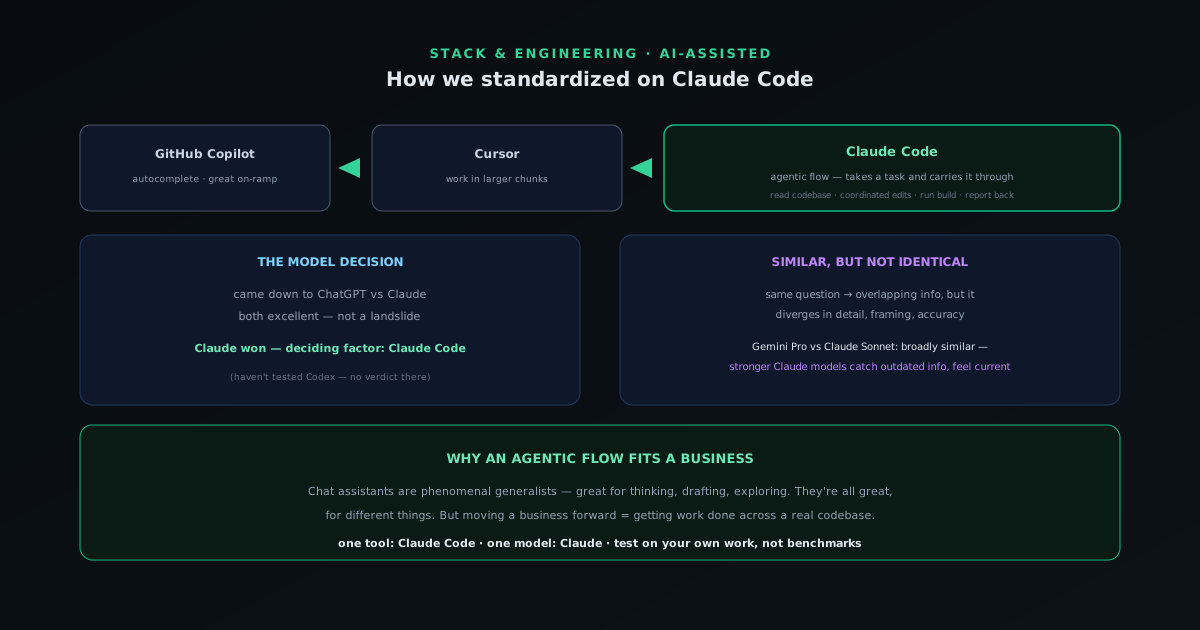
How we standardized on Claude Code to build our apps
Our path through AI coding tools and LLMs, and why an agentic flow won out for a small business.
Novus Stream Solutions (hub)
Stack & engineering · Jun 7, 2026
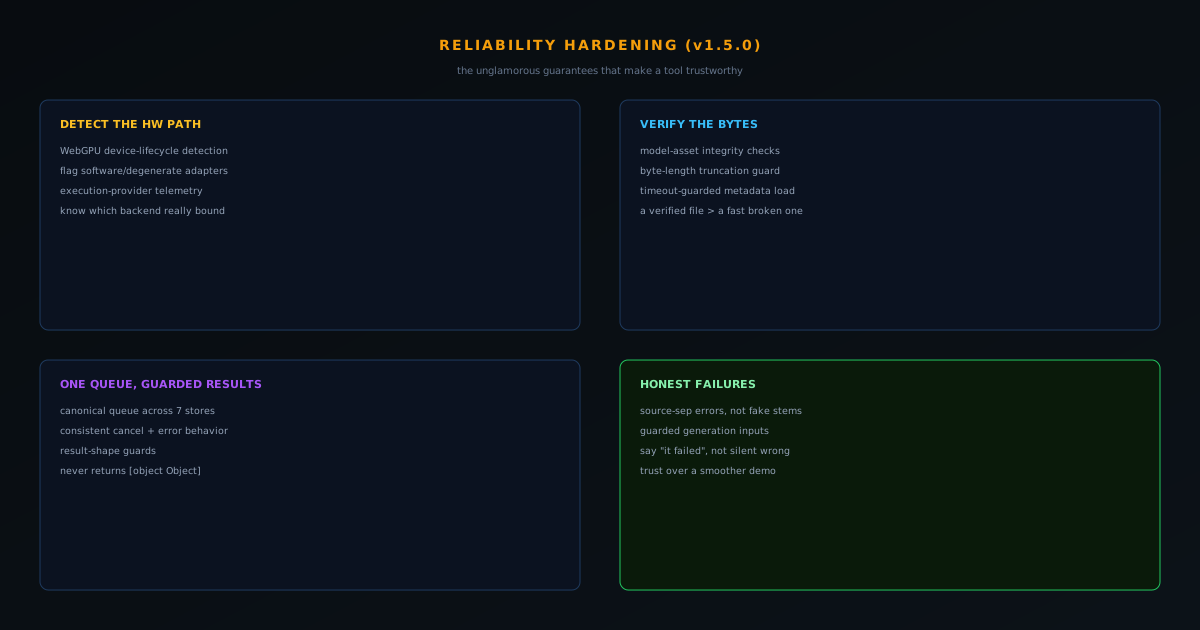
Reliability hardening: device lifecycle, model integrity, and honest failures
An engineering note on the unglamorous guarantees that make a tool trustworthy, and why honest failures beat silent wrong answers.
Stack & engineering
Stack & engineering · Jun 6, 2026
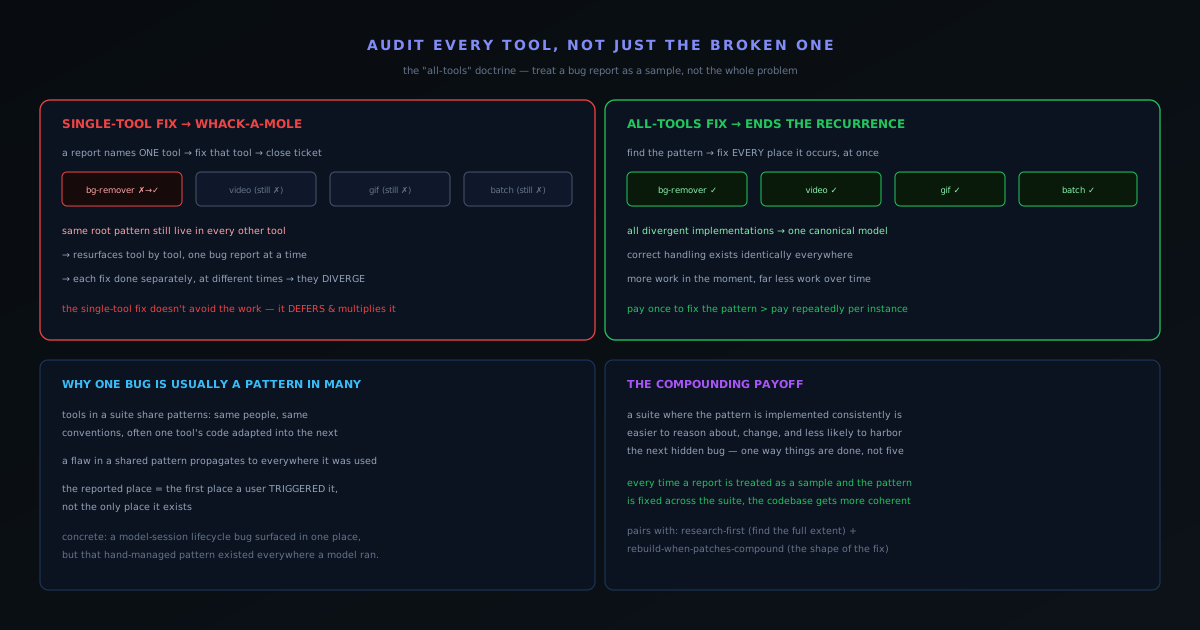
Audit every tool, not just the broken one: the "all-tools" doctrine behind our refactors
Why a bug reported in one place is almost always a pattern that lives in several, and the discipline of fixing the pattern everywhere at once.
Engineering
Stack & engineering · Jun 5, 2026
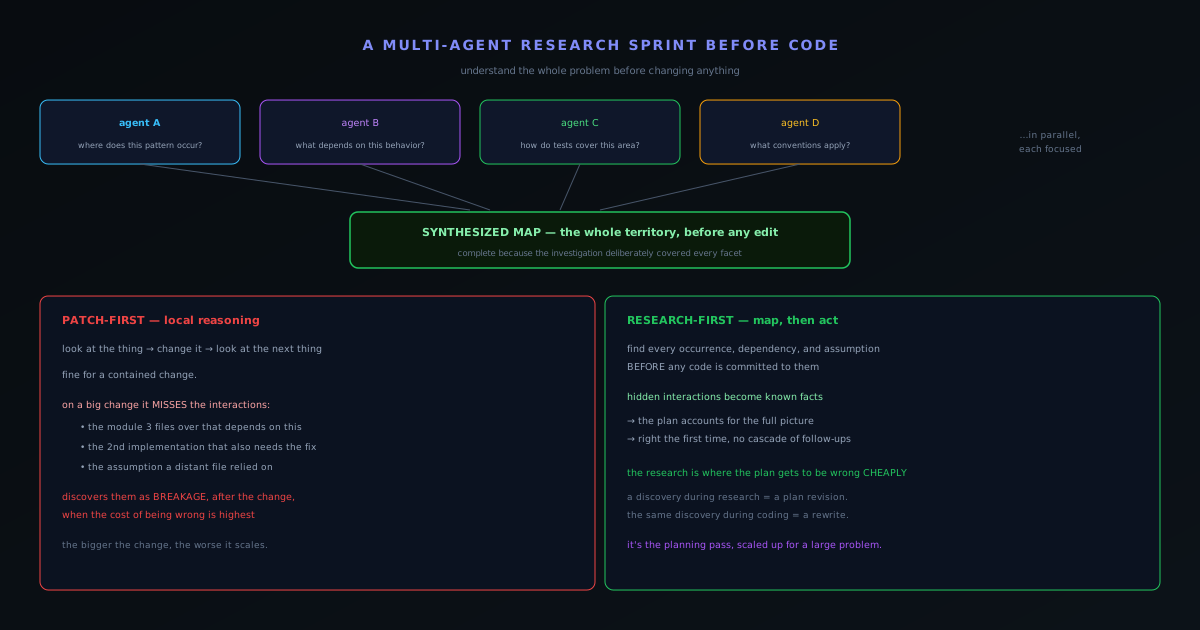
Running a multi-agent research sprint before touching code
How to use parallel agents to understand a problem completely before changing anything, and why that front-loaded research pays for itself on large work.
Engineering
Stack & engineering · Jun 5, 2026
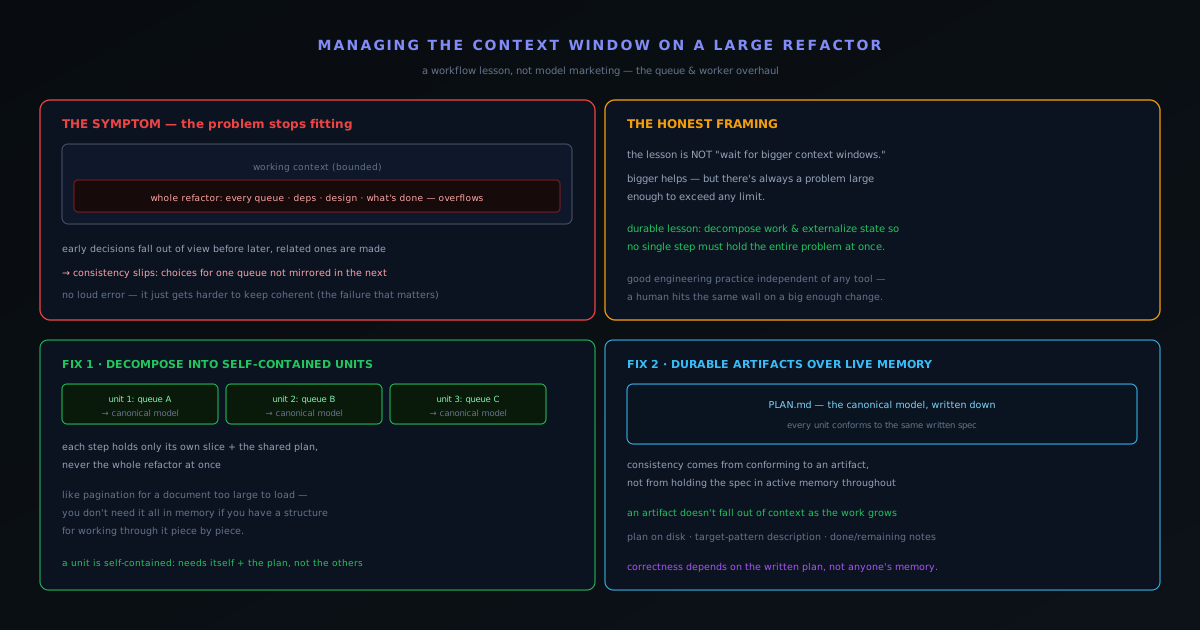
Managing the context window on a large refactor: what broke and how we fixed our sessions
A workflow lesson, not model marketing: how to structure a large refactor so it survives the limits of what can be held in working context at once.
Engineering
Stack & engineering · Jun 4, 2026
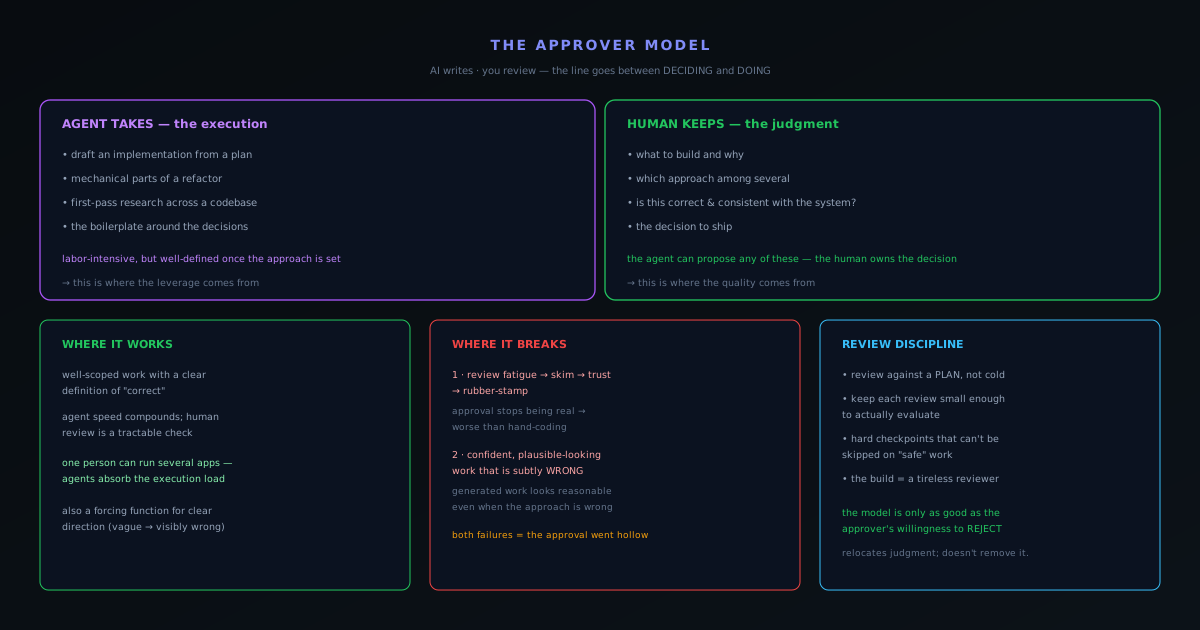
The approver model: running a build pipeline where AI writes and you review
The operating model for one person directing AI execution: what the human keeps, what the agent takes, and how to keep the review meaningful.
Engineering
Stack & engineering · Jun 4, 2026
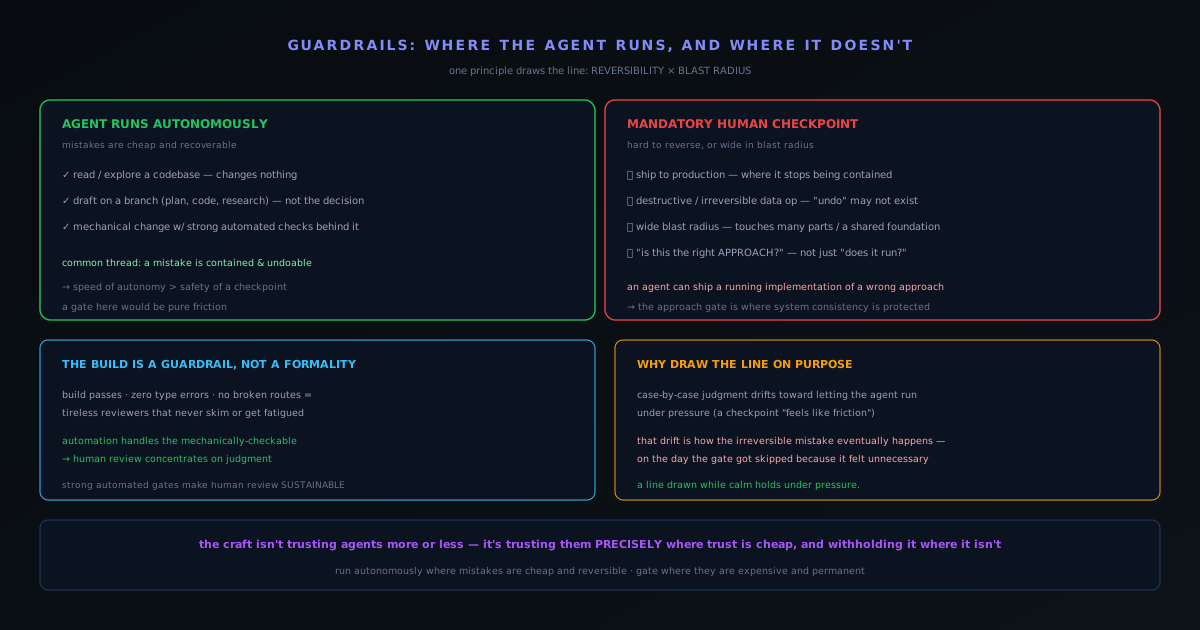
Guardrails and human review: where we let the agent run and where we don't
A practical map of where AI agents operate autonomously and where a human checkpoint is non-negotiable, and the reasoning behind each boundary.
Engineering
Stack & engineering · Jun 3, 2026
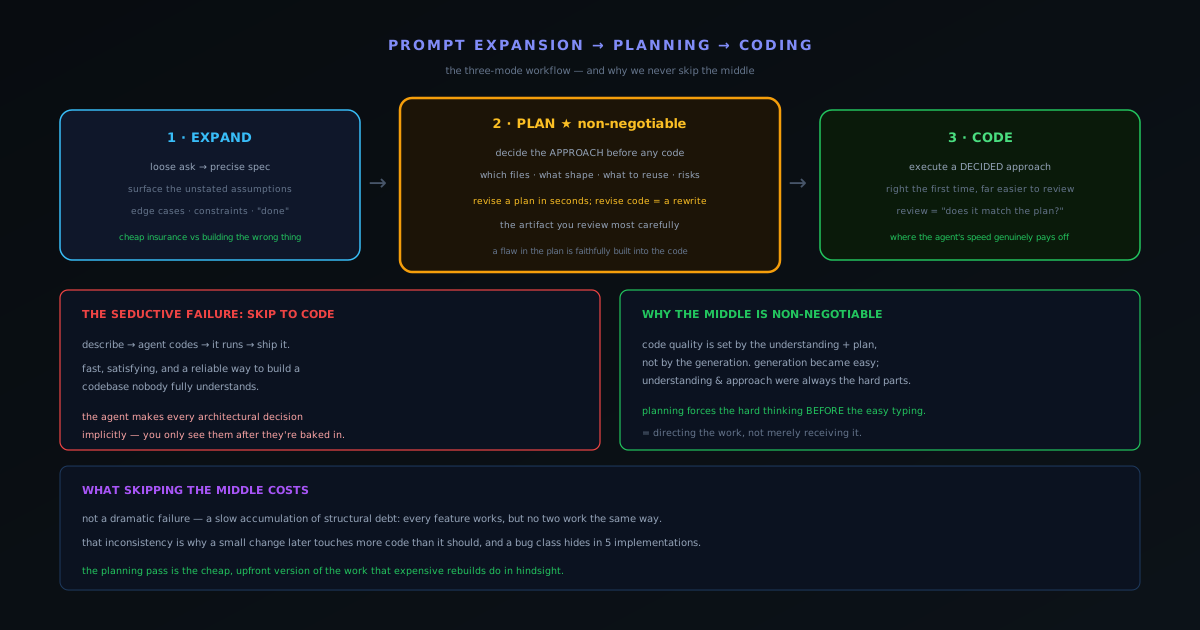
Our three-mode workflow: prompt expansion → planning → coding (and why we never skip the middle)
Why the planning pass between understanding a request and writing code is the step that determines whether AI-assisted development produces something maintainable.
Engineering