Novus Restaurant
Read coverage and freshness before you trust a series
Tell a genuinely stable price from a series nobody has published in a month. Use the coverage, freshness and ingestion-schedule pages to judge whether a number is safe to price against before you use it.
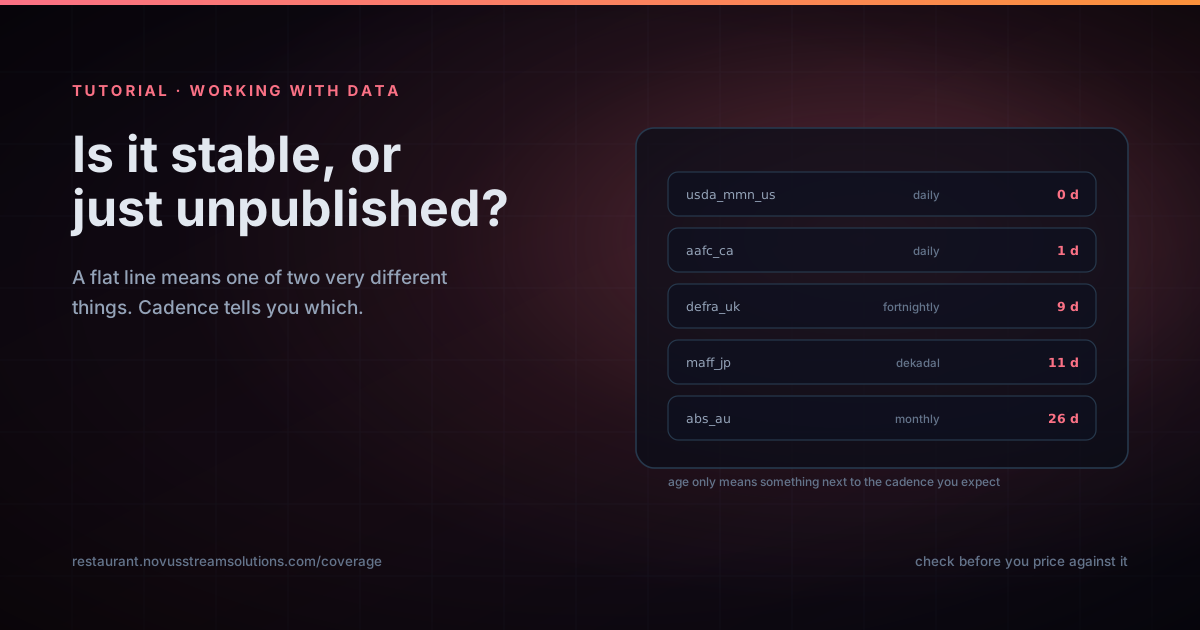
A flat line on a price chart means one of two very different things: the price genuinely has not moved, or nobody has published a new figure. Confusing the two is how a kitchen ends up pricing a menu against a number that stopped being true weeks ago.
Novus Restaurant gives you three views specifically to tell them apart. This tutorial is about using them before you commit to a figure, not after.
Contents
Two ways to finish
Judge one series
Decide whether a specific price is safe to price against today.
Audit a whole market
See where a market has real depth and where it is thin.
- 1
1. Start with expected cadence, not with the chart
Every observation shows an expected cadence: daily, fortnightly, monthly, dekadal, or mixed. That expectation comes from the provider, and it is the yardstick for everything that follows. A monthly series that last updated eighteen days ago is perfectly healthy. A daily series in the same state is not.
Cadence varies widely across the 11 providers: USDA My Market News, AAFC Canada and SNIIM Mexico publish daily; DEFRA is fortnightly; FAO FPMA, ABS Australia and the World Bank programme are monthly; MAFF Japan is dekadal, meaning three times a month.
- Age is only meaningful relative to the cadence you should expect.
- The ingestion-schedule page tells you when each provider is re-checked.
- 2
2. Check the coverage page for the market you care about
Open /coverage. This is the honest map of where series actually exist. A market being "supported" does not mean every category within it has depth; it means at least one provider feeds it.
Use this before building any recurring process on top of a category. If coverage is thin, no amount of dashboard polish will change the fact that the underlying agency is not publishing much, and you should plan around that rather than discover it mid-quarter.
- 3
3. Separate provider health from data staleness
These are different failure modes and they need different responses. A degraded provider means Novus could not read the source: a connection problem. A stale series means the read succeeded and the publisher simply had nothing new.
The first is temporary and usually resolves on the next scheduled run. The second is a real property of the market, and it is information: if an agency has not published a wholesale price for an item in six weeks, that tells you something about that item's market.
- Degraded provider → a fetch problem, likely transient.
- Stale series → the publisher has released nothing new. Not a bug.
- The registry at /data-sources is configuration; health is a separate, live question.
- 4
4. Read the methodology before comparing anything
The /methodology and /understanding-analytics pages explain how a comparable movement is derived and what an evidence confidence score weighs. Both are short and both are worth reading once properly.
The important rule they encode: series are matched before they are compared. Two items with similar names, in different units or at different levels of trade, are not the same series, and the product will not treat them as one to produce a tidier number.
- Comparable movements only: matching happens before comparison.
- Confidence is a weighted quality signal, not a margin of error.
- 5
5. Decide, and record why
Bring it together into a decision you can defend. A figure is safe to price against when the provider is healthy, the observation is fresh relative to its expected cadence, the movement was computed against a genuinely comparable baseline, and the confidence score is not scraping the floor.
When any of those fails, the useful move is to note which one failed and go to the publishing agency directly. That is a slower answer and a correct one, and it is why the source identifier on every row matters more than any chart on the page.
- Healthy provider + fresh-for-cadence + comparable baseline + reasonable confidence = usable.
- Any one failing → go upstream to the agency rather than accepting a weaker number.
Judging a series in under a minute
Check expected cadence first; it is the only thing that makes an age meaningful, and a monthly series is not stale at three weeks. Then separate the two failure modes: a degraded provider is a fetch problem that usually clears on the next scheduled run, while a stale series means the publisher genuinely released nothing, which is itself information about that market. If you end up going upstream to the agency, that is the system working; the source identifier on every row exists precisely so you can.
Frequently asked questions
Quick answers to common questions about this topic.
A price has not changed in weeks. Is the data broken?
Probably not. Check the expected cadence first: a monthly series is not stale at three weeks. Then check provider health to confirm the fetch is succeeding. A healthy provider plus an unchanged value means the publisher genuinely has not released anything new.
What is the difference between coverage and freshness?
Coverage is whether a series exists for a market and category at all. Freshness is how old the newest observation in that series is, judged against the cadence its provider publishes on.
Why not just fill the gaps with an estimate?
Because an interpolated value looks exactly like a published one on a chart, and there is no way for a reader to tell them apart later. The product shows gaps as gaps so that every visible figure is one an agency actually released.
Related workflow
Turn a market movement into a menu price you can defend
Start from a published food-price movement, check it is real before acting on it, and end with a costed menu sheet you can hand to a supplier or an accountant.
- Find the movement and check it is publishableNovus Restaurant: Read the observation with its published date and source identifier, then check the provider is healthy and the series is fresh for its cadence; a flat line can mean a stable price or an absent publisher, and only cadence tells you which.
- Build the costing sheet and sign itNovus PDF Studio: Assemble the figures into a document, add the fields a supplier or accountant fills in, and sign it locally so nothing leaves your device.
Related troubleshooting
Was this page helpful?
Your answer stays in this browser, it is not sent anywhere and no account or cookie is involved.