Novus Learn
Work through the Novus Learn JavaScript course, zero to developer
A walkthrough of the authored JavaScript curriculum in Novus Learn: 12 modules and 77 lessons in a fixed teaching order, 65 of them carrying runnable graded exercises, taught in the product's own words rather than as a list of links to documentation.
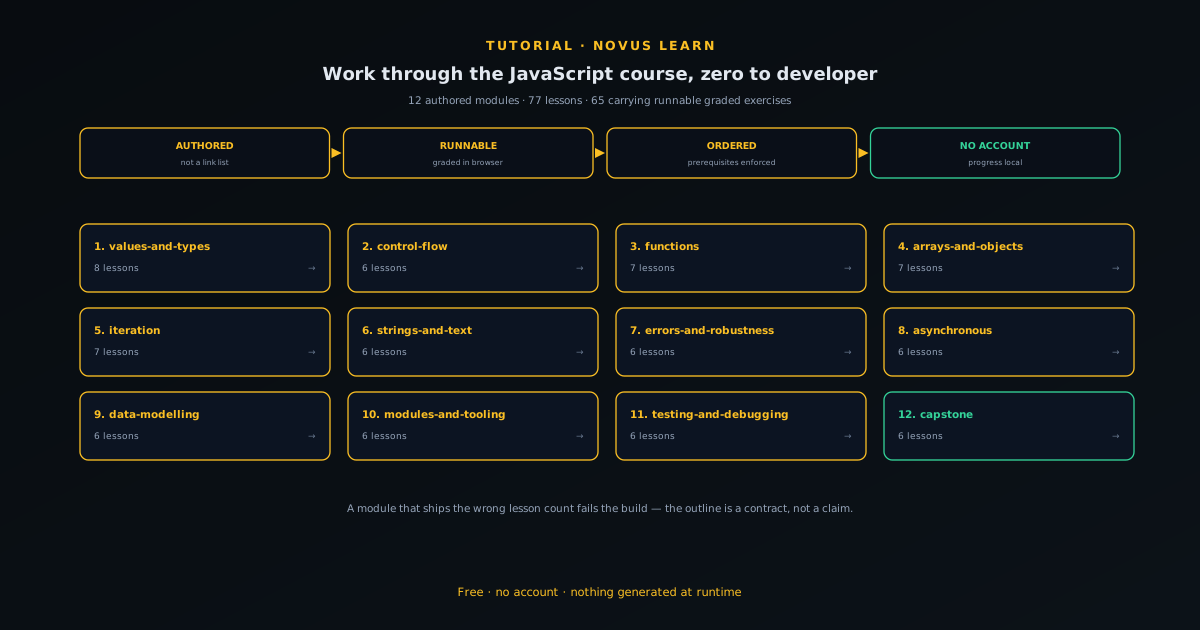
Most of Novus Learn is deliberately citation-only: it shows you sources and refuses to paraphrase them. The JavaScript curriculum is the exception, and the exception was made for a reason: you cannot learn a language from zero by being handed a reading list. The course is hand-authored, committed, and reviewed: 12 modules, 77 lessons, and 65 lessons carrying runnable graded exercises, with nothing generated at runtime.
This tutorial covers how to work through it: why the order is fixed, what a lesson actually contains, how the grading works and what it is honest about, and how to use the surrounding surfaces (the scratchpad and the citation-backed language reference) without turning the course into a tour of tabs.
Contents
- 1.1. Open the course and read the outcome statement
- 2.2. Respect the order: it is enforced, not suggested
- 3.3. Work a lesson: read, run, be graded
- 4.4. Use the scratchpad for anything counter-intuitive
- 5.5. Send language questions to the reference, not to folklore
- 6.6. Finish with the capstone, and prove it yourself
Two ways to finish
Start at module one
Work the fixed teaching order from values and types through to the capstone.
Fill a specific gap
Jump to a module you need, using its stated prerequisites to check you have the ground under you.
- 1
1. Open the course and read the outcome statement
Go to learn.novusstreamsolutions.com/languages and open the JavaScript path. Before the first lesson, read the outcome statement, the promise the course makes about what you will be able to do at the end: read, write, debug, and test plain JavaScript on your own, model real data, write functions other people can use, handle failure deliberately, and prove your code works with tests you wrote yourself.
That statement is the contract to judge the course by. It is deliberately about capability rather than coverage, and it is deliberately about plain JavaScript rather than a framework. Knowing what you are aiming at makes it much easier to tell whether a lesson landed.
- 2
2. Respect the order: it is enforced, not suggested
The twelve modules run in a fixed teaching sequence: values and types, control flow, functions, arrays and objects, iteration, strings and text, errors and robustness, asynchronous JavaScript, data modelling, modules and tooling, testing and debugging, and a capstone. Each declares its prerequisites, and the ordering is validated at build time: a module cannot list a prerequisite that appears later, and no module after the first is allowed to float free of everything before it.
The practical consequence is that the sequence is not a table of contents someone arranged by taste. Skipping ahead to asynchronous JavaScript before functions and error handling means the lesson will assume ground you have not covered. If you are filling a specific gap rather than starting from zero, read the module's stated prerequisites first and honour them.
- 12 modules · 77 lessons · a validated prerequisite graph.
- Prerequisites appear earlier by construction: the order is the contract.
- 3
3. Work a lesson: read, run, be graded
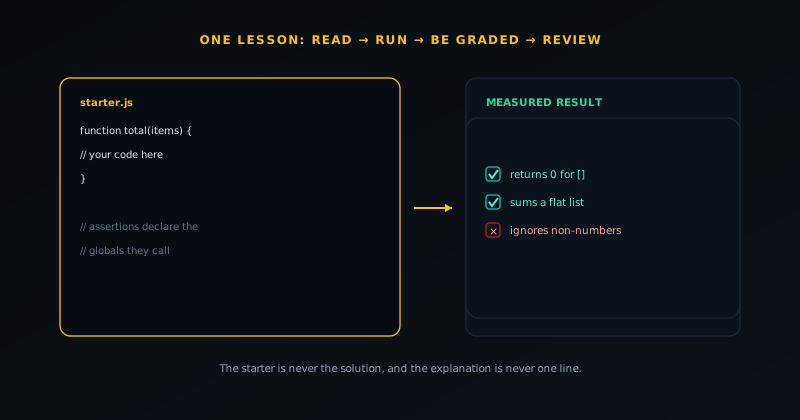
A lesson teaches the concept in the product's own words, then hands you an exercise with starter code. 65 of the 77 lessons carry at least one runnable graded exercise; the remainder are the ones where a graded task would be artificial rather than useful. The starter is never the solution (that is checked at build time) so there is always something real to do.
Grading runs in a sandbox in your browser. Each exercise declares the globals its assertions will call, and the solution has to actually declare them, which means a "passing" exercise genuinely produced the thing the lesson asked for rather than something that merely looked right. Nothing is sent anywhere and no model is called; the grading is a set of assertions running against code you wrote.
Assertions run locally against the globals the exercise declares: a pass means the thing the lesson asked for actually exists. - 4
4. Use the scratchpad for anything counter-intuitive
JavaScript has a handful of areas where reading is a poor substitute for trying: coercion, scoping, asynchronous ordering, and anything involving `this`. The scratchpad at /playground runs code in the browser immediately, which makes it the fastest way to settle a question the moment you have it rather than carrying a vague uncertainty into the next three lessons.
A habit worth building: whenever a lesson makes a claim about behaviour that surprises you, stop and reproduce it in the scratchpad before continuing. Two minutes there prevents a misunderstanding compounding through the modules that build on it.
- 5
5. Send language questions to the reference, not to folklore
The rest of the /languages surface stays citation-only on purpose, pointing at official documentation for each concept rather than inventing an explanation. When you want the authoritative behaviour of a method or an edge case the course did not need to cover, that is the right place to go: the answers cite official documentation instead of the confident blog post that happens to rank first.
This split is the whole design. The course teaches, because teaching from zero requires authored explanation. The reference cites, because reference material should never be a paraphrase. Knowing which surface you are on tells you how much to trust the wording in front of you.
- /languages/<lang>/course: authored teaching, in the product's own words.
- /languages/<lang>/reference: citation-backed, never paraphrased.
- /playground: a scratchpad for testing a mental model right now.
- 6
6. Finish with the capstone, and prove it yourself
The final module is a capstone: build, test, and review a small library end to end against a brief. It is the point of the whole sequence, because it is the first task where nobody tells you which technique to reach for. Everything before it exists to make that possible.
Treat the capstone the way you would treat real work. Write the tests you would want if somebody else had written the code. Handle the failure cases deliberately rather than assuming clean input. Then read your own diff as a reviewer would. The course's promise is that you can defend every line you wrote; the capstone is where you find out whether that is true.
Authored where it must be, cited everywhere else
The course is the one place in Novus Learn that explains a concept in its own words, and it is hand-authored and committed rather than generated: a module that ships a different lesson count from its published outline fails the build. Work the order, run every exercise, use the scratchpad the moment something surprises you, and send authoritative language questions to the citation-backed reference instead of guessing.
Frequently asked questions
Quick answers to common questions about this topic.
How long is the Novus Learn JavaScript course?
12 modules and 77 lessons in a fixed teaching order, 65 of which carry at least one runnable graded exercise, ending in a capstone where you build, test, and review a small library against a brief.
Is the course generated by AI?
No. The curriculum is hand-authored, committed, and reviewed TypeScript content: no model call, no key, no network, nothing generated at runtime. The published module outline is validated at build time, so a module that ships a different lesson count fails the build rather than shipping.
Can I skip to a module I need?
You can, but read its stated prerequisites first. The teaching order is validated so that every prerequisite appears earlier, which means a later module genuinely assumes the earlier ones: jumping into asynchronous JavaScript before functions and error handling will not go well.
How are the exercises graded?
Assertions run in a sandbox in your browser against the code you wrote. Each exercise declares the globals its assertions call, and the starter code is checked at build time to make sure it is never already the solution.
Related workflow
From a source you can cite to a study pack you can hand out
Read from the source rather than a summary of it, then turn what you verified into a document someone else can use.
- Find the source and check the claim against itNovus Learn: The study material is extractive, not generative: what you get back is what the source says, which is the only kind you can safely cite.
- Assemble and finish the packNovus PDF Studio: Merge the pieces, add the fields a learner fills in, and sign it locally, so unpublished material stays unpublished.
Related troubleshooting
Was this page helpful?
Your answer stays in this browser, it is not sent anywhere and no account or cookie is involved.