2026 · Novus Stream Solutions (hub)About 10 min readNovus Stream Solutions
XML sitemaps and robots.txt for a small site
Of all the technical-SEO levers, two of the simplest are a pair of plain text files most site owners never open: robots.txt, which tells crawlers where they may and may not go, and the XML sitemap, which hands them a tidy list of the pages you want found. Small as they are, getting them wrong can quietly hide a whole site, and getting them right helps the rest of your SEO work land.
Contents
Overview
Two of the most consequential files on a website are also two of the smallest, and most site owners never open either of them. The first is robots.txt, a plain text file at the root of your domain that tells search-engine crawlers the ground rules: which parts of the site they are welcome to crawl and which they should leave alone. The second is the XML sitemap, a structured list of the pages you actually want search engines to find, handed over so they do not have to discover everything by following links and guessing. Neither file makes your content better or your rankings higher on its own, but both shape how efficiently and completely search engines can discover what you have published, and getting either one wrong can quietly undermine all the other SEO work you do.
This guide explains the pair in plain terms for a small-site owner: what robots.txt controls and, crucially, what it does not, including the dangerous and widely misunderstood difference between telling a crawler not to visit a page and telling search engines not to list it. Then it covers what an XML sitemap is and is not, how the two files cooperate, the classic mistakes that have accidentally hidden entire sites from search, and the light-touch maintenance that keeps both correct as your site grows. The reassuring news is that for most small sites these files are simple, often handled for you by your platform, and need only to be understood well enough that you do not break them.
robots.txt: the ground rules for crawlers
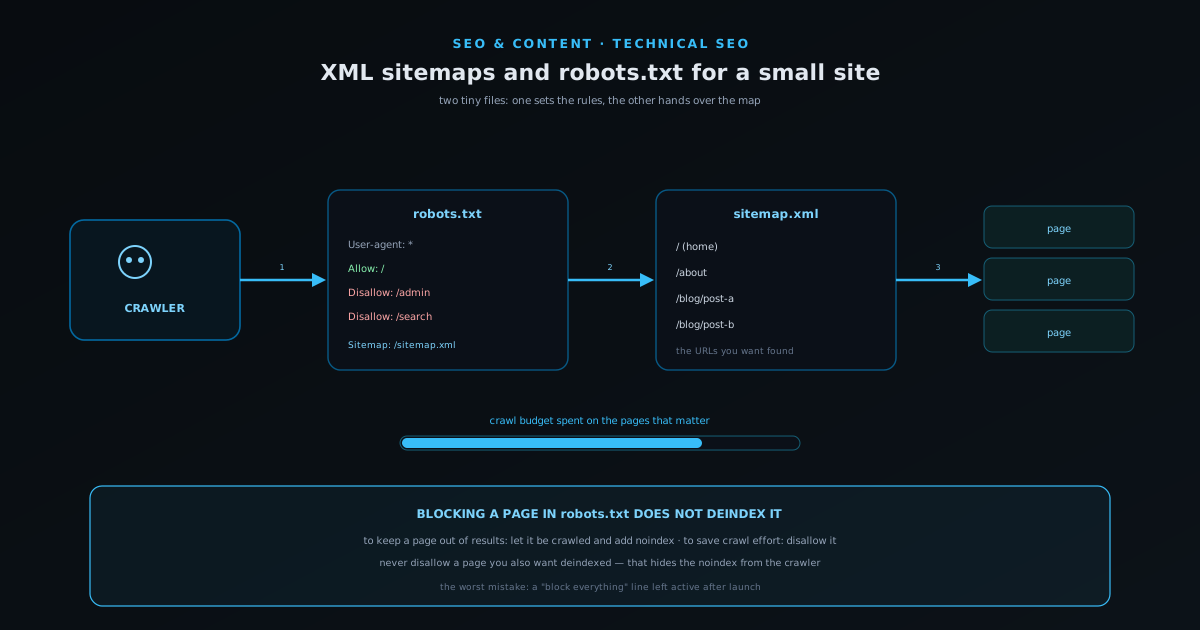
robots.txt is the first thing a well-behaved crawler looks for when it arrives at your domain, and it works like a notice posted at the entrance listing where visitors may and may not wander. Its syntax is deliberately minimal: you specify which crawler a rule applies to, then a set of allow and disallow instructions describing paths the crawler may or may not request. A site can use it to keep crawlers out of areas that have no business in search (internal search-results pages, admin areas, duplicate or parameter-laden URLs, staging sections), so that the crawler spends its attention on the pages that matter rather than wandering through the ones that do not. For most small sites the right robots.txt is short, permissive about the real content, and restrictive only about the genuinely private or pointless corners.
It is worth being clear about robots.txt’s nature: it is a set of directions that legitimate crawlers choose to follow, not a security barrier. The major search engines respect it, which is what makes it useful for guiding them, but it does not lock anything: a URL you disallow is still a URL anyone can visit directly, and ill-behaved bots can ignore the file entirely. So robots.txt is the right tool for "please do not waste crawl effort here," and the wrong tool for "keep this secret," because genuinely private content needs real protection like authentication, not a polite note asking crawlers to look away. Understanding that distinction prevents the mistake of trusting robots.txt to hide something it only asks nicely about.
The trap: blocking crawling is not preventing indexing
The single most important and most counter-intuitive thing to understand about robots.txt is that disallowing a page does not reliably keep it out of search results, and assuming it does causes real damage. Blocking a URL in robots.txt tells the crawler not to fetch the page’s content, but a search engine can still know the URL exists from links pointing to it, and it may list that URL in results anyway, now without being able to read the page to generate a sensible title or description. The result is the worst of both worlds: the page appears in search as a bare, content-less listing, because you blocked the very access the engine needed to understand it. People who "hide" a page by disallowing it in robots.txt are often surprised to find it indexed regardless, just badly.
The fix is to use the right tool for the right intent, and the two intents are genuinely different. If you want a page to be crawled but not listed in search results, you do not block it in robots.txt; you let the crawler reach it and place a "noindex" instruction on the page itself, which the engine can only see if it is allowed to read the page. If you want to save crawl effort on pages that do not matter for search at all, then robots.txt disallow is appropriate. The cardinal error is combining the two by disallowing a page you also want deindexed, which prevents the engine from ever seeing the noindex instruction that would have removed it. Remember the rule: to keep a page out of results, let it be crawled and tell it noindex; to keep crawlers out of an area, disallow it, and never expect disallow alone to deindex anything.
The XML sitemap: handing over the map
Where robots.txt sets boundaries, the XML sitemap does the opposite job: it proactively offers search engines a clean list of the URLs you want them to know about, so discovery does not depend entirely on them crawling link by link and hoping to find everything. It is a structured file, following a simple shared standard, that lists each important page’s address and can include a little metadata such as when the page was last changed. Think of it as handing a visitor a map of the building with the rooms worth seeing marked, rather than making them open every door to learn the layout. For a small, well-linked site this is a convenience; for a larger one, a newer one with few inbound links, or one with pages buried deep, it can be the difference between content being found promptly and being found slowly or not at all.
It helps to be clear about what a sitemap is not, because expectations get inflated. A sitemap is a discovery aid, not a ranking booster: listing a page does not make it rank, and a page’s presence in the sitemap is a suggestion to crawl, not a command to index; search engines decide for themselves what to index and how to rank it. Nor does a sitemap override robots.txt; if you list a URL in the sitemap but disallow it in robots.txt, you have sent a contradictory signal, and the block usually wins. The honest framing is that the sitemap lowers the friction of discovery and signals which pages you consider important and current, which is genuinely valuable, while leaving the actual indexing and ranking judgements where they belong, with the search engine.
How the two files work together
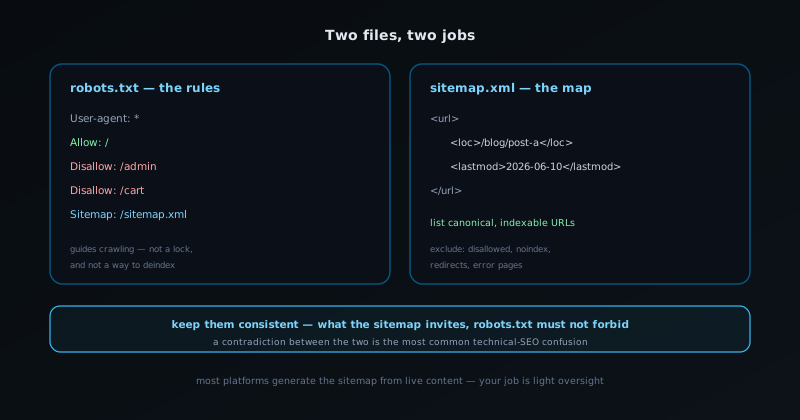
The two files are complementary, and a healthy small site uses them as a matched pair rather than in isolation. robots.txt draws the boundary (keep out of these low-value or private areas, you are welcome everywhere else) and conventionally points to the location of your XML sitemap with a single line, so a crawler that reads the rules immediately learns where to find the map. The sitemap then fills in the positive space inside that boundary, naming the pages you want discovered and indicating which are fresh. Used together, they give a crawler a coherent picture: here is where not to bother, here is the curated list of what matters, and here is roughly how current each of those pages is.
The cooperation only works if the two files agree, which is why the most common technical-SEO confusion is a contradiction between them. The sitemap should list the canonical, indexable pages you genuinely want found (not pages you have disallowed in robots.txt, not pages marked noindex, not redirects or error pages) because including those sends mixed messages and erodes the trust an engine places in your sitemap’s accuracy. Kept consistent, the pair is a clean two-part instruction. Kept contradictory, they become noise that makes the crawler work harder to figure out what you actually meant. The discipline is simply to make sure that what the sitemap invites and what robots.txt forbids never overlap.
The mistakes that accidentally hide a site
Because these files are so powerful and so terse, the failure modes are dramatic out of proportion to the file size, and a few specific mistakes account for most of the disasters. The most catastrophic is a single stray line that disallows the entire site (a rule that blocks all crawlers from everything), which is depressingly easy to leave in place after launch, since the same line is used deliberately to keep crawlers out of a site while it is being built. Sites have been launched with the "block everything" rule still active, quietly invisible to search for weeks until someone wondered why traffic never arrived. Any time search visibility is mysteriously absent, the robots.txt file is the first place to look, because one careless line there can switch off the whole site’s discoverability.
The other recurring mistakes are subtler but still harmful. Disallowing resources a page needs to render (the styles and scripts that make it work) can stop a search engine from seeing the page as users do and judging it fairly. Letting a sitemap rot so it lists dead, redirected, or noindexed URLs teaches the engine to trust it less. Blocking a page in robots.txt while expecting that to deindex it, the trap covered earlier, leaves the page listed but unreadable. And forgetting these files exist at all means missing the chance to guide crawling on a site that would benefit from it. None of these are hard to avoid once you know them; they cause trouble precisely because the files are so easy to set and forget that a small error survives unnoticed until it has done weeks of quiet damage.
- The "block everything" line left active after launch: the single most catastrophic and easiest mistake to miss.
- Disallowing the styles or scripts a page needs to render, so engines cannot judge it as users see it.
- Disallowing a page you actually want deindexed, which leaves it listed but unreadable; use noindex on a crawlable page instead.
- A stale sitemap listing dead, redirected, or noindexed URLs, which erodes the engine’s trust in it.
- Contradictions between the two files: a URL invited by the sitemap but forbidden by robots.txt.
Keeping both correct as the site grows
The good news for a small-site owner is that maintaining these files is genuinely light work, especially because most modern platforms and content systems generate the sitemap automatically and ship a sensible default robots.txt, so much of this happens without you touching anything. When the sitemap is generated from your live content, it stays current as you publish, retire, and update pages, which removes the staleness problem at the source, a strong argument for letting your platform handle it rather than maintaining a hand-written list that will inevitably drift. Your job in that case is mostly oversight: confirming the generated sitemap lists the right pages and excludes the ones it should, and that robots.txt is permissive about your real content and restrictive only where you intend.
A small amount of periodic attention catches the rest. After any significant change to your site’s structure, after a launch or migration, or simply on a regular cadence, it is worth a quick check that robots.txt does not contain a leftover block, that the sitemap is reachable and current, and that the two files still agree. Submitting your sitemap through a search engine’s webmaster tools and watching for reported errors closes the loop, giving you a direct readout of whether the engine is finding and accepting your pages. Treated this way (mostly automated, lightly supervised, checked after big changes), these two tiny files quietly do their job: keeping crawlers out of the corners that do not matter, handing them a clean map of the pages that do, and making sure the rest of your SEO effort is actually allowed to be seen.
Frequently asked questions
Quick answers to common questions about this topic.
What is the difference between robots.txt and an XML sitemap?
robots.txt sets the ground rules (which parts of your site crawlers may and may not request) while the XML sitemap proactively hands search engines a clean list of the pages you want discovered. robots.txt draws the boundary; the sitemap fills in the positive space inside it. They work best as a matched pair, with robots.txt even pointing to the sitemap’s location.
Does blocking a page in robots.txt remove it from Google?
No, and assuming it does is a common, damaging mistake. Disallowing a URL stops crawlers reading its content, but the engine can still know the URL exists from links and may list it as a bare, content-less result. To keep a page out of results, let it be crawled and add a "noindex" instruction to the page itself; never disallow a page you also want deindexed, because that hides the noindex.
Do I need an XML sitemap for a small website?
It is a helpful discovery aid rather than a requirement. A small, well-linked site may be crawled fine without one, but a sitemap lowers the friction of discovery and signals which pages you consider important and current: valuable for newer sites, sites with few inbound links, or pages buried deep. It does not boost rankings or force indexing; it just makes finding your pages easier.
What is the most dangerous robots.txt mistake?
Leaving the "block everything" line active after launch: the rule that disallows all crawlers from the whole site, often used deliberately during development and then forgotten. It can make a site quietly invisible to search for weeks. Any time search visibility is mysteriously absent, check robots.txt first, because one careless line can switch off the entire site’s discoverability.
How often do I need to update these files?
Rarely, if your platform generates the sitemap from live content and ships a sensible robots.txt; the sitemap then stays current automatically. Your job is oversight: after a launch, migration, or structural change, or on a regular cadence, confirm robots.txt has no leftover block, the sitemap is reachable and current, and the two files agree. Submitting the sitemap via webmaster tools closes the loop.
Related troubleshooting
Was this page helpful?
Your answer stays in this browser, it is not sent anywhere and no account or cookie is involved.