2026 · Novus Stream SolutionsAbout 12 min readNovus Stream Solutions
Topic clusters explained: how to structure a product blog
A pile of unconnected blog posts ranks worse than the same posts organized into topic clusters. Here is what a topic cluster is, how the pillar-and-spoke model works, and how to structure a blog around it.
Contents
- 1.Overview
- 2.What a topic cluster is
- 3.The pillar-and-spoke model
- 4.Why clusters beat scattered posts
- 5.Building a pillar page
- 6.Choosing the spokes
- 7.The internal linking that makes it a cluster
- 8.How clusters signal expertise
- 9.A real example: how this blog is structured
- 10.Clusters make new content cheaper to rank
- 11.Common mistakes and how to start
Overview
Two blogs can contain the same hundred posts and perform completely differently in search, and the usual difference is structure. A blog that is a flat pile of unconnected posts (each one a standalone island) tends to underperform a blog whose posts are organized into topic clusters, where related posts link to and reinforce each other around a central theme. The clustered blog ranks better, gets crawled more efficiently, and signals genuine depth on its topics, while the scattered one looks like a random collection that happens to share a domain. Topic clusters are how you turn a heap of posts into a structure that compounds, and the model is simple enough to explain in a single guide.
The core idea is that search rewards demonstrated depth on a topic, and depth is shown not by individual posts in isolation but by a connected body of content that thoroughly covers a subject. A topic cluster is the structural expression of that depth: a central pillar page covering a broad topic, surrounded by spoke posts each covering a specific aspect of it, all linked together. This guide explains what clusters are, why they outperform scattered posts, and how to actually structure a product blog around them, including a real example, since the blog you are reading is built this way.
What a topic cluster is
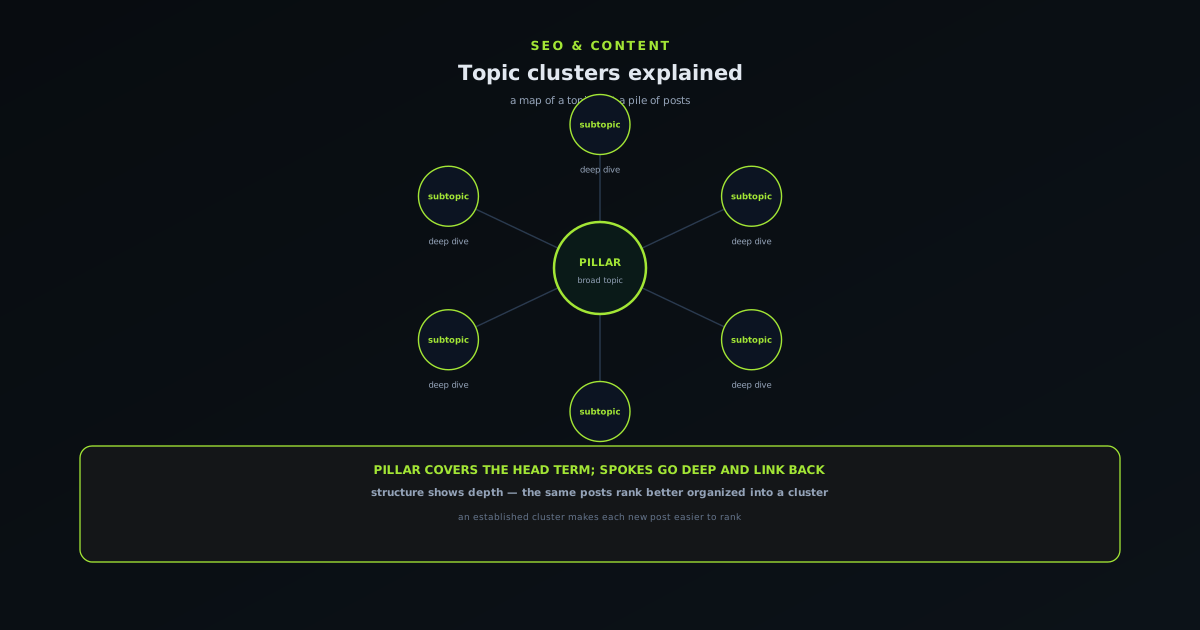
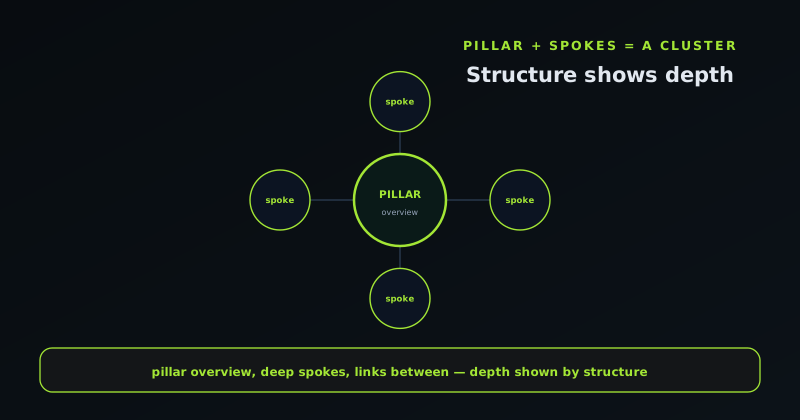
A topic cluster is a group of content pieces organized around a single broad topic, consisting of one comprehensive pillar page that covers the topic at a high level and multiple spoke pages that each dive deep into a specific subtopic, with internal links connecting the spokes to the pillar and to each other. The pillar gives an overview and routes readers to the details; the spokes provide the depth on each piece; the links make the relationship explicit. Together they form a coherent, navigable body of content on the topic rather than a set of disconnected articles that happen to be about related things.
The structure mirrors how genuine expertise actually looks. Someone who deeply understands a topic can both give you the big-picture overview and go deep on any specific aspect, with a clear sense of how the pieces relate, which is exactly what a pillar plus linked spokes represents. A topic cluster is, in effect, a map of a subject: the pillar is the overview of the territory, the spokes are detailed looks at specific places, and the links are the roads between them. That map is useful to readers navigating the topic and legible to search engines assessing whether you actually cover it in depth.
The pillar-and-spoke model
The pillar page targets the broad, high-volume topic (the term that captures the whole subject) and covers it comprehensively at an overview level, linking out to the spokes for the details. It is the entry point and the hub: a reader can land on the pillar, get oriented on the whole topic, and click through to whichever specific aspect they care about. Because it covers the broad term and is reinforced by all the spokes linking back to it, the pillar is positioned to rank for the competitive head term, supported by the depth the spokes provide. It is the page you want to be the authoritative overview of your topic.
The spoke pages each target a specific, narrower subtopic (a long-tail query that is part of the broader subject) and cover it in genuine depth. Each spoke is a thorough treatment of one piece of the topic, linking back to the pillar and often to sibling spokes where relevant. Spokes are easier to rank for individually because they target more specific, less competitive queries, and collectively they demonstrate that you cover the whole topic deeply, which strengthens the pillar. The model works because it serves both the broad searcher (via the pillar) and the specific searcher (via the spokes), while the links knit it all into a structure that shows depth.
Why clusters beat scattered posts
Scattered posts compete with each other and demonstrate no depth; clustered posts reinforce each other and demonstrate a lot. When you publish unconnected posts on related topics, they often end up competing for similar queries without any of them being clearly authoritative, and search engines have no structural signal that you cover the topic comprehensively. Organize the same posts into a cluster, and suddenly there is a clear hierarchy (a pillar to rank for the broad term, spokes for the specifics) and an obvious signal of depth from the connected, comprehensive coverage. The same content performs better purely because it is structured.
Clusters also help with the practical mechanics of how search works. Internal links spread authority through the cluster, so a strong spoke can lift the pillar and vice versa; the connected structure helps search engines crawl and understand the relationship between your pages; and the comprehensive coverage signals expertise that individual posts cannot. For readers, the cluster is genuinely more useful (they can navigate from overview to detail and between related details easily), which improves engagement, and engagement reinforces ranking. The structure is not a trick; it makes the content both more useful to humans and more legible to search, which is why it outperforms the same posts left scattered.
Building a pillar page
A good pillar page comprehensively covers a broad topic at a level that orients the reader and routes them to depth, without trying to be the full depth itself. It should give a genuine overview (enough that a reader lands with a vague sense of the topic and leaves with a clear map of it) while linking out to the spokes for the detailed treatment of each aspect. The balance is important: a pillar that is too thin is just a link list, while one that tries to cover everything in full becomes unwieldy and leaves no room for the spokes. The pillar covers the whole topic broadly; the spokes cover the pieces deeply.
The pillar should target the broad term that represents the whole topic, which is usually more competitive and higher-volume than any single spoke's term, and it earns the right to rank for that term partly through the depth the spokes provide. Practically, you often write the pillar and spokes together as a planned set rather than hoping scattered posts will retroactively form a cluster. Start by mapping the topic (the broad theme and its constituent subtopics), then design the pillar to cover the theme and route to the subtopics, and the spokes to cover each subtopic in depth. Planning the structure up front is what produces a real cluster rather than a pile you try to organize afterward.
Choosing the spokes
The spokes should be the genuine subtopics of your pillar: the specific questions, tasks, comparisons, and aspects that someone interested in the broad topic would want to go deeper on. The way to find them is to think about the real questions your audience has within the topic, the specific long-tail searches they make, and the natural ways the broad subject breaks into pieces. Each spoke should target a specific query with real intent and cover it thoroughly, so that it earns its own rankings while contributing to the cluster's overall depth. Good spokes are specific enough to rank and useful enough to deserve to.
A common question is how many spokes a cluster needs, and the honest answer is enough to genuinely cover the topic, not a fixed number. A cluster should feel comprehensive (like it actually addresses the meaningful aspects of its topic), which might be a handful of spokes for a narrow topic or many for a broad one. The goal is coverage, not quantity for its own sake: each spoke should address a real subtopic, and you keep adding spokes as long as there are genuine, valuable subtopics to cover. Resist both the temptation to pad the cluster with thin spokes and the temptation to stop before the topic is actually covered; let the real shape of the topic determine the spokes.
The internal linking that makes it a cluster
Links are what turn a set of related posts into an actual cluster, and without them you just have posts that happen to be about similar things. Each spoke should link back to its pillar, the pillar should link out to its spokes, and spokes should link to sibling spokes where the content genuinely relates. These links do real work: they help readers navigate the topic, they spread ranking authority through the cluster, and they make the structural relationship explicit to search engines. A cluster without internal linking is a cluster in name only; the links are the connective tissue that makes the structure exist.
The linking should be genuine and contextual rather than mechanical. Link from a spoke to the pillar where the reader would actually benefit from the overview, and from one spoke to another where the topics genuinely connect, using descriptive anchor text that tells the reader what they will get. Forced or excessive linking is its own kind of spam and helps no one; thoughtful linking that reflects the real relationships in the content is what makes the cluster both useful and effective. The principle is to link the way a knowledgeable guide would point you to related material (because it is genuinely relevant) rather than stuffing links to game the structure.
How clusters signal expertise
Beyond the mechanical SEO benefits, topic clusters signal expertise in a way that individual posts cannot, and that signal matters increasingly as search quality systems get better at assessing genuine authority. A connected, comprehensive body of content on a topic demonstrates that you actually know the subject deeply (you can cover the overview and every significant aspect, and you understand how they relate), which is exactly the kind of demonstrated depth that earns trust from both readers and search engines. A single post can be a lucky hit; a thorough cluster is evidence of real knowledge.
This is why clusters tend to compound over time. As a cluster fills out and earns rankings across its pillar and spokes, it builds topical authority that makes each new piece in the cluster easier to rank, and it positions you as a genuine resource on the subject rather than a site with one or two posts that happened to rank. The expertise signal is self-reinforcing: depth earns authority, authority lifts the whole cluster, and a stronger cluster makes additional depth more valuable. Building clusters is therefore a long-game strategy that gets stronger as it grows, which is exactly what you want from a content investment.
A real example: how this blog is structured
The blog you are reading is built as a set of topic clusters, which makes it a concrete example. There are clusters around each product (the background remover, the visualizers) where a flagship overview post acts as a pillar and many specific posts serve as spokes covering individual features, comparisons, and how-tos, all linked together. There are clusters around themes like on-device AI, the engineering stack, the operating model, and now online business, SEO, monetization, and automation. Each cluster has its broad coverage and its specific deep-dives, connected by internal links and grouped under a category so readers and search engines alike can see the structure.
This structure is why the blog is organized into categories and subcategories rather than a flat chronological feed: the categories are essentially the clusters made navigable, and the subcategories group the spokes within each. New posts are added to the cluster they belong to and linked to their siblings, so each addition strengthens an existing structure rather than floating alone. The practical lesson from the example is that clustering is not something you bolt on afterward; it is a way of planning and organizing content from the start, where every post is conceived as part of a cluster and connected accordingly. That deliberate structure is a large part of why a blog of this size functions as a coherent resource rather than a sprawling archive.
Clusters make new content cheaper to rank
One underappreciated benefit of building in clusters is that an established cluster makes each new piece of content within it easier to rank, which changes the economics of publishing over time. When you have built genuine topical authority on a subject through a thorough cluster, a new spoke added to that cluster benefits from the authority and internal linking the cluster already has; it is not starting from zero the way an isolated post on a new topic would. This means that as a cluster matures, adding to it gets more rewarding, because each new piece inherits some of the strength the cluster has accumulated. The cluster is not just a structure for existing content; it is a platform that makes future content more effective.
This compounding is a strong argument for going deep on chosen topics rather than spreading thin across many. A site that builds a few thorough clusters develops real authority in those areas, and within them, continued publishing compounds: each addition is easier to rank and strengthens the whole. A site that publishes scattered posts across many unrelated topics never builds this authority anywhere, so every post starts from scratch. The strategic implication is to choose the topics you want to own and build genuine clusters around them, because the depth pays off not just in the current content but in making all future content on the topic more effective. Clusters turn topic selection into a long-term investment, where committing to a subject and building real depth in it yields compounding returns that scattered publishing never accumulates.
Common mistakes and how to start
The common cluster mistakes are predictable: building clusters with no real pillar, so there is nothing to anchor the structure; padding clusters with thin spokes that do not earn their place; forgetting the internal linking that makes a cluster a cluster; or creating so many overlapping clusters that they compete with each other instead of each owning a clear topic. The fixes follow directly: give each cluster a genuine pillar, hold each spoke to a real quality and relevance bar, link the cluster together deliberately, and give each cluster a distinct topic so they complement rather than cannibalize. Most cluster failures are one of these, and most are easy to avoid once named.
To start your first cluster, pick one broad topic you can genuinely cover in depth, map its meaningful subtopics, and plan a pillar plus a set of spokes to address them, with the internal links designed in from the start. Write the pillar as a real overview that routes to the spokes, write each spoke as a thorough treatment of its subtopic, and connect them. One well-built cluster is worth more than a scattered pile of posts, and once you have built one, the model repeats for every topic you want to own. Structuring a product blog around topic clusters is the difference between content that accumulates into authority and content that just accumulates, and it is entirely within reach for any blog willing to plan its structure rather than just publish.
Frequently asked questions
Quick answers to common questions about this topic.
What is a topic cluster?
A content structure where a broad pillar page links to many focused supporting posts on subtopics, and they all link back. It signals topical authority and helps search engines understand how your content fits together.
How do topic clusters help SEO?
They concentrate relevance and internal links around a theme, so the whole cluster ranks better than scattered posts. Interlinking also spreads authority and keeps readers moving through related content.
How do I build a topic cluster?
Pick a pillar topic, write supporting posts answering specific questions within it, and link them to the pillar and each other. See Internal linking that actually moves the needle.
Related troubleshooting
Was this page helpful?
Your answer stays in this browser, it is not sent anywhere and no account or cookie is involved.