2026 · Novus Stream SolutionsAbout 12 min readNovus Stream Solutions
Writing for humans first and still ranking
The old idea that you must choose between writing for people and writing for search is mostly dead. Modern search rewards the same things readers do. Here is how to write for humans first and rank anyway.
Contents
- 1.Overview
- 2.The false choice between humans and search
- 3.Why search now rewards what humans want
- 4.Write the thing the searcher actually needed
- 5.Depth and specificity beat keyword density
- 6.Readability is an SEO feature, not a luxury
- 7.The keyword still matters, as a topic, not a chant
- 8.Structure so people can scan and find
- 9.What writing for robots actually costs you
- 10.Why humans-first content ages better
- 11.How we write here
Overview
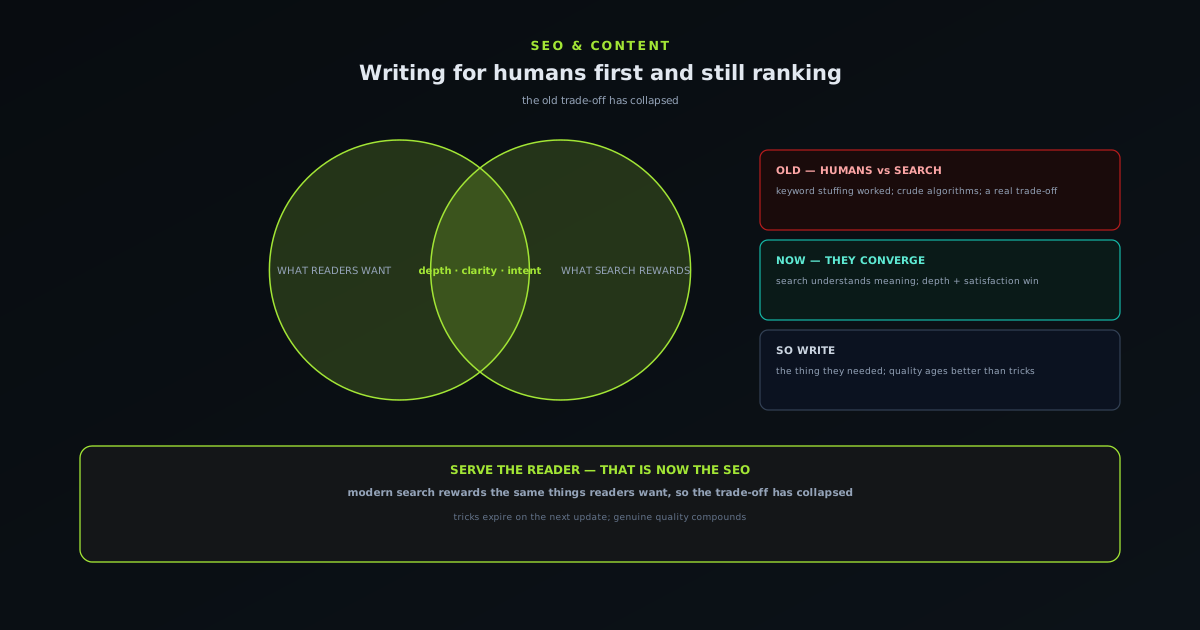
For years, "writing for SEO" and "writing for people" were treated as opposing forces, and writers were told to compromise one for the other: stuff in keywords, hit a density target, structure for the algorithm even when it hurt the reader. That advice is now mostly obsolete and often actively harmful, because modern search has gotten good enough at understanding content and measuring satisfaction that the things which help readers are largely the same things that help rankings. The supposed trade-off has collapsed: writing genuinely well for humans is, increasingly, the most effective SEO strategy there is. This is a field note on writing for humans first and ranking anyway, which is no longer the paradox it used to be.
The shift happened because search engines got better at their actual job, which is surfacing the content that best satisfies a searcher. Older algorithms could be gamed with keyword tricks because they were crude proxies for relevance; modern ones understand meaning, assess depth, and measure whether searchers were satisfied, which means the path to ranking now runs through actually satisfying searchers. The tricks that used to work now mostly do not, and the thing that works is being the genuinely best answer to the query. That convergence is liberating: you can stop writing awkwardly for robots and start writing well for people, because writing well for people is what ranks.
The false choice between humans and search
The framing of "humans versus search" was always a bit of a false choice, but it had real teeth when algorithms were crude. In that era, you genuinely could rank thin, keyword-stuffed content that no human enjoyed, so there was a real tension between optimizing for the algorithm and serving the reader. Writers learned to insert keywords unnaturally, pad content to length targets, and structure pages around search rather than sense, because those tactics worked. The trade-off was real, and the cynical conclusion that SEO meant degrading content for the algorithm was, for a while, partly true.
What changed is that the algorithm caught up to the point where the cynical tactics stopped working and often backfired. Keyword stuffing now reads as spam to systems that understand language; thin content gets demoted by systems that assess depth; pages that disappoint searchers get pushed down by systems that measure satisfaction. The tactics that exploited the gap between "what ranks" and "what is good" no longer have a gap to exploit, because the two have largely converged. The false choice is now genuinely false: you do not have to choose between humans and search, because search is now trying to reward exactly what humans want, which means serving humans is serving search.
Why search now rewards what humans want
Modern search systems are built around understanding content and measuring searcher satisfaction, which means they are increasingly designed to reward the same things a reader would. They can understand what a page is actually about rather than just matching keywords, so genuine relevance beats keyword presence. They can assess whether content covers a topic with real depth, so thorough beats thin. And they can measure whether searchers who clicked a result were satisfied or bounced back to try another, so genuinely useful beats superficially optimized. Each of these capabilities pushes rankings toward the content humans actually prefer.
This is not a temporary state but a direction of travel, because search engines have a strong incentive to keep getting better at surfacing genuinely satisfying content; their own usefulness depends on it. As the systems improve, the alignment between "what ranks" and "what readers want" only tightens, which means betting on genuine quality is betting with the long-term trend rather than against it. Tactics that exploit current weaknesses in the algorithm are bets against that trend and tend to stop working as the systems improve; quality is the one strategy that gets safer over time. Writing for humans is not just currently effective; it is the strategy aligned with where search is heading.
Write the thing the searcher actually needed
The most reliable way to rank for a query is to be the genuinely best answer to it, which starts with understanding what the searcher actually needed and then providing exactly that. Behind every search is a person with a real intent (a question to answer, a task to accomplish, a decision to make), and the content that satisfies that intent completely is the content search wants to surface. This means the first job of writing for a query is not finding keywords but understanding intent: what does someone searching this actually want, and what would fully satisfy them? Write to that, and you are writing both the thing the human needed and the thing search rewards.
This intent-first approach also naturally avoids the failures that get content demoted. When you write to genuinely satisfy the searcher's need, you produce depth because real needs require real answers, you produce relevance because you are addressing the actual intent, and you produce satisfaction because the reader gets what they came for. The keyword falls out of writing about the topic properly, rather than being stuffed in. Focusing on the searcher's real need rather than the query's surface keywords is the single mental shift that makes humans-first writing rank, because it aligns what you write with what both the reader and the search engine are actually looking for.
Depth and specificity beat keyword density
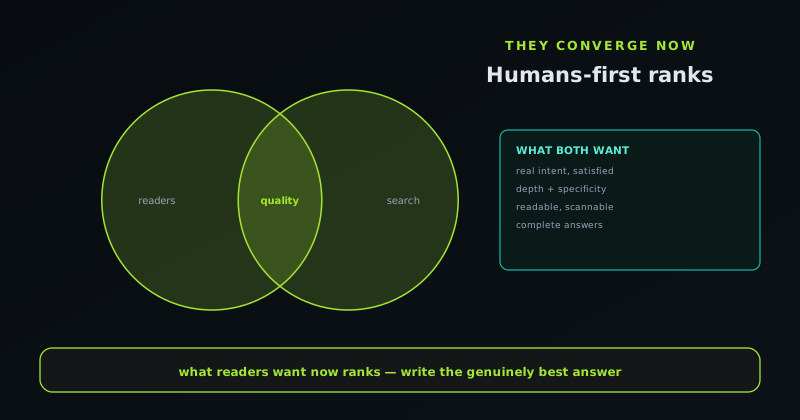
The old metric of keyword density (how many times your target phrase appears) is essentially dead as an optimization target, replaced by depth and specificity as the things that actually matter. Modern systems understand a topic from the full meaning of your content, not from counting keyword occurrences, so repeating a phrase the prescribed number of times does nothing while genuinely covering the topic thoroughly does everything. A page that comprehensively and specifically addresses its subject will rank for that subject and its many related queries, even if the exact target phrase appears only naturally, because the system understands the page is genuinely about the topic.
Specificity is especially powerful because it is both what readers want and what distinguishes genuinely knowledgeable content from generic filler. Specific examples, concrete details, real numbers, and particular guidance signal that the content comes from actual understanding, which both serves the reader and reads as quality to the algorithm. Generic content that could have been written about anything ranks poorly and helps no one; specific content that clearly comes from real knowledge ranks well and genuinely helps. The shift from chasing keyword density to pursuing depth and specificity is the shift from optimizing for a crude proxy to optimizing for the real thing, which is exactly the convergence that makes humans-first writing effective.
Readability is an SEO feature, not a luxury
Readability used to be treated as separate from SEO (a nicety for the reader that did not affect rankings) but in a world where search measures satisfaction, readability is an SEO feature. Content that is clear, well-organized, and easy to read keeps readers engaged and satisfies their intent efficiently, which produces exactly the positive signals modern search rewards. Content that is dense, confusing, or poorly structured frustrates readers, who bounce back to search to find something better, producing the negative signal of an unsatisfied searcher. The reading experience directly affects the satisfaction that increasingly drives rankings, so writing readably is writing for search.
This means the craft of clear writing (good structure, plain language, logical flow, scannable organization) is not in tension with SEO but in service of it. A reader who can easily find and absorb what they came for is a satisfied searcher, and satisfied searchers are the outcome the algorithm is trying to produce. Investing in readability, far from being a distraction from optimization, is a direct contributor to it, because it improves the very experience that search measures. The old idea that you might sacrifice readability for SEO has it exactly backwards: sacrificing readability sacrifices the satisfaction signal, and protecting readability protects your rankings.
The keyword still matters, as a topic, not a chant
None of this means keywords are irrelevant; it means their role changed from a phrase to repeat into a topic to address. You still need to know what people search for, because that tells you what content to create and what intent to satisfy; keyword research is genuinely useful for understanding demand and intent. What changed is that knowing the keyword is the start of understanding what to write, not a phrase to sprinkle through the text a certain number of times. The keyword points you at a real query with real intent; your job is to satisfy that intent thoroughly, and the language takes care of itself when you write about the topic properly.
The healthy way to use a keyword is as a topic definition and an intent signal: it tells you what subject to cover and what the searcher wants, and you write naturally about that subject to that intent. The phrase will appear where it naturally does, related terms will appear because you are genuinely covering the topic, and the content will be understood as relevant because it actually is. The unhealthy way (treating the keyword as a magic phrase to insert at the right density) is both ineffective now and corrosive to the writing. Use keywords to understand what to write; do not let them dictate how you write, because writing to the topic and intent is what actually ranks.
Structure so people can scan and find
Readers do not consume content linearly the way the writer imagines; they scan, jump to the part they need, and decide quickly whether the page will satisfy them. Writing for humans first means structuring content for that real behavior: clear headings that signal what each section covers, logical organization that lets a reader navigate to their need, and an arrangement that surfaces the most important information rather than burying it. This scannable structure serves the reader who wants a specific answer and the reader who wants the whole picture, and it happens to be exactly the structure that helps search understand and surface your content.
Good structure also signals quality and aids comprehension in ways that compound. A well-organized page is easier for both readers and search systems to understand, easier to extract specific answers from, and more satisfying to use, all of which feed the engagement and satisfaction signals that matter. The discipline is to organize content around how readers actually use it (letting them find what they need quickly) rather than around how you happened to think of it. Structuring for scanning is another case where serving the human and serving search point the same direction: the organization that helps readers navigate is the organization that helps your content perform.
What writing for robots actually costs you
It is worth being clear about what the old robot-first approach costs, because the costs are real even when the tactics occasionally still work. Content written for algorithms rather than people is unpleasant to read, which damages the reader relationship and the brand behind it; it is increasingly ineffective as algorithms improve, so the effort is wasted; and it risks penalties as the patterns it relies on get detected and demoted. You spend effort degrading your own content for diminishing returns and growing risk, a bad trade on every axis. The robot-first approach is not just ethically dubious; it is strategically poor.
There is also an opportunity cost: time spent gaming the algorithm is time not spent making genuinely good content that would both rank and serve the audience. Every hour optimizing for crude signals is an hour not spent on the depth, specificity, and clarity that actually work and that build a lasting relationship with readers. The robot-first writer is running on a treadmill that is speeding up and tilting against them, while the human-first writer is building something that compounds. Once you see that writing for humans is also the most effective way to rank, the case for robot-first writing collapses entirely: it is worse content, worse results, and worse risk, all to avoid simply writing well.
Why humans-first content ages better
A practical advantage of writing for humans first is that the content ages better, because it is not built on exploiting the current state of an algorithm that will change. Content optimized for a specific algorithmic quirk (a keyword density, a structural trick, a ranking loophole) is fragile by nature: when the algorithm updates, as it constantly does, the trick stops working and the content that relied on it loses its rankings. Content built on genuinely serving the reader has no such fragility, because the thing it depends on (being genuinely useful) is exactly what search keeps trying to reward as it improves. Humans-first content is durable precisely because its value does not depend on any particular algorithmic state.
This durability compounds into a real strategic difference over time. The writer who chases algorithmic tricks is on a treadmill, constantly redoing work as the tricks expire and the algorithm shifts, while the writer who serves readers builds content that keeps working through updates and often improves as the algorithm gets better at recognizing quality. Over years, the humans-first approach accumulates a body of content that retains and grows its value, while the trick-based approach accumulates content that repeatedly needs rescuing or replacing. Betting on genuine quality is betting on the one thing that does not expire, which is why humans-first writing is not just currently effective but durably so. The content you write to genuinely help readers today will still be helping them, and ranking, long after this year's algorithmic tricks have stopped working.
How we write here
The blog you are reading is written humans-first on purpose, and it is a working test of the idea. Each post is meant to genuinely help the person who came for the topic: to be the thing they actually needed, written with enough depth and specificity to be worth their time, structured so they can find what they want, and honest about its limits. The keywords are used to understand what topics to cover and what intent to serve, not as phrases to chant, and the posts rank or do not rank on whether they genuinely satisfy the searcher. That is the whole strategy: write the genuinely useful thing, and trust that modern search increasingly rewards it.
The practical takeaway is that you can stop treating SEO as a separate, distasteful task layered on top of writing, and start treating good writing as the SEO. Understand what your searcher actually needs, write the genuinely best answer to it with real depth and specificity, make it readable and well-structured, and satisfy the intent completely. That is writing for humans, and in modern search it is also the most reliable way to rank. The era when you had to choose is over; the writers who serve their readers best are increasingly the ones search serves best too, and writing for humans first is now simply the smart strategy.
Frequently asked questions
Quick answers to common questions about this topic.
Can you write for humans and still rank in Google?
Yes. That is increasingly the only durable way. Search rewards content that genuinely helps the reader, so clarity, depth, and real usefulness are the SEO strategy, not a tradeoff against it.
Do I still need keywords if I write for humans?
Use them naturally (to match how people actually phrase a query) but do not stuff them. Cover the topic thoroughly and the relevant terms appear on their own.
What does "helpful content" mean for ranking?
Content written to satisfy a real need, by someone with genuine knowledge, that leaves the reader done rather than clicking back to search. That reader satisfaction is what modern ranking optimizes for.
Related troubleshooting
Was this page helpful?
Your answer stays in this browser, it is not sent anywhere and no account or cookie is involved.