2026 · Novus Stream Solutions (hub)About 13 min readNovus Stream Solutions
Search intent: writing the page the searcher actually wanted
The most common reason a well-written page does not rank is that it answers a different question than the searcher asked. Search intent (the kind of page someone actually wants) is the foundation of SEO. Here is how to read it and match it.
Contents
- 1.Overview
- 2.The four kinds of search intent
- 3.Read the intent straight from the results
- 4.Why a great page that mismatches intent still fails
- 5.Match the format and depth, not just the topic
- 6.When one query hides several intents
- 7.How intent reshaped search itself
- 8.Intent shifts with time, place, and device
- 9.Designing the page around the intent
- 10.Measuring whether you matched the intent
- 11.Intent first, then everything else
Overview
A page can be thorough, well-written, and accurate and still never rank, and the most common reason is not quality but mismatch: it answers a different question than the one the searcher was actually asking. Search engines are, at their core, in the business of giving people the result they wanted, and "wanted" means more than the topic; it means the kind of page that satisfies the underlying goal behind the search. That goal is search intent, and matching it is the foundation everything else in SEO rests on. You can have the best content on a subject and lose to a thinner page that better fits what searchers of that query are trying to do, because the engine is rewarding fit, not just effort.
Understanding intent reframes the whole task of content. Instead of asking "what do I want to say about this topic?" you ask "what is the person typing this query trying to accomplish, and what kind of page would accomplish it for them?" Those are different questions, and the second one is the one that ranks. Someone searching "how to remove a background" wants a method; someone searching "best background remover" wants a comparison; someone searching "nss background remover" wants a specific tool; someone searching "remove background free" wants to do it now. Same topic, four different intents, four different pages. This guide covers the intent types, how to read intent directly from the results, why mismatched content fails regardless of quality, and how to match the format and depth a query demands.
The four kinds of search intent
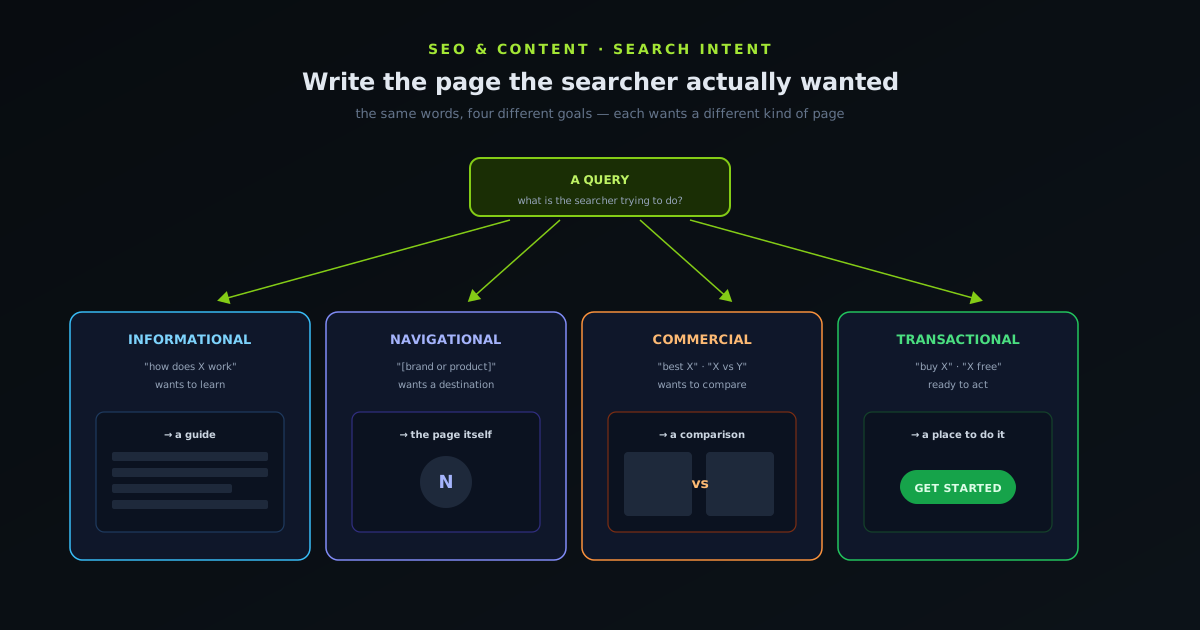
Search intent is conventionally sorted into four types, and learning to recognize them is most of the skill. Informational intent is the searcher wanting to learn or understand something ("how does X work," "what is Y," "why does Z happen"), and it is satisfied by explanatory content: guides, tutorials, answers. Navigational intent is the searcher trying to reach a specific site or page they already have in mind (a brand name, a product name, a known destination), and it is satisfied by being that destination. These two cover most of the queries that are about knowing and finding rather than buying.
The other two lean toward a purchase. Commercial-investigation intent is the searcher comparing options before deciding ("best X," "X vs Y," "X reviews"), and it is satisfied by comparisons, roundups, and evaluations that help them choose. Transactional intent is the searcher ready to act ("buy X," "X free," "download X," "X near me"), and it is satisfied by a page where they can do the thing, a product page or a tool. The reason this taxonomy matters is that each type wants a structurally different page: an explanation, a destination, a comparison, or an action. Identify which type a query is, and you have already decided most of what your page needs to be. Misidentify it, and you will build the wrong kind of page no matter how well you build it.
Read the intent straight from the results
You do not have to guess at intent, because the search engine has already published its judgment of it: the current top results for a query are the engine's working answer to "what kind of page satisfies this search." If the first page is dominated by how-to guides, the intent is informational and the engine expects a guide. If it is full of product and category pages, the intent is transactional and an article will struggle no matter how good it is. If it is comparison posts and "best of" lists, the intent is commercial and the searcher wants help choosing. Reading the results is the single most reliable way to determine intent, because it tells you what is actually winning rather than what you assume should.
This SERP-reading habit also reveals the format details beyond the broad type. Look at what the ranking pages have in common: their length, their structure, whether they lead with a direct answer or build up to it, whether they include comparisons, images, or steps, whether the results are recent or evergreen. Those shared traits are the template the engine is rewarding for that query, and your page needs to meet that template before it can compete on quality. The mistake is to skip this and write the page you imagine, then wonder why it does not rank against pages that all share a shape you ignored. The results are a free, direct readout of intent and expected format; reading them before writing is the cheapest, highest-leverage step in the whole process. Finding which queries to read this way is the job of keyword research, covered in Keyword research with free data: Search Console, autocomplete, and common sense.
Why a great page that mismatches intent still fails
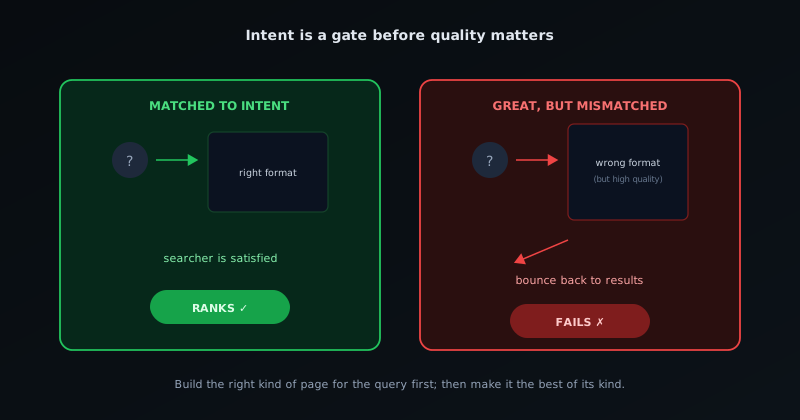
It is worth dwelling on why mismatch is fatal even when the content is excellent, because it is counterintuitive: surely a better page should win? The reason is that the engine is not grading your page in isolation; it is predicting which result will satisfy the searcher, and a page that does not fit the intent will not satisfy them no matter its quality. If someone searching a transactional "buy" query lands on your beautifully written 3,000-word explainer, they bounce, because they wanted to buy, not read. The engine observes that mismatch (through the behavior of searchers who try your page and leave unsatisfied) and learns that your page does not answer this query, regardless of how good the page is on its own terms.
This is why "just write great content" is incomplete advice. Great content that matches intent ranks; great content that mismatches intent fails, and the failure is invisible if you only look at the content and not at the fit. The practical implication is that intent is a gate you pass before quality matters: first build the right kind of page for the query, then make that page excellent. Reversing the order (making an excellent page and hoping its quality overcomes the wrong format) is the most common way good writers waste good work. The page that ranks is the one that is both the right shape and well-made, and the right shape comes first.
Match the format and depth, not just the topic
Once you have read the intent, matching it means meeting the format and depth the query expects, not merely covering the topic. Format is the structural shape: an informational query may want a step-by-step guide, a definitional query may want a direct answer up top followed by detail, a comparison query may want a table or a clear side-by-side, a transactional query may want the action immediately available. Giving the right answer in the wrong structure still underperforms, because searchers and the engine both expect a particular shape for a particular kind of search. The ranking pages show you the shape; your job is to deliver your substance in it.
Depth is the other half: the query implies how much the searcher wants. A quick factual question wants a concise, direct answer, and burying it under a long preamble frustrates the searcher even if the answer is eventually there; a complex how-to or a buying decision wants thoroughness, and a thin treatment leaves the searcher unsatisfied and sends them back to the results. Matching depth means calibrating the page to the query rather than to a fixed word count: short where the search wants speed, comprehensive where it wants completeness. The combination of right format and right depth is what "matching intent" concretely means in the writing, and it is the difference between a page that satisfies the searcher (and signals that satisfaction to the engine) and one that technically covers the topic but does not fit the search. For the how-to shape in particular, matching depth is only half the job; the other half is keeping the reader moving all the way to the end, which is the whole subject of How to write a tutorial people actually finish.
When one query hides several intents
Some queries are genuinely ambiguous, with searchers wanting different things from the same words, and the results often reveal this as a mix: a few guides, a few products, a comparison or two on the same page. When the engine shows a blend, it is telling you the intent is split, and the winning move is usually a page that serves the dominant intent while acknowledging the others, or a clear structure that lets different searchers quickly find their part. Forcing a single narrow interpretation onto a mixed-intent query leaves part of the audience unsatisfied; recognizing the mix and addressing it is what lets a page rank across the spread of what searchers mean.
Mixed intent is also a signal about how to organize content across pages rather than within one. If a topic supports clearly separable intents (learning about it, comparing options, and acting), those often deserve distinct pages, each matched to its own intent, linked together so a searcher who arrives with one goal can move to another. That structure is exactly what a topic cluster provides, and it is why intent and clustering go together: you map the intents around a subject, build a matched page for each, and link them into a whole that covers the topic across every way people search it. The deeper treatment of that structure is in Topic clusters explained: how to structure a product blog; the intent lens is what tells you which pages the cluster needs and what each one should be.
How intent reshaped search itself
It helps to understand why intent became the organising idea, because it explains why matching it is no longer optional. Search engines spent years getting better at understanding not the literal words of a query but the need behind it, so that two differently-worded searches with the same underlying intent return similar results, and a single ambiguous word returns a blend of the things people usually mean by it. The engine is, in effect, trying to satisfy the want behind the words, and it measures its own success by whether searchers seem satisfied with what they got.
This is why keyword matching alone stopped working: a page can contain the exact query words and still fail, because it does not serve the need those words expressed. The shift moved the goalposts from did you mention the term to did you satisfy the intent, which is a higher and more human bar. Once you see search this way, intent stops being one ranking factor among many and becomes the frame the others sit inside: you are not optimising a page for a string, you are answering a person, and the engine is increasingly good at telling the difference.
Intent shifts with time, place, and device
A subtlety that catches people out is that intent is not fixed to a query forever; it shifts with context, and a page that matched last year can drift out of alignment as the dominant need behind a search changes. A term can move from informational to commercial as a topic matures and people move from learning about it to buying it, or spike seasonally so the same words mean something different in December than in June. The intent behind a query is a moving target, and matching it once is not the same as matching it permanently.
Context beyond time matters too. The same query can carry different intent on a phone than on a desktop (a mobile searcher is more often looking for something quick, local, or immediate), and the surrounding situation colours the need. The practical implication is to revisit your important pages periodically and check that the results for their target queries still look the way they did when you wrote them; if the result page has shifted toward a different intent, your page needs to shift with it, which is the same refresh discipline that keeps any content from going stale.
Designing the page around the intent
Matching intent is not only about choosing the right topic and format; it is about structuring the page so it satisfies the need quickly rather than burying the answer. If the intent is to get a specific answer, the answer should be near the top, not after a thousand words of preamble, because a searcher who has to dig for what they came for often leaves before finding it. If the intent is to compare options, the page should make the comparison easy to scan. The structure of the page is part of how well it serves the intent, not a separate concern.
This is where intent and user experience meet: a page that leads with what the searcher wanted, then offers the depth for those who want more, serves both the skimmer and the reader. The common failure is the opposite: a page that withholds the answer to keep people scrolling, which serves the publisher metrics at the expense of the searcher and ultimately loses, because the engine notices the dissatisfaction. Designing the page to deliver on the intent immediately, and to reward deeper reading without requiring it, is what turns a topically-correct page into one that actually satisfies.
Measuring whether you matched the intent
You do not have to guess whether you matched intent, because searcher behaviour leaves signals. The clearest is the back-to-results move: when someone clicks your page and quickly returns to the search to try another result, that is a strong sign your page did not satisfy the need, and a pattern of it tells you the intent is mismatched even if the page ranks for a while. Conversely, when people land, stay, and do not go looking elsewhere, you have served the need, and the engine reads that satisfaction as a reason to keep showing your page.
The practical move is to treat a page that attracts clicks but loses people quickly as an intent problem rather than a quality problem: the page may be excellent and still be answering the wrong question. When you see that pattern, go back to the results for the query, re-read what the satisfying pages are actually providing, and realign your page to the need rather than polishing the wrong answer. Matching intent is iterative: you make your best read of the need, watch how searchers respond, and correct toward what actually satisfies them.
Intent first, then everything else
The reason to put intent at the center of content strategy is that it determines the return on everything else you do. Keyword research finds the queries; intent tells you what to build for each. Writing skill makes a page good; intent tells you what kind of page to make good. Internal linking and clustering organize your pages; intent tells you which pages those should be. Skip the intent step and you risk pouring all that effort into pages shaped wrong for the searches they target: the expensive, demoralizing failure of doing good work that cannot rank because it answers a question nobody asked in the form they asked it.
Made a habit, reading intent is fast: before writing anything, search the target query, read the kind of pages that rank, name the intent and the expected format and depth, and only then write, building the right kind of page and making it the best of its kind. That sequence keeps you from the most common and most frustrating SEO mistake, which is not bad writing but misaimed writing. The pages that win are not always the longest or the most polished; they are the ones that most precisely give the searcher what they were looking for, in the form they were looking for it. Match the intent first, write for humans within that match as covered in Writing for humans first and still ranking, and quality finally has a query it can win.
Frequently asked questions
Quick answers to common questions about this topic.
What is search intent?
Search intent is the goal behind a query: what the searcher is actually trying to do. It is usually sorted into four types: informational (learn something), navigational (reach a specific site), commercial investigation (compare options), and transactional (take an action like buy or download). Matching it is the foundation of ranking.
How do I find the intent of a keyword?
Search it and read the top results; they are the engine's own answer to what kind of page satisfies that query. If guides rank, it is informational; if product pages rank, transactional; if comparisons rank, commercial. Note their shared length, structure, and format, and match that template.
Why does my high-quality page not rank?
Most often because it mismatches intent: it answers a different question or comes in the wrong format than searchers want. The engine predicts which result satisfies the searcher, and a great page in the wrong shape gets bounced. Build the right kind of page for the query first, then make it excellent.
What if a query has more than one intent?
When the results show a mix of page types, the intent is split. Serve the dominant intent while acknowledging the others, or structure the page so different searchers find their part fast. Often the better answer is several intent-matched pages linked as a topic cluster, one for each way people search the subject.
Related troubleshooting
Was this page helpful?
Your answer stays in this browser, it is not sent anywhere and no account or cookie is involved.