2026 · NSS Background RemoverAbout 12 min readNovus Stream Solutions
Real-estate photo staging & background cleanup, free and in your browser
Listing photos sell homes, and small edits — decluttering, brightening, sky fixes, and light virtual staging — make a measurable difference. Here is how to do them free, on-device.
Contents
- 1.Overview
- 2.Decluttering: the highest-impact edit
- 3.Brightening dim rooms
- 4.Sky replacement and exterior fixes
- 5.Light virtual staging for empty rooms
- 6.The honesty line, stated plainly
- 7.Doing it all free, on-device, at volume
- 8.Window pulls and the bright-windows look
- 9.Straightening verticals and fixing wide-angle distortion
- 10.Twilight and dusk exterior shots
- 11.A simple per-listing editing checklist
Overview
Listing photos are the first showing. Most buyers scroll a feed of properties and decide in a second or two, from the thumbnail alone, whether to click — which means the photos do more to sell a home than almost anything else in the listing. The good news is that the edits that make listing photos work are not exotic: decluttering distractions, brightening dim rooms, fixing a flat grey sky, and lightly staging empty spaces so buyers can picture living there. None of these require expensive software or a professional editor, and this guide covers doing them free, on-device, in your browser. An important honesty note runs throughout: edits should make a property look its best truthfully, never misrepresent it, and virtual staging should be disclosed where required.
The reason free, on-device editing is the right approach for real estate specifically is volume and privacy. An agent shoots many properties, each with many photos, so a per-image cost or upload step adds up fast, and listing photos sometimes show occupied homes whose owners would reasonably prefer the images not pass through unknown servers. Doing the edits locally — no upload, no per-image fee, no watermark — keeps the workflow fast and the images private. The techniques below are the practical, high-impact edits that make the biggest difference to how a listing performs, ordered roughly by how much they move the needle.
Decluttering: the highest-impact edit
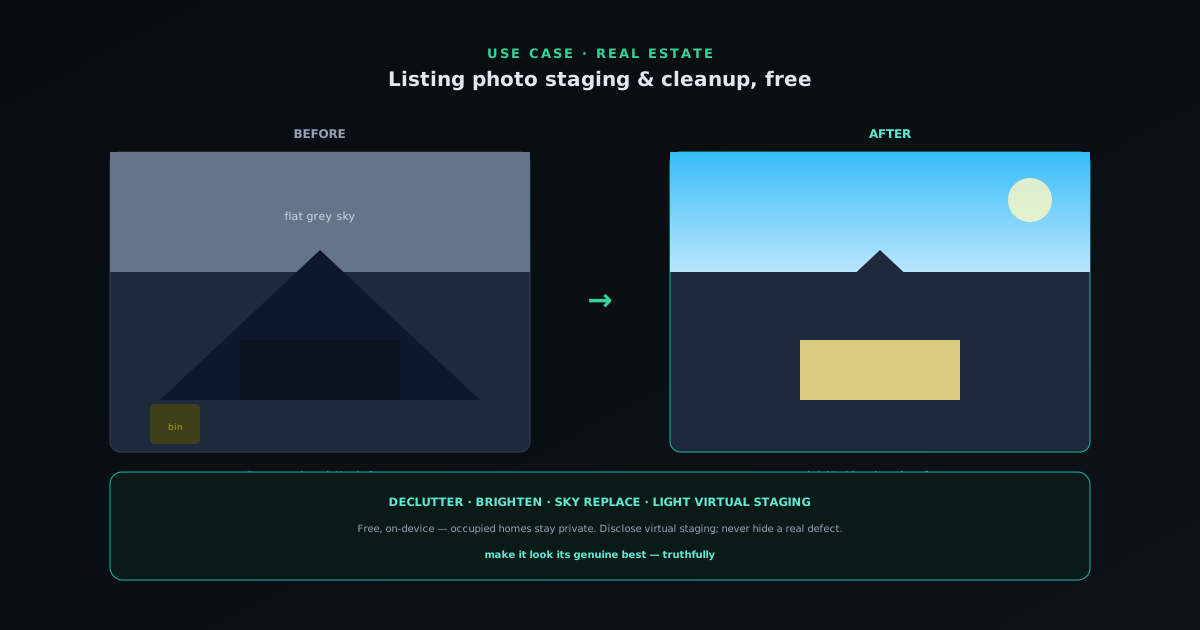
The single most valuable edit for most listing photos is removing distractions — clutter on counters, a stray bin, cables, a car in the driveway, personal items that pull attention from the space itself. Buyers are trying to evaluate the room, and visual noise makes a space feel smaller and less appealing than it is. Object-removal tools let you paint over a distraction and have it filled in with matching surroundings, so a cluttered counter becomes clean and a parked car disappears from the kerb appeal shot. This is the edit that most reliably makes a room read better, because it lets the space speak for itself.
The honesty line matters here and is easy to hold: removing a temporary distraction — a bin, a car, clutter that will not be there for the buyer — presents the property truthfully, while removing or hiding a permanent defect does not. A clean counter is fair; concealing damage is misrepresentation. Keeping the edits to genuinely temporary or irrelevant distractions keeps the listing honest while still letting the property look its best. The AI object-removal and inpainting tools handle the technical part — selecting and filling — so the skill is mostly judgment about what is fair to remove, which is a judgment any agent already makes when they tidy a room before a showing.
Brightening dim rooms
Interior shots are often darker than the room feels in person, because cameras struggle with the mix of window light and indoor light, and a dim photo makes a space feel cramped and unwelcoming. Brightening and balancing the exposure — lifting shadows, evening out the light, correcting a colour cast from indoor bulbs — makes a room feel open and inviting, which is how it actually felt to stand in. AI enhancement tools that adjust exposure, white balance, and clarity do this in one pass, turning a flat, dim interior into a bright, true-to-life one.
The goal is to make the room look the way it genuinely looks on a good day, not to fake a brightness it does not have, which is both the honest approach and the one that avoids the unnatural, over-processed look that makes buyers suspicious. A subtle, balanced brighten reads as a well-lit room; an aggressive one reads as a filter hiding something. The same applies to colour: correcting an orange cast from indoor lighting to neutral white makes the space look clean and accurate, while pushing the colours into something punchy looks fake. Brightening to truthful, natural lighting is the edit that makes interiors inviting without crossing into misrepresentation.
Sky replacement and exterior fixes
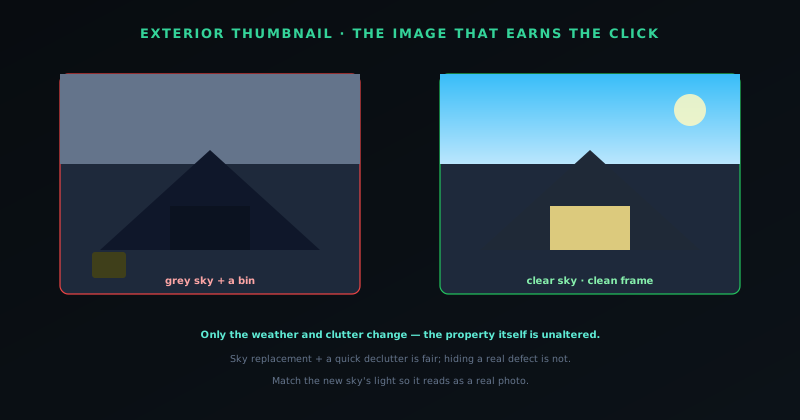
A flat grey sky makes even a beautiful exterior look dreary, and since you cannot always shoot on a perfect day, replacing a dull sky with a clear blue one is a standard, accepted real-estate edit that makes kerb-appeal shots far more inviting. The technique is a background-removal problem applied to the sky: separate the sky from the building and landscape, then composite in a better sky, matching the lighting so it looks natural rather than pasted on. Done well, it makes the exterior look like it was shot on the kind of day buyers imagine moving in on.
The honesty consideration for sky replacement is widely understood in the industry: changing the weather is generally accepted as long as it does not misrepresent the property itself — the house, the yard, the surroundings — which it does not, since only the sky changes. The line to hold is matching the new sky's lighting to the actual photo so it looks plausible, and not using the sky edit to obscure something about the property. Beyond the sky, modest exterior cleanups — removing a stray bin or a car, tidying the frame — follow the same decluttering logic. The exterior shot is often the thumbnail that earns the click, so the small investment in a clean, bright exterior with a good sky pays off directly in how many buyers open the listing.
Light virtual staging for empty rooms
Empty rooms are hard for buyers to evaluate, because most people struggle to judge scale and imagine furniture in a bare space, which is why staged homes consistently show better. Virtual staging — digitally placing furniture into an empty room — gives buyers that reference without the cost of physically staging the property, and lightweight versions of it are achievable with compositing tools that place furniture into the room while matching perspective and lighting. Even a simple stage — a sofa and a rug in a living room, a bed in a bedroom — transforms how a buyer reads the space.
Virtual staging carries the clearest disclosure obligation of any edit here: a virtually staged photo should be labelled as virtually staged, because the furniture is not part of the property, and many jurisdictions and listing services require this disclosure. Done honestly — disclosed, with realistic furniture placed to show the room's potential rather than to hide its flaws — virtual staging is a legitimate, valuable tool that helps buyers picture the space. The key is that it informs rather than deceives: it shows how the room could be used, with clear labelling that the staging is digital. Holding that line keeps virtual staging both useful and above board.
The honesty line, stated plainly
Because real-estate photo editing sits closer to the misrepresentation line than most image work, it is worth stating the principle plainly: edits should make the property look its genuine best, never make it look like something it is not. Decluttering temporary distractions, brightening to true-to-life lighting, replacing a dull sky, and clearly disclosed virtual staging all present the property truthfully. Hiding permanent defects, faking a view, altering the actual structure or condition, or staging without disclosure cross into misrepresentation that can mislead buyers and create real liability.
The practical test is simple: would a buyer who saw the property in person feel the photos were honest? A clean counter, a bright room, a blue sky, and disclosed staging all pass that test, because the property itself is unchanged and the buyer's experience matches the listing. Concealed damage or undisclosed alterations fail it, because the buyer arrives to something different from what they were shown. Keeping every edit on the right side of that test is what lets an agent use these tools confidently — they make listings perform better while keeping them honest, which is the only sustainable way to use them given the trust and the legal stakes involved in selling someone a home.
Doing it all free, on-device, at volume
The reason to do this work in a free, on-device tool rather than paying a per-photo editing service is the economics of real-estate volume: an agent processes many photos across many listings, and a per-image fee or a subscription adds up to a real cost, while a free local tool does not. The NSS Background Remover at bgremover.novusstreamsolutions.com covers the core edits — object removal and inpainting for decluttering, AI enhancement for brightening and colour, background and sky replacement for exteriors, and lifestyle compositing for light staging — all in the browser, with no upload and no watermark on the output.
The on-device, no-upload property matters for real estate beyond cost, because listing photos sometimes show occupied homes, and the owners reasonably expect their interiors not to be sent to unknown servers. Processing locally keeps those images private, which is the responsible default when the photos depict someone's home. And because the tool runs in the browser with no per-image limit, an agent can process an entire listing's photo set in one session, applying the same brightening and cleanup approach across the set for consistency. The batch-friendly, free, private workflow is what makes these professional edits practical at the volume real estate actually demands, rather than a per-photo luxury.
Window pulls and the bright-windows look
One of the most recognizable marks of professional real-estate photography is the "window pull" — interior shots where the view through the windows is visible and bright rather than blown out to white. Cameras struggle with the huge brightness difference between a room's interior and the daylight outside, so a single exposure either shows the room well and blows out the windows, or shows the view and leaves the room dark. Correcting this — recovering a visible, appealing view through the windows while keeping the room properly lit — makes an interior look airy and well-shot, and it is one of the edits that most distinguishes a polished listing from a snapshot.
The honest version of a window pull recovers a real view that the windows actually have, not a fabricated one, which keeps the edit truthful while making the photo far more inviting. A room that shows a bright garden or a city view through its windows reads as open and desirable; the same room with blown-white windows reads as flat and amateur. AI enhancement that balances the interior and exterior exposure, or compositing a correctly-exposed window view back into a well-lit room shot, achieves the look. As with all these edits, the line is truthfulness: recovering the genuine view and the room's real light is fair, while inventing a view the property does not have is not. Done honestly, the bright-windows look is a high-impact, widely-expected edit that makes interiors feel professionally captured.
Straightening verticals and fixing wide-angle distortion
Real-estate interiors are usually shot with wide-angle lenses to fit a whole room in frame, and wide angles introduce distortion — walls that lean, verticals that converge, and a stretched look near the edges — that makes a space feel subtly wrong even when a viewer cannot name why. Correcting this so that vertical lines are actually vertical and the room's proportions look natural is a quiet but important edit, because straight walls and true verticals read as a well-composed, professional photo, while leaning walls read as a casual snapshot. The fix is geometric: straighten the verticals and correct the lens distortion so the room sits square.
There is an honesty dimension here too, because wide-angle lenses can also make rooms look larger than they are, and pushing that effect to misrepresent a small room's size crosses the line. The fair use of distortion correction is to make the photo look natural and correctly proportioned — the way the room actually feels to stand in — rather than to exaggerate its size. A room shot at a sensible focal length and corrected for distortion gives the buyer an accurate sense of the space; one shot ultra-wide and left distorted to look cavernous sets up a disappointing in-person visit. Straightening verticals and correcting distortion for accuracy, not exaggeration, is what makes interiors look professional while keeping the sense of scale honest, which protects both the listing's appeal and its credibility.
Twilight and dusk exterior shots
A twilight exterior — the house photographed at dusk with warm interior lights glowing and a deep blue sky — is one of the most striking images in real-estate marketing, and it is often used as the hero shot for higher-end listings because it makes a property look warm, inviting, and aspirational. Capturing a true twilight shot requires being on-site at the brief golden window around sunset, which is not always practical, so a common edit is to convert a daytime exterior into a convincing dusk image: deepening the sky to twilight blue, warming and brightening the windows to suggest lights on inside, and adjusting the overall light to the softer feel of evening.
The honesty consideration for a twilight conversion is similar to sky replacement: changing the time of day and the lighting mood is generally accepted as a stylistic edit because it does not misrepresent the property itself, only the conditions it is shown in. The line to hold is that the house, its features, and its surroundings remain accurate — only the time of day and the ambient light change. A convincing twilight edit matches the lighting consistently so it looks like a real dusk photograph rather than an obvious manipulation, which is what makes it effective. Used as the hero image for a listing that warrants it, a well-executed twilight shot is one of the highest-impact single images available, turning an ordinary daytime exterior into the aspirational thumbnail that earns the click, all while keeping the property itself truthfully represented.
A simple per-listing editing checklist
A repeatable checklist keeps a listing's photos consistent and ensures the high-impact edits are not missed under time pressure. For each listing: start with the exterior thumbnail shot, decluttering the frame and replacing a dull sky if needed, since this is the image that earns the click. Then move through the interiors, brightening each to true-to-life lighting and decluttering distractions on surfaces and floors. For empty rooms, decide whether light virtual staging will help a buyer read the space, and if so, stage it and label it as virtually staged. Finally, review the whole set for consistency — similar brightness and colour treatment across rooms — so the listing reads as one coherent property.
Running the same checklist on every listing is what turns photo editing from an ad-hoc scramble into a reliable part of the workflow, and it is also what produces the visual consistency that makes a listing look professionally handled. The consistency is a byproduct of applying the same process to every set, the same way that consistent product photos come from a standardized process rather than per-image decisions. An agent who builds this checklist into their listing prep gets better-performing photos with less per-listing effort, because the decisions are made once and applied repeatedly. The tools handle the technical execution; the checklist ensures the right edits happen every time, honestly and consistently, which is what makes listing photos a dependable asset rather than a variable one.
Frequently asked questions
Quick answers to common questions about this topic.
Is it legal to edit real-estate listing photos?
Editing to present a property at its genuine best — decluttering temporary distractions, brightening to true-to-life lighting, replacing a dull sky — is standard and accepted. Hiding permanent defects or staging without disclosure can mislead buyers and create liability, so keep edits truthful and disclose virtual staging.
Do I have to disclose virtual staging?
Yes — a virtually staged photo should be clearly labelled as virtually staged, since the furniture is not part of the property, and many jurisdictions and listing services require this disclosure. Disclosed staging that shows a room's potential is legitimate; undisclosed staging is not.
Can I replace the sky in a real-estate photo?
Yes. Replacing a dull grey sky with a clear one is a widely accepted edit because it changes only the weather, not the property. Match the new sky's lighting to the photo so it looks natural, and do not use it to obscure anything about the property itself.
How can I edit listing photos for free without uploading them?
Use the NSS Background Remover at https://bgremover.novusstreamsolutions.com — decluttering, brightening, sky replacement, and light staging all run in your browser with no upload and no watermark, which keeps occupied homes' interiors private and the per-photo cost at zero.