2026 · Novus Stream Solutions (hub)About 13 min readNovus Stream Solutions
Building an email list from day one for a small store
Social followers are rented; an email list is owned. Here is the practical, day-one playbook for a small store to start collecting addresses, what to offer in exchange, and how to keep the list healthy and legal.
Contents
- 1.Overview
- 2.Why email beats every rented channel
- 3.Give people a reason to sign up
- 4.Where to put the form (and where not to)
- 5.The welcome email does the heavy lifting
- 6.Consent, permission, and the law
- 7.Deliverability: getting into the inbox
- 8.Quality over quantity, always
- 9.A simple sending rhythm you can sustain
- 10.Start before you feel ready
Overview
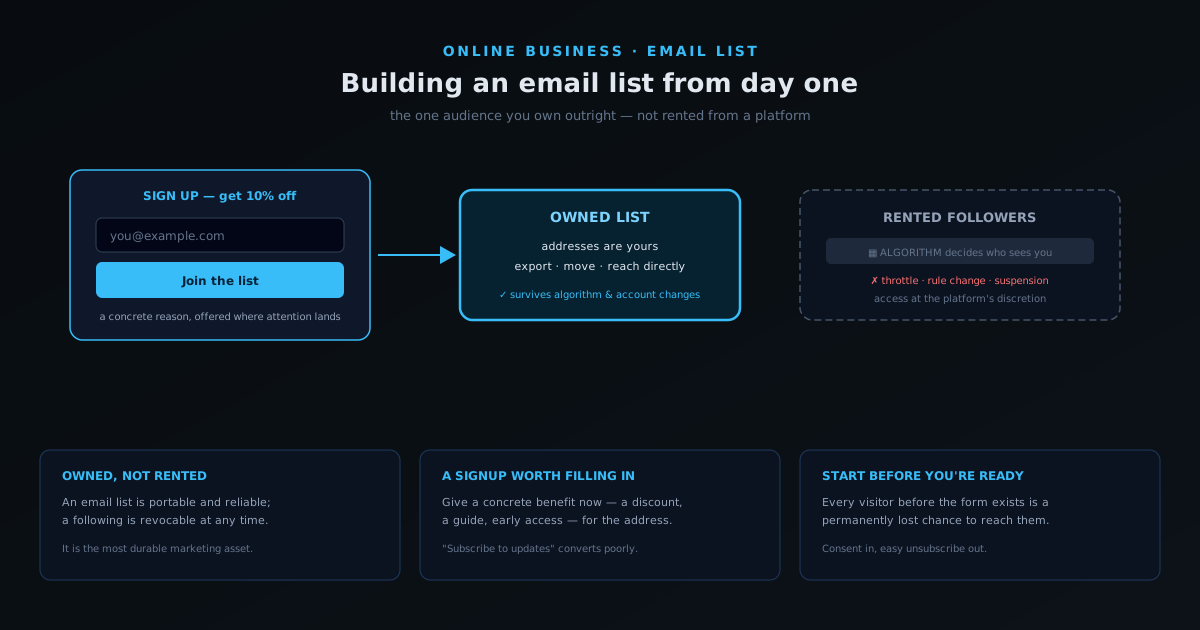
An email list is the only audience a small store fully owns. Every follower you gather on a social platform is rented from that platform: the algorithm decides how many of them see any given post, the rules can change overnight, and an account suspension can erase the whole audience in an afternoon. An email list, by contrast, is a file of addresses that belongs to you; you can export it, move it between providers, and reach every person on it directly, without an intermediary deciding who gets to see what. For a small store, that ownership is the difference between a marketing channel you control and one you merely borrow, which is why starting to collect addresses from the very first day is one of the highest-leverage habits you can build.
The mistake most small stores make is treating the list as something to start "later," once there is traffic worth capturing, by which point months of visitors have come, browsed, and left with no way to ever reach them again. Every visitor who arrives before you have a signup form is a permanently lost chance to build the audience. This guide is the day-one version: how to put a working signup in place immediately, what to offer in exchange for an address, what the first email should say, and the consent and deliverability basics that keep a young list healthy and legal. None of it requires scale or budget; it requires starting before you feel ready, because the cost of waiting is measured in the audience you never got to keep.
Why email beats every rented channel
The core argument for email is ownership, and ownership shows up in three concrete ways. First, reach: an email lands in an inbox, where it is seen far more reliably than a social post that an algorithm may show to a small fraction of your followers. Second, portability: if your email provider raises prices or changes terms, you export the list and move, carrying the whole audience with you, whereas a social following cannot be exported anywhere. Third, durability: platforms rise, fall, and ban accounts, but an email address keeps working regardless of which platform is currently fashionable. These properties make email the most resilient marketing asset a small business can build, which is why businesses that have been burned by an algorithm change or a lost account almost always say they wish they had built the list sooner.
Email also tends to convert better than social, for a structural reason: someone who hands over their address has made a deliberate choice to hear from you, which is a stronger signal of interest than a passive follow. That self-selected audience is more likely to open, read, and buy, so the list is not just larger in reach but warmer in intent. The combination (reliable reach to a self-selected, owned, portable audience) is why email consistently returns more per subscriber than rented channels return per follower. For the comparison in full, including where social still earns its place, see Email vs social media for owning your audience; the short version is that social is excellent for discovery and email is excellent for the relationship, and a small store wants both, with the owned list as the asset it is building toward.
Give people a reason to sign up
A signup form that says only "subscribe to our newsletter" converts poorly, because it asks for something (an address, and the future attention that comes with it) while offering nothing concrete in return. The fix is to give people a specific, immediate reason to sign up: an exchange where they get something of clear value for their address. For a store, the most common and effective offer is a first-order discount: a small percentage or fixed amount off the first purchase in exchange for joining the list. It is simple, it is valuable to someone already considering a purchase, and it ties the signup directly to a sale, which means the list grows with people who were close to buying anyway.
A discount is not the only option, and for stores where margins are thin or discounting is off-brand, a content offer can work better: a short useful guide, a checklist, a lookbook, early access to new products, or a heads-up on restocks and drops. The principle is the same regardless of the specific offer: name a concrete benefit the visitor receives now, in exchange for the address. Vague promises of "updates" or "news" do not motivate a signup; a specific thing they want does. The best offer is the one that both matches what your particular visitors value and attracts people genuinely interested in what you sell, so the list fills with future customers rather than discount-hunters who unsubscribe the moment the coupon is spent.
Where to put the form (and where not to)
Placement determines how many of your visitors ever see the offer, so a signup form should appear where attention naturally lands without ambushing the visit. A persistent, unobtrusive spot (an inline form in the footer, a section on the homepage, a field in the checkout flow) captures the steady stream of people who scroll and browse. A well-timed popup can significantly lift signups, but only if it is used with restraint: triggered after the visitor has spent some time or shown intent (such as moving toward leaving), easy to dismiss, and not repeated on every page load. A popup that blocks the content the instant someone arrives, or that reappears aggressively, costs more in goodwill and bounce than it gains in addresses.
The places not to put a form are anywhere that interrupts a task the visitor is trying to complete: over the product they are reading about, in the middle of checkout, or as an obstacle to seeing prices. The goal is to make signing up easy and inviting at the moments people are receptive, not to extract addresses by friction. A good rule is that the form should feel like an offer the visitor is glad to see, presented when they have already gotten some value from the page, rather than a toll gate they must pass. Stores that respect this balance build lists that grow steadily and convert well; stores that treat every visitor as a popup target build lists padded with people who signed up to make the popup go away and never engage again.
The welcome email does the heavy lifting
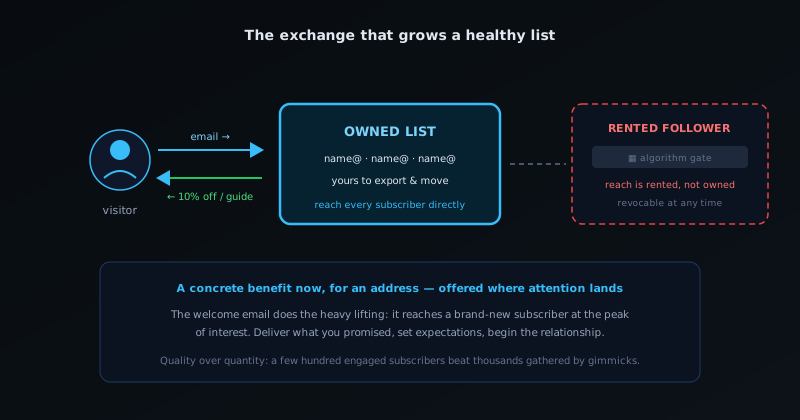
The single most valuable email you will send is the welcome (the message that goes out the moment someone joins), because it reaches a brand-new subscriber at the peak of their interest, when they have just chosen to hear from you and your brand is fresh in their mind. Open rates on welcome emails are far higher than on any later message, which makes this the email worth getting right above all others. At minimum, it should deliver whatever you promised at signup (the discount code, the guide, the early-access link), thank the person, and set a brief expectation of what they will receive and how often, so the relationship starts with a kept promise rather than silence.
A welcome email is also the natural place to make a first, low-pressure introduction: a sentence or two on who you are and what you make, a link to your best products or your story, and a gentle nudge toward a first purchase if a discount is part of the offer. The tone should match your brand and feel like a person wrote it, because this message sets the expectation for every email that follows. What it should not be is a hard sell or a wall of links; its job is to confirm the subscriber made a good decision and to begin a relationship, not to extract a sale in the first thirty seconds. Get the welcome right and a meaningful share of new subscribers take a first action from it; the broader sequence that can follow it is covered in The email automation flows every small store needs.
Consent, permission, and the law
Email marketing operates under real laws, and a small store needs to respect them from day one, not as legal theater but because the rules largely encode what makes a list healthy anyway. The core requirements across the major regimes are consistent: people must genuinely opt in rather than be added without their knowledge, every marketing email must include a working unsubscribe that is honored promptly, and you must not disguise who the email is from or what it is about. Buying lists, scraping addresses, or adding customers who never agreed to marketing violates these rules and, just as importantly, poisons your deliverability by sending mail to people who never asked for it and will mark it as spam.
The practical posture is straightforward: collect addresses only with clear consent, make the unsubscribe link easy to find and instant to act on, and never treat an unsubscribe as a problem to obstruct. A person who leaves cleanly is far better than one who stays and marks you as spam, because spam complaints damage your sender reputation and your reach to everyone else on the list. Treating consent and easy exit as features rather than obstacles keeps you on the right side of the law and builds the kind of list that actually performs: one made of people who want to be there. The specifics vary by jurisdiction, so confirm the rules that apply where your customers are, but the universal principles of genuine opt-in, honest identification, and honored unsubscribes are the foundation everywhere.
Deliverability: getting into the inbox
A list is only as valuable as your ability to actually reach the inbox, and deliverability (whether your email lands in the inbox rather than the spam folder or nowhere) depends on your sender reputation, which you build through consistent good practice. The technical foundation is authentication: configuring the records (SPF, DKIM, and DMARC) that prove your emails genuinely come from your domain, which most email providers walk you through and which mailbox providers increasingly require. Skipping authentication is one of the fastest ways to land in spam, so it is worth doing correctly once at the start rather than wondering later why open rates are mysteriously low.
Beyond the technical setup, deliverability is earned through behavior: sending to people who opted in, removing addresses that consistently bounce or never engage, keeping spam complaints low by sending what you promised at the cadence you promised, and avoiding the patterns (all-caps subject lines, spammy phrasing, misleading headers) that trip filters. A clean, engaged list that you mail consistently builds a strong reputation; a list padded with stale or non-consenting addresses drags reputation down for everyone on it. This is another reason the consent-first, quality-over-quantity approach pays off: the same practices that keep you legal and respectful also keep you in the inbox, where a marketing email can do any good at all.
Quality over quantity, always
It is tempting to chase a big subscriber number, but list size is a vanity metric if the addresses do not belong to people who want to hear from you. A list of a few hundred engaged subscribers who open, read, and buy is worth far more than a list of thousands assembled through gimmicks, giveaways unrelated to your products, or aggressive popups, because the engaged small list converts, while the padded large one drags down your open rates, your deliverability, and your sense of how the business is actually doing. The metrics that matter are engagement and conversion, not raw count, and those follow from how the list was built.
This is why the methods you use to grow the list shape its value more than its size does. Offering a discount or content that attracts people genuinely interested in what you sell builds a list of likely customers; running a giveaway for a generic prize builds a list of people who wanted the prize and have no interest in you. The first list grows slower and performs; the second grows fast and decays. For a small store, the discipline is to optimize for the right subscribers rather than the most subscribers, accepting slower growth in exchange for a list that is an actual asset. A focus on quality compounds: an engaged list refers others, sustains a strong sender reputation, and provides reliable revenue, while a padded list demands constant cleanup and never delivers the returns its size seems to promise.
A simple sending rhythm you can sustain
Having a list is only useful if you actually email it, and the most common failure after building a list is then neglecting it: letting months pass between sends, so that when an email finally goes out, subscribers have forgotten who you are and mark it as spam. A list you never mail decays, because the relationship that consent created goes cold. The fix is a sending rhythm you can genuinely sustain: a regular cadence, even a modest one, that keeps you present in subscribers' inboxes without overwhelming them. Consistency matters more than frequency (a reliable monthly email beats a flurry followed by silence), because it keeps the relationship warm and your sender reputation steady.
What to send is less mysterious than it seems: new products and restocks, genuinely useful content related to what you sell, behind-the-scenes notes that build the relationship, and occasional offers. The mix should lean toward value rather than constant selling, because a list that only ever receives sales pitches trains subscribers to ignore or unsubscribe, while a list that regularly receives something worth opening stays engaged and buys when you do make an offer. Setting a cadence you can actually keep (and treating it as a commitment to the people who trusted you with their address) is what turns the list from a static file into a living channel. The discipline of a sustainable content rhythm applies here as much as anywhere; the operating side of keeping that rhythm is covered in The cadence behind a site you can trust.
Start before you feel ready
The throughline of building an email list well is that the best time to start is the day the store opens, and the second best time is today, because every day without a signup form is a day of visitors lost forever. You do not need traffic, a big offer, or a polished sequence to begin; you need a working form, a concrete reason to sign up, and a welcome email that keeps its promise. Everything else (the automation flows, the regular sends, the segmentation) can be added as the list grows, but none of it can recover the addresses you failed to collect while waiting to feel ready. The asymmetry is stark: starting early costs almost nothing and compounds, while starting late forfeits an audience that can never be reclaimed.
Treating the email list as a foundational asset rather than a marketing afterthought is the mindset shift that pays off over the life of a business. The list is the audience you own outright, the channel that survives platform changes, and the most reliable engine for both first customers and repeat sales, but only if you build it from the beginning, grow it with quality over quantity, respect the consent and deliverability rules that keep it healthy, and actually use it. A small store that starts collecting addresses on day one, with a real offer and a kept promise, is building the single most durable marketing asset available to it, one address at a time, while its competitors are still telling themselves they will get to it later.
Frequently asked questions
Quick answers to common questions about this topic.
When should a small store start building an email list?
On day one. Every visitor who arrives before you have a signup form is a permanently lost chance to reach them again. You do not need traffic or a polished sequence to start: just a working form, a concrete reason to sign up, and a welcome email that keeps its promise.
What should I offer to get people to sign up?
Give a specific, immediate benefit in exchange for the address, most commonly a first-order discount, or a useful guide, early access, or restock alerts. Vague promises of "updates" convert poorly; a concrete thing the visitor wants now converts well and attracts likely customers.
Is it legal to email people who signed up?
Yes, if they genuinely opted in, every email has a working unsubscribe you honor promptly, and you do not disguise who the email is from. Never buy or scrape lists. The exact rules vary by jurisdiction, so confirm what applies where your customers are.
Is a bigger email list always better?
No. A few hundred engaged subscribers who open and buy are worth more than thousands gathered through gimmicks. List size is a vanity metric; engagement and conversion are what matter, and they follow from building the list with offers that attract genuinely interested people.
Related troubleshooting
Was this page helpful?
Your answer stays in this browser, it is not sent anywhere and no account or cookie is involved.