2026 · Novus Stream Solutions (hub)About 12 min readNovus Stream Solutions
Email vs social media for owning your audience
Social media gives you reach you do not own; email gives you an audience you do. They are not rivals so much as a funnel: social for discovery, email for the relationship. Here is the honest comparison and how to use both.
Contents
Overview
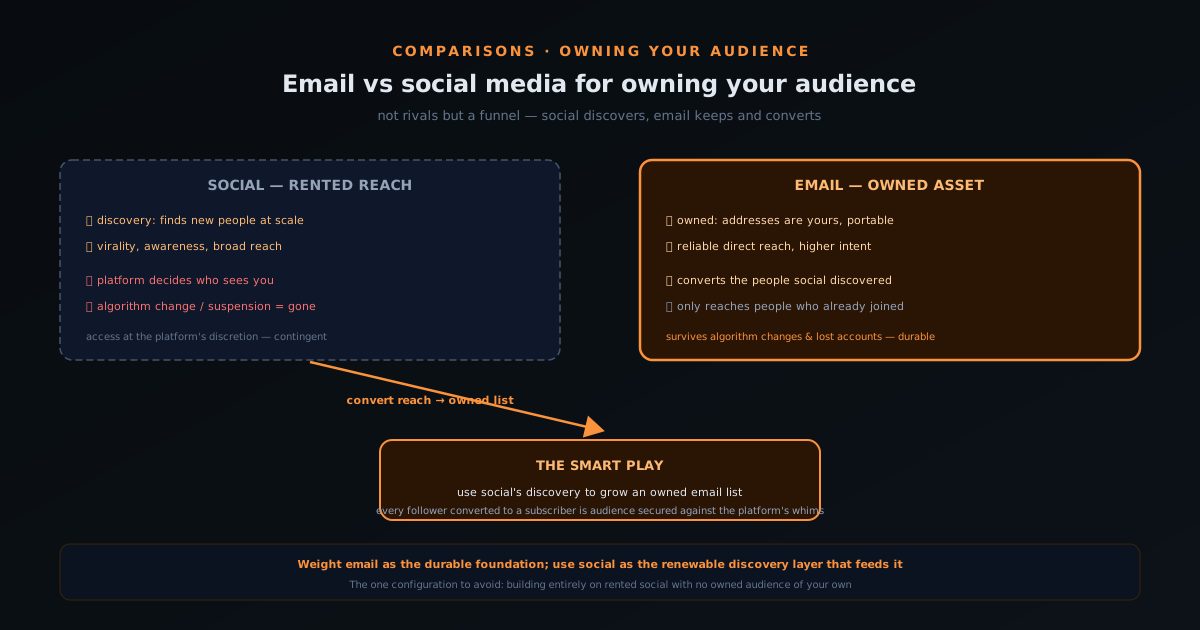
The question of whether to build an audience on email or social media is often framed as a rivalry, but the more useful framing is that they are different kinds of assets doing different jobs, and the distinction that matters most is ownership: an email list is an audience you own outright, while a social media following is reach you rent from a platform. This single difference (owned versus rented) drives most of the practical contrasts between the two and should shape how a business invests in each. An owned audience is one you control and can reach directly regardless of any platform; a rented audience is one whose access is mediated by a platform that can change the terms, the reach, or your access entirely at any time. Understanding this is the foundation for using both channels wisely rather than over-investing in the one that feels bigger while neglecting the one you actually own.
The honest comparison this guide makes is not that one channel is good and the other bad (both have genuine strengths and a real place), but that they play different roles, and the common mistake is to build an audience entirely on rented social platforms while neglecting the owned email asset, leaving the business exposed to risks it does not control. Social media is excellent at what it does (discovery, reach, virality), and email is excellent at what it does (direct, owned, reliable relationship), and the smartest strategy uses each for its strength while recognizing that only one of them is an asset you truly own. The guide covers what each channel is genuinely good at, the risks of building only on rented ground, and why the most resilient approach treats social as a discovery engine that feeds an owned email list, combining the reach of the rented with the ownership of the owned.
Owned versus rented, precisely
The owned-versus-rented distinction is worth stating precisely because so much follows from it. When you own an audience, as with an email list, you hold the actual connection: you have the addresses, you can export them, you can reach every person directly, and no intermediary stands between you and them or decides whether your message gets through. When you rent an audience, as with social media followers, the platform holds the connection: it decides how many of your followers see any post, it owns the relationship data, it can change its algorithm or rules, and it can suspend or ban your account, taking the entire audience with it. You have followers in name, but your access to them is entirely at the platform's discretion.
This distinction is not abstract; it has happened to countless businesses and creators who built large social followings and then lost their reach overnight to an algorithm change that throttled their posts, or lost their entire audience to an account suspension, with no recourse because they never owned the connection in the first place. The follower count looked like an asset, but it was a number on someone else's platform, revocable at will. An email list, by contrast, survives all of this: if an email provider raises prices or changes terms, you export the list and move, carrying the audience intact, because the addresses are yours. The owned-versus-rented frame thus translates directly into resilience versus fragility (the owned audience is durable and portable, the rented one is contingent and revocable), and this is the single most important consideration in how a business should weight its audience-building investment.
What email is genuinely good at
Email's strengths are the mirror image of social's, which is exactly why the two complement each other rather than substitute. Email's core strength is the owned, direct relationship: a message in an inbox reaches the person reliably, without an algorithm deciding whether to show it, and it reaches someone who deliberately chose to hear from you, which makes them a warmer, higher-intent audience than passive social followers. This combination (reliable direct reach to a self-selected audience you own) is why email consistently converts better than social, delivering a higher return per person because the audience is both reachable on demand and primed to act. Where social is broad and shallow, email is narrower and deeper, and the depth is where conversion and relationship happen.
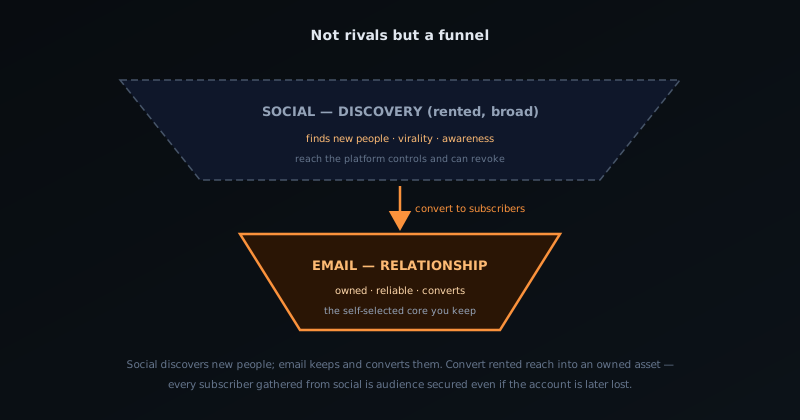
Email is also the channel built for the relationship and the transaction rather than discovery: it is where you nurture the people who found you, deepen the connection over time, and drive the conversions and repeat purchases that sustain a business, through the direct, owned channel that nothing mediates. Its limitation is the flip side of its strength: email can only reach people who already gave you their address, so it does not find new people the way social does; it deepens relationships with people you already have rather than discovering new ones. This is precisely why email is not a replacement for social but a complement: social finds the people, email keeps and converts them. Email is the bottom-of-funnel, relationship-and-conversion channel, owned and reliable, just as social is the top-of-funnel, discovery channel, rented and broad. A business needs both functions, which is the basis for using them together.
The risk of building only on rented ground
The central danger this comparison warns against is building a business entirely on rented social platforms while never developing an owned audience, because it leaves the business's entire reach contingent on platforms it does not control and cannot depend on. A business whose only connection to its audience runs through social media is exposed to every risk the platform poses: an algorithm change that slashes organic reach (which has happened repeatedly and dramatically), a policy shift that disadvantages the business, an account suspension that erases the audience, or the platform's decline as audiences move elsewhere. In each case, the business that owned no audience of its own has no fallback: the reach it spent years building evaporates, and there is no list to fall back on because it was never built.
This risk is not hypothetical or rare; it is one of the most common and devastating things that happens to businesses and creators who over-invested in rented reach, and the pattern is consistent: a large following that felt like security right up until the platform changed the terms and the reach or the account disappeared. The lesson those businesses learn the hard way is that rented reach, however large, is not a substitute for an owned audience, because the largest social following is worth nothing the moment the platform decides to throttle or remove it, while even a modest owned email list keeps working regardless. The prudent posture is to treat social reach as valuable but contingent (to use it without depending on it) and to ensure that the business is building an owned audience in parallel, so that its survival does not rest entirely on platforms whose decisions it cannot influence and whose terms it cannot control. Diversifying off purely rented ground is risk management as much as growth strategy.
You own the data, not just the addresses
The ownership email provides extends beyond the addresses themselves to the relationship data and the direct feedback that a rented platform keeps for itself, which is an underappreciated part of why the owned channel is more valuable. With an email list, you can see who opens, who clicks, and who buys, segment your audience by their behavior, and learn directly from how subscribers respond, all without an intermediary deciding what data you are allowed to see. On a social platform, the equivalent insight is mediated and partial, surfaced only as the platform chooses, because the relationship and its data belong to the platform rather than to you.
Owning the data compounds the strategic advantage of the owned audience, because it lets you understand and serve your audience in ways a rented channel does not permit. You can tailor what you send based on what subscribers actually do, identify your most engaged people, and build the relationship on real knowledge of it, turning the list into not just a reachable audience but an understood one. This is the deeper sense in which email is owned and social is rented: not only can the platform revoke your reach, it also stands between you and any real understanding of your audience, whereas the email relationship (addresses and data alike) is yours to learn from and act on directly.
Owning the data also future-proofs the relationship against the platform changes that periodically reshape social media, because the understanding you have built of your email audience is yours regardless of what any platform does. A business that has learned its audience through its own list (who engages, what they respond to, what they buy) carries that knowledge through any disruption, while a business that depended on a platform's analytics loses both the audience and the understanding of it when the terms change. This is the compounding value of owned data: it accumulates into a durable understanding of the audience that no external party can revoke, which is as much a part of the owned-versus-rented distinction as the addresses themselves. The owned list is an asset not only because you can reach it, but because you can keep learning from it on your own terms.
How to weight your investment
Given that both channels have roles, the practical question becomes how to weight investment between them, and the answer follows from the owned-versus-rented logic: invest in social for its discovery value, but always with the goal of building the owned email asset, and weight toward email as the durable foundation while using social as the renewable discovery layer on top. This does not mean abandoning social (its discovery power is genuinely valuable and hard to replace), but it means not mistaking social reach for the secure asset, and ensuring that effort on social is connected to the email-building goal rather than being an end in itself. The business that pours everything into social follower counts while neglecting its list is optimizing the rented metric; the business that uses social to grow an owned list is building the durable asset while still capturing the discovery.
The right specific weighting varies by business (a business dependent on constant new-customer discovery leans harder on social's top-of-funnel power, while a business focused on deepening relationships and repeat purchases leans harder on email), but the principle holds across them: treat email as the owned foundation worth protecting and growing, and treat social as the powerful but rented discovery channel that should feed it. The error to avoid at all costs is building entirely on rented ground with no owned audience, because that is the configuration that leaves a business one algorithm change or account suspension away from losing its reach. The resilient configuration always includes a growing owned audience, fed by whatever discovery channels (social prominent among them) the business uses. Weighted this way (social for discovery feeding an owned email foundation) a business captures the strengths of both while owning the asset that determines its independence from platforms it cannot control, which is the durable answer to the email-versus-social question.
Frequently asked questions
Quick answers to common questions about this topic.
Is email or social media better for building an audience?
They do different jobs. Social media is rented reach that excels at discovery: finding new people. Email is an owned audience that excels at the relationship and conversion. The smart strategy is not to choose but to use social to find people and convert them into an owned email list.
Why is a social following called "rented"?
Because the platform holds the connection. It decides how many followers see your posts, owns the relationship data, and can change its algorithm or suspend your account, taking the audience with it. An email list is "owned": you hold the addresses, can export them, and reach people directly.
What is the risk of building only on social media?
Your entire reach depends on platforms you do not control. An algorithm change can slash your organic reach, or an account suspension can erase the audience overnight, with no fallback if you never built an owned list. It has happened to countless businesses: rented reach is contingent, not secure.
How should I split effort between email and social?
Use social for its discovery strength but always to build the owned email list, weighting email as the durable foundation. Do not mistake follower counts for a secure asset. The one configuration to avoid is building entirely on rented social with no owned audience of your own.
Related troubleshooting
Was this page helpful?
Your answer stays in this browser, it is not sent anywhere and no account or cookie is involved.