Novus Visualizers
Picking the perfect song (section) for your visualizer
The track you feed the analyzer decides how good the visual can be. What makes a section reactive (clear beats, dynamic range, defined frequency content) and how to choose the part of your song that will look best.
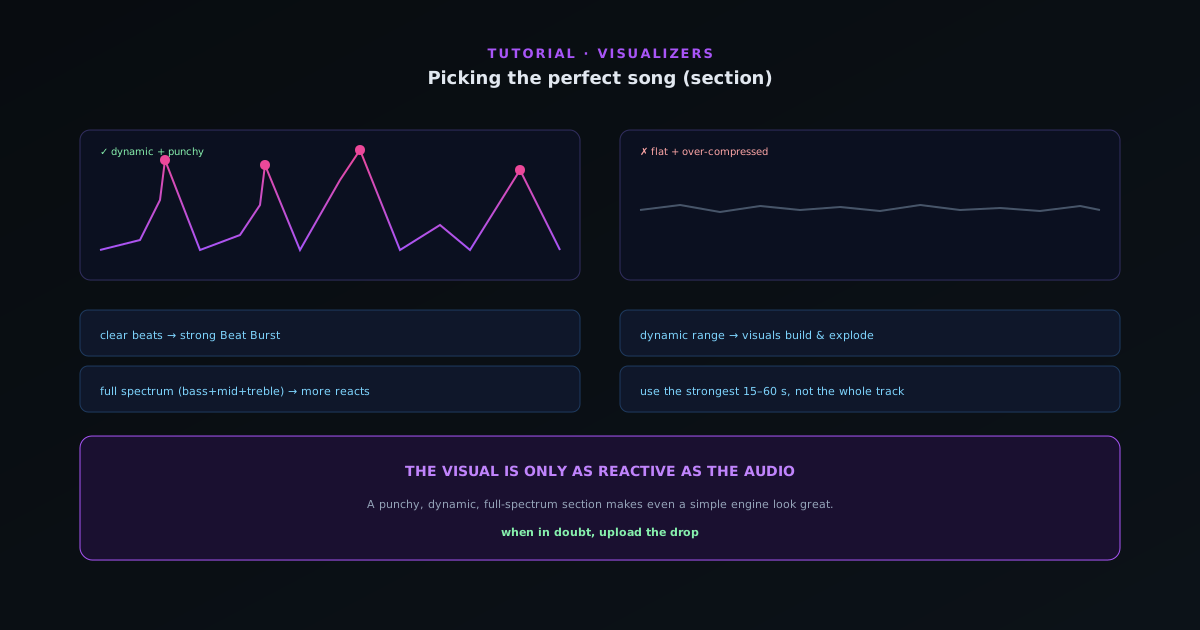
Novus Visualizers reacts to whatever audio you give it, so the single biggest factor in how good your visual looks is which track, and which part of it, you upload. A flat, compressed section produces flat motion; a dynamic, beat-driven one produces dynamic motion. This guide is about choosing well.
Contents
- 1
1. Clear beats beat ambient washes
The analyzer detects BPM and beat onsets to drive Beat Burst. A track with clear, punchy transients (a defined kick and snare) gives it obvious beats to lock onto, so the motion pulses with the rhythm. Ambient, beatless, or heavily reverbed material gives the detector less to work with, so the motion drifts rather than hits. If your track is ambient, that is fine; just expect flowing motion rather than punchy reactions.
- Punchy transients (kick/snare) → strong Beat Burst.
- Ambient/beatless → flowing, not punchy, motion.
- 2
2. Dynamic range gives the visual somewhere to go
Reactivity is about contrast: quiet parts and loud parts. A track that is loud and compressed from start to finish (everything at maximum) leaves the visuals nowhere to build, because the RMS loudness never changes. A section with a quiet intro and a bigger drop lets the visual breathe and then explode. Pick the part of your song with the most dynamic movement.
- Contrast (quiet → loud) drives dynamic visuals.
- Over-compressed, always-loud material looks flat.
- 3
3. Defined frequencies light up more of the engine
The 32-band FFT splits sound into bass, mid, and treble, and different visual elements react to different bands. A track with content across the spectrum (deep bass, present mids, crisp highs) lights up more of the engine than a track that lives only in the low-mids. A bright hi-hat or a sub-bass line gives the treble- and bass-driven elements something to react to.
- Full-spectrum content reacts across more elements.
- Bass + mids + crisp highs all drive different motion.
Dynamic range is the hidden criterion; flat loudness gives the visualizer nothing to react to. - 4
4. Choose the section, not just the song
You rarely need the whole track. For most visuals (especially short-form) the best move is to use the strongest 15–60 seconds: the drop, the hook, or the most dynamic verse. Trim to that section before you build, so the analyzer (and your visual) is working with your track’s best material rather than a slow intro.
- Use the strongest 15–60 s (drop / hook).
- Trim before building so the analyzer gets the best part.
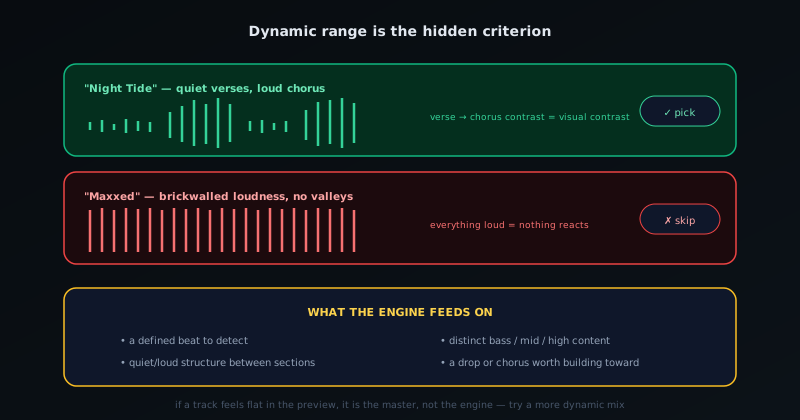
Feed it your best 30 seconds
If you remember one thing: the visual is only as reactive as the audio. A punchy, dynamic, full-spectrum section makes even a simple engine look great, while a flat, compressed wash makes a complex one look dull. When in doubt, upload the drop.
Frequently asked questions
Quick answers to common questions about this topic.
Which part of a song works best for a short visualizer?
Pick a section with a clear hook or drop and strong dynamics (the chorus or a beat-heavy moment) so the visuals have energy to react to. For shorts, the most recognizable 15–30 seconds usually wins.
Does the song choice affect the visuals?
Yes. Because the visuals react to the audio, a track with clear rhythm and dynamic range produces more dramatic motion than a flat, compressed one.
Related workflow
A track to a release-ready visualizer, per platform
Render the visual once, then produce the platform masters from it, instead of re-rendering the whole video for every aspect ratio.
- Render the beat-synced videoNovus Visualizers: Pick the engine and mode against your actual track; the analysis is done on your audio, not on a preset preview.
- Trim or upscale the exportNSS Background Remover: The video utilities handle the tidy-up pass so the render does not have to be repeated to fix ten seconds of it.
- Produce the per-platform mastersNovus Convert: Each destination wants a different container and bitrate; converting the finished render is far cheaper than re-rendering it.
Related troubleshooting
Was this page helpful?
Your answer stays in this browser, it is not sent anywhere and no account or cookie is involved.