Novus Visualizers
Best visualizer styles by genre
Which engines and modes tend to fit which genres (from hip-hop and EDM to lo-fi, rock, ambient, and classical) so you can pick an engine and mode that already feels right for your track.
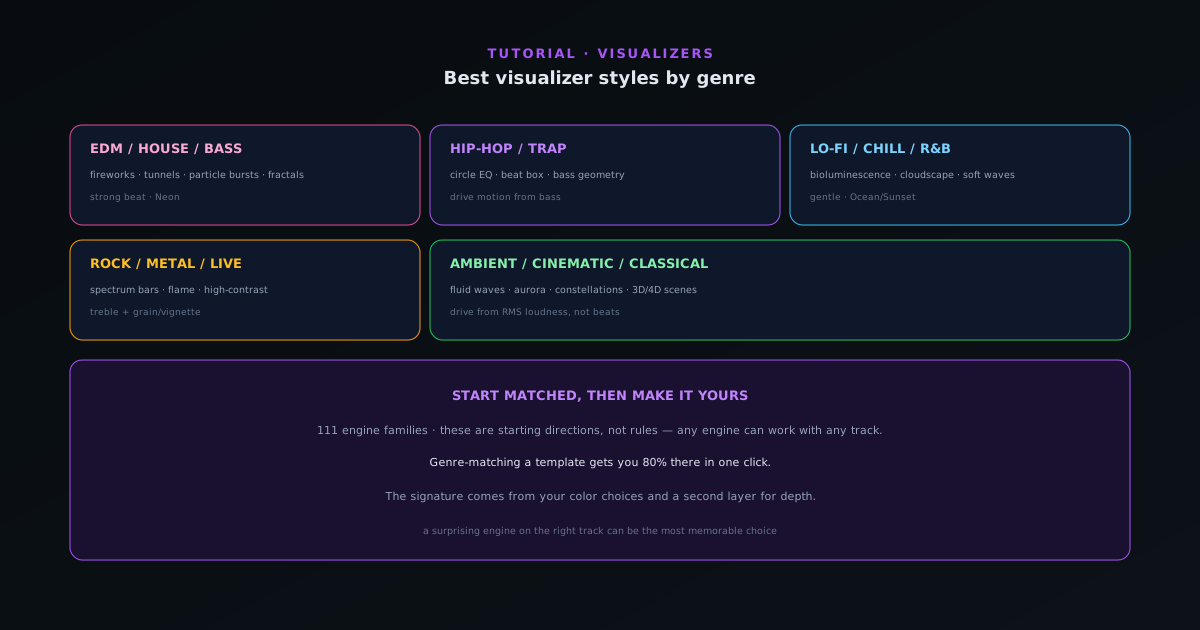
With ten engines and 60 modes to choose from, the hardest part is often just picking a starting point. These are not rules (any engine can work with any track) but matching the style to the genre gets you to "this feels right" faster. Pick a direction here, then customize.
Contents
- 1
EDM, house & bass music
High-energy electronic music wants engines that hit hard on the beat and fill the frame: Particles in Fountain Burst or Orbit Swarm, the Tunnel engine in Warp Field or Particle Vortex, and Radial in Sunburst or Pulse Orb. Lean into strong Beat Burst, glow, and pulse so the drops land. Bright, saturated color themes (Neon) match the energy.
- Particles · Tunnel (Warp Field / Particle Vortex) · Radial Sunburst.
- Strong beat reactivity + Neon colors.
- 2
Hip-hop & trap
Beat-forward genres look great with engines that emphasize the kick and the bass: the Bars engine in Center Mirror, Radial Bars, or Piano/Step Grid, and Radial in Pulse Orb or Concentric Rings. Bind the biggest motion to bass so the 808s drive the visual, and keep a cleaner, bolder look that does not fight a logo or title.
- Bars (Center Mirror / Radial Bars) · Radial Pulse Orb.
- Drive the main motion from bass.
- 3
Lo-fi, chill & R&B
Relaxed genres suit calm, continuous, atmospheric engines: Bloom in Ink Diffusion or Ripple Blossom, a gentle Waveform (Line or Filled), soft Particles (Dust Storm, Starfield), and a slow Radial Mandala. Use softer color themes (Ocean, Sunset), dial the beat reactivity back so it breathes rather than pulses, and let it loop hypnotically.
- Bloom · soft Waveform · Particles · slow Mandala.
- Gentle reactivity, soft color themes.
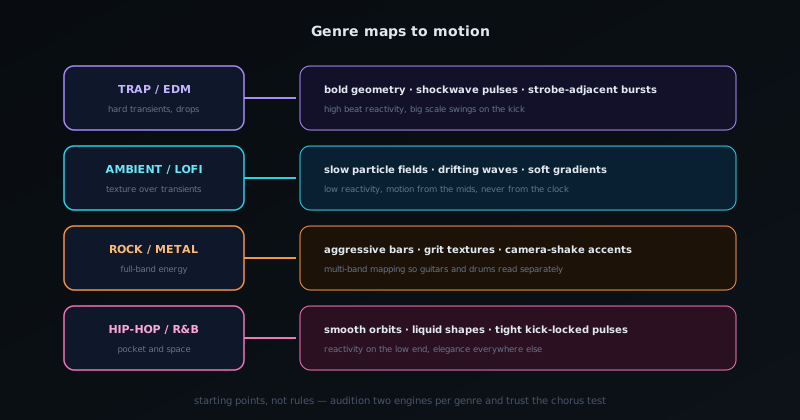
Genre maps to motion: heavy transients want bold reactions, ambient wants drift. - 4
Rock, metal & live bands
Guitar-driven music suits energetic but less "electronic" looks: the Bars engine in Linear Equalizer or Stacked Bands, the Spectrum engine in Line Spectrum or Frequency Ridge, and Trails Echo Streaks for grit. Treble-driven reactivity catches cymbals and guitar; a vignette and film grain add an analog feel that fits the genre.
- Bars (Linear Equalizer) · Spectrum · Trails Echo Streaks.
- Treble reactivity + grain/vignette.
- 5
Ambient, cinematic & classical
Beatless and orchestral music wants flowing, evolving engines: Waveform in Ribbon or 3D Surface, the Tunnel engine in Spectrum Tube or Waveform Tube, Particles Constellation, and Bloom Crystal Growth. Drive motion from the RMS loudness envelope rather than beats so the visual swells with the music’s dynamics, and let ordered layers add depth.
- Waveform 3D Surface · Tunnel tubes · Constellation · Crystal Growth.
- Drive from RMS loudness, not beats.
Start matched, then make it yours
Genre-matching an engine and mode gets you most of the way in one move, but the real signature comes from your color choices and a second layer for depth. Treat these as starting directions, not rules; a surprising engine on the right track can be the most memorable choice of all.
Frequently asked questions
Quick answers to common questions about this topic.
Which visualizer style suits my genre?
Match the engine to the music: smooth, warm styles for lo-fi and ambient; sharp, high-energy engines for EDM and hip-hop; classic spectrum or waveform looks for many genres. The tutorial maps styles to genres.
Can I customize a genre style to my brand?
Yes: adjust color, layers, and reactivity so a genre-appropriate base becomes your own consistent look across releases.
Related workflow
A track to a release-ready visualizer, per platform
Render the visual once, then produce the platform masters from it, instead of re-rendering the whole video for every aspect ratio.
- Render the beat-synced videoNovus Visualizers: Pick the engine and mode against your actual track; the analysis is done on your audio, not on a preset preview.
- Trim or upscale the exportNSS Background Remover: The video utilities handle the tidy-up pass so the render does not have to be repeated to fix ten seconds of it.
- Produce the per-platform mastersNovus Convert: Each destination wants a different container and bitrate; converting the finished render is far cheaper than re-rendering it.
Related troubleshooting
Was this page helpful?
Your answer stays in this browser, it is not sent anywhere and no account or cookie is involved.