Novus Odds
Getting started with Novus Odds: your first simulation
Open the Novus Odds Lab, run a first synthetic market experiment, and learn how to read win rate, ROI, and odds buckets — without placing a wager.
Novus Odds is a probability simulation laboratory for betting mathematics. It does not accept deposits, connect to sportsbooks, or place wagers. You configure a synthetic market, run Monte Carlo-style experiments across thousands or millions of events, and inspect the distribution of outcomes so intuition has to answer to numbers.
This guide walks the first end-to-end run: open the lab, set a few knobs, generate outcomes, and read the snapshot — win rate, ROI, and odds buckets — with the informational product boundary kept explicit the whole way.
Contents
Two ways to finish
Open and configure
Reach the lab and set odds range, margin, size, stake, and seed.
Run and read
Generate outcomes, then interpret win rate, ROI, and buckets.
- 1
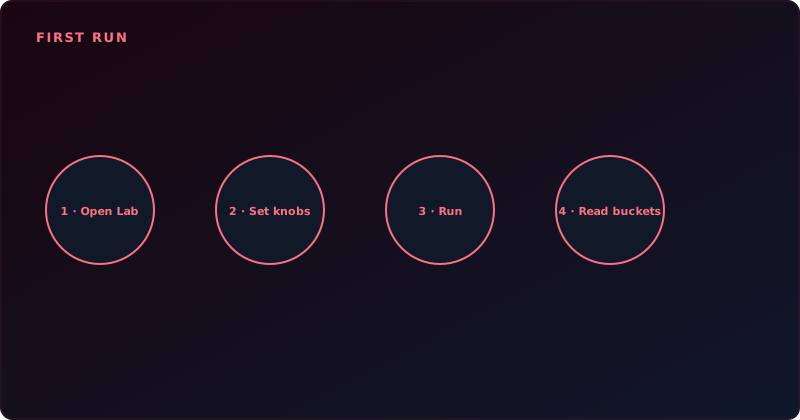
1. Open Odds Lab with the right expectations
Go to odds.novusstreamsolutions.com. The site leads with a clear contract: betting mathematics without placing a bet. Treat that as the product boundary, not marketing filler. Everything you do here is a controlled experiment under assumptions you choose.
If you came looking for tips or a place to stake money, stop here and recalibrate. The lab measures relationships between prices, probability, and variance. It does not move money.
- Informational simulation only — no deposits or wagers.
- The live site is the working product; this tutorial teaches how to use it.
- 2
2. Walk the three-step loop once
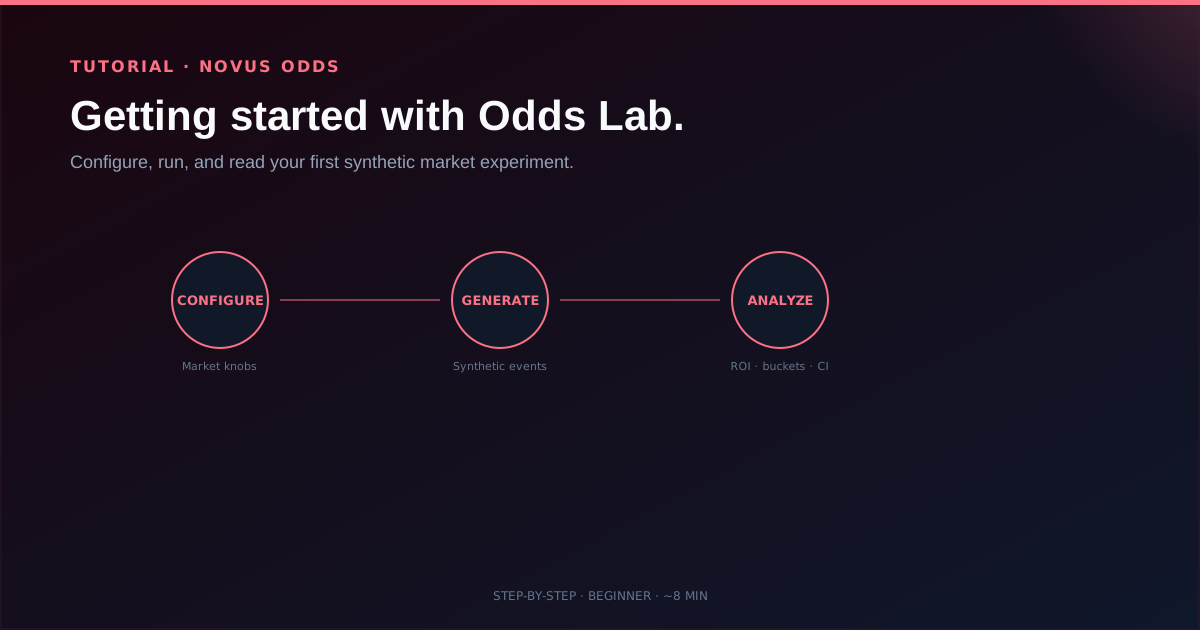
The product is organized as configure → generate → analyze. First you define the market (odds range, margin, uncertainty, experiment size, stake, seed). Then the engine builds synthetic prices, estimates probabilities, and resolves events. Finally you inspect win rates, odds buckets, expected versus observed ROI, streaks, and confidence intervals.
On your first run, do not chase a “winning” setup. Chase a readable one: a moderate sample size, a seed you can remember, and defaults you understand well enough to explain to someone else.
One clean pass through the lab beats ten unreadable hot takes. - 3
3. Run the experiment and wait for the snapshot
Start the simulation and let it finish. Large experiments take longer; that is expected. When the run completes, the lab surfaces a snapshot — win rate, ROI, max losing streak, and volume by odds bucket — similar to the illustrative numbers on the marketing page.
Write down the seed and the key knobs before you change anything. Without that, you cannot tell whether a later result is a new insight or a new coincidence.
- 4
4. Read the snapshot as distribution, not destiny
A single finished run is one sample path. Positive expected value can still print a negative observed ROI. A hot streak can still sit inside a losing long-run expectation. The point of the first tutorial is to feel that gap, not to paper over it.
From here, go deeper with Configure Novus Odds markets: range, margin, stake, and seed for the knobs, Favorites vs longshots in Novus Odds: reading odds buckets for buckets, Expected value and ROI in Novus Odds for EV versus observed ROI, and Variance, streaks, and confidence intervals in Novus Odds for streaks and intervals.
First runs are for literacy, not for edges
Lock a seed, finish one full experiment, and practice explaining the snapshot out loud. If you cannot say what each number means, you are not ready to change five knobs at once. Docs live at Novus Odds; the tool map is Tool maps.
Frequently asked questions
Quick answers to common questions about this topic.
Does Novus Odds place bets for me?
No. It is an informational simulation tool. There are no deposits, sportsbook accounts, or automated betting.
What should I change on my first run?
As little as possible. Use a memorable seed and a moderate experiment size so you can reread the same result and then change one knob at a time.
Is Novus Odds free?
Yes. The lab is free to use in the browser as part of the Novus Stream Solutions portfolio.