Novus Odds
Configure Novus Odds markets: range, margin, stake, and seed
Learn what each Novus Odds market knob does — odds range, market margin, pricing uncertainty, experiment size, stake, and reproducible seed — so experiments stay comparable.
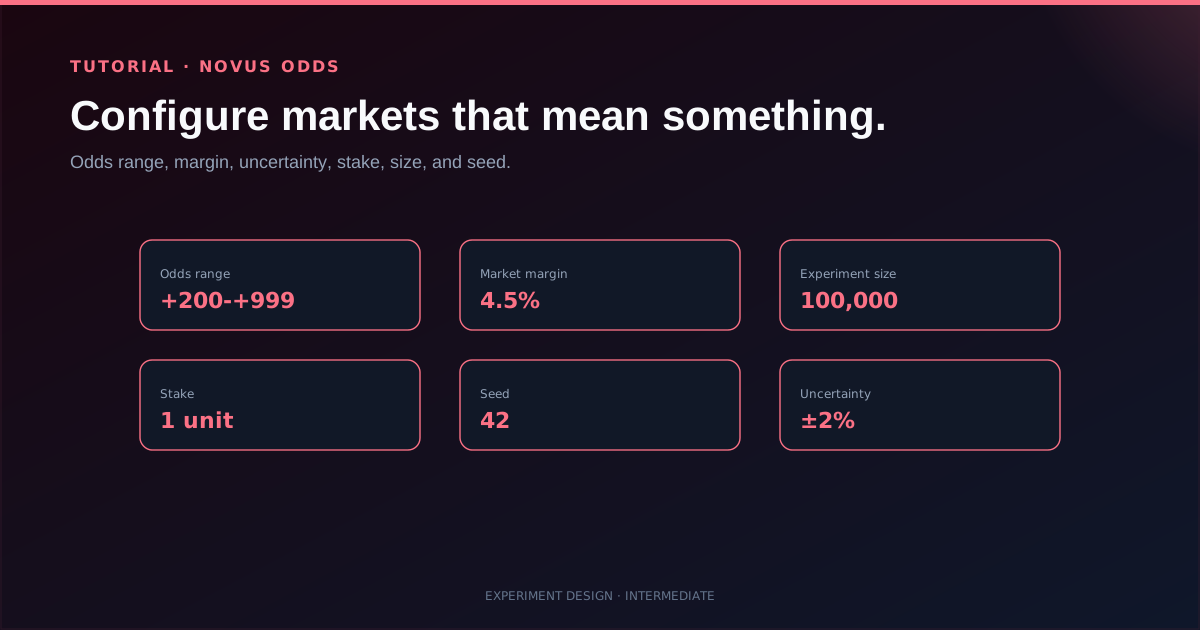
A simulation is only as honest as the assumptions baked into it. Novus Odds exposes those assumptions as knobs: odds range, market margin, pricing uncertainty, experiment size, stake, and seed. This tutorial explains what each one is for and how to change them one at a time.
If you have not completed a first run yet, start with Getting started with Novus Odds: your first simulation so the loop is already familiar.
Contents
Two ways to finish
Define the market
Odds range, margin, and pricing uncertainty.
Define the experiment
Size, stake, and reproducible seed.
- 1
1. Pick an odds range that matches the question
The odds range decides which synthetic prices the lab will generate. A band concentrated on shorter prices asks a different question than a band full of longshots. Choose the range that matches the claim you want to test, not the range that looks most exciting after the fact.
If you later compare two runs, keep the range fixed unless the comparison is explicitly about range. Otherwise you are changing the population and the answer at the same time.
- 2
2. Set market margin and pricing uncertainty
Market margin is the book’s overround — the structural edge priced into the market before any individual selection is judged. Pricing uncertainty lets the lab inject noise around how prices relate to underlying probability. Together they decide how “fair” or “hostile” the synthetic market is.
Raising margin without saying so is a classic way to make a strategy look worse than it is, or better if you quietly lower it. Document the margin in the same notes as the seed.
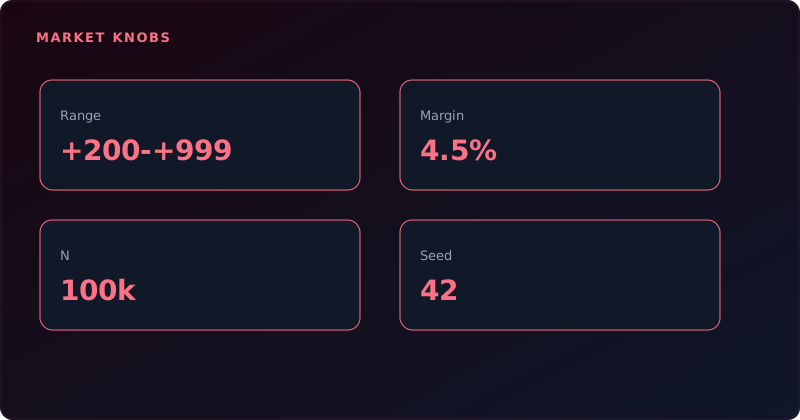
Change one knob per experiment when you care about causality. - 3
3. Choose experiment size and stake
Experiment size is how many synthetic events you resolve. Small samples are noisier; huge samples are slower and can create false confidence if the assumptions are wrong. Stake scales P&L without changing the probability structure — useful for readability, useless as a substitute for edge.
For teaching and debugging, prefer a size large enough to populate odds buckets but small enough that you will actually rerun it after a tweak.
- 4
4. Lock a reproducible seed
A seed lets you recreate an identical experiment. That is how you prove a change in result came from a knob you moved rather than from a different random draw. Share seeds the way you would share a spreadsheet formula: they are part of the method.
When you want a fresh world, change the seed on purpose and say so. Silent reseeding is how people launder luck into narrative.
One knob, one claim
The cleanest Odds workflow is scientific: change a single assumption, keep the seed when you want a paired comparison, and write down what you changed before you look at the new snapshot.
Frequently asked questions
Quick answers to common questions about this topic.
What does the seed do?
It makes the random draw reproducible so you can rerun the same experiment or share it. Change it only when you intentionally want a new sample path.
Should I maximize experiment size?
Not always. Larger samples reduce noise but do not fix bad assumptions, and they make iteration slower. Match size to the question.