Novus Odds
Favorites vs longshots in Novus Odds: reading odds buckets
Use Novus Odds buckets to compare favorites, moderate underdogs, and longshots — volume, hit rate, and ROI by price band instead of one blended win rate.
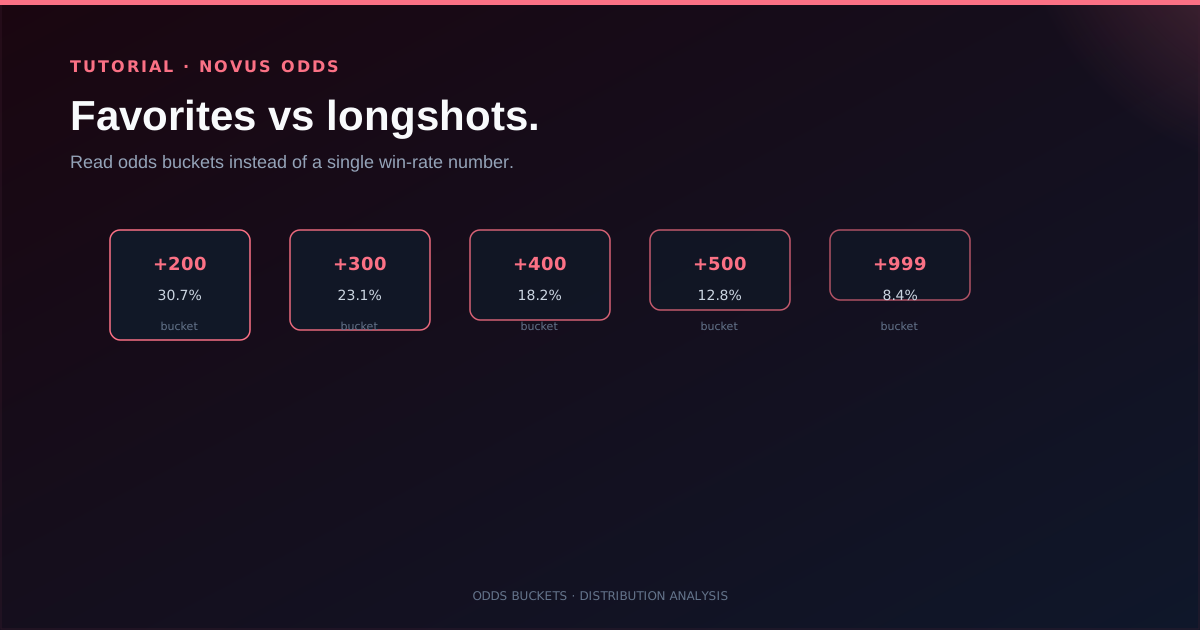
A single win rate hides almost everything interesting about a betting-math experiment. Novus Odds groups results into odds buckets so you can see how favorites and longshots behave differently under the same assumptions.
This tutorial teaches you to read those buckets: where volume sits, how hit rates fall as prices lengthen, and why a blended number can flatter or bury a band.
Contents
- 1
1. Treat buckets as different populations
Each odds band is effectively its own market slice. Shorter prices win more often and pay less; longer prices win rarely and pay more. Mixing them into one win rate is like averaging sprint times with marathon times.
Start every analysis by asking which bands actually received volume in your run. A strategy that never fires in a band cannot claim a result there.
- 2
2. Compare volume, hit rate, and ROI together
Volume tells you where the experiment spent its attention. Hit rate tells you how often those prices closed. ROI tells you whether the payout structure compensated for the misses. You need all three; any one alone can lie.
The illustrative snapshot on the live site already shows volume concentrating differently across bands such as +200–+299 versus longer prices. Recreate that habit on your own runs.
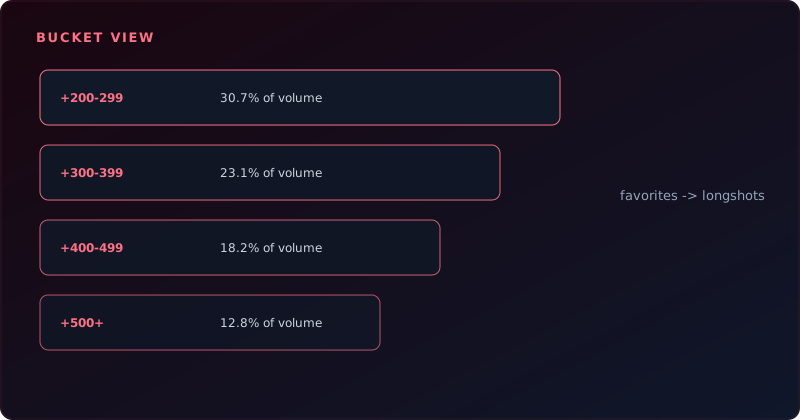
Favorites and longshots are different questions wearing the same chart. - 3
3. Ask band-level questions, not slogan questions
Good questions sound like: “Under a 4.5% margin, does observed ROI in the +300 band match expected ROI?” Bad questions sound like: “Do longshots always lose?” The lab rewards the first kind.
When a band looks magical, rerun with the same seed after changing only margin or uncertainty. If the magic vanishes, it was fragile.
Never quote a win rate without its band
If you publish or teach from an Odds run, label the odds bucket beside every percentage. Unlabeled win rates are how longshot folklore spreads.
Frequently asked questions
Quick answers to common questions about this topic.
Why do longshots show lower win rates?
Because longer prices imply lower probabilities of winning. That is expected. The interesting question is whether the payout compensates for the rarity — which is an ROI / EV question, not a win-rate question alone.