2026 · Novus Stream Solutions (hub)About 13 min readNovus Stream Solutions
Writing product descriptions that actually sell
A product description has to do the selling a salesperson would do in a store. Here is how to write descriptions that actually convert: benefits over features, knowing the buyer, scannability, and trust.
Contents
- 1.Overview
- 2.Benefits over features (but include both)
- 3.Know who you are writing for
- 4.Structure for scanning, not reading
- 5.Specifics build trust
- 6.Natural SEO in descriptions
- 7.Handle objections before they stop the sale
- 8.Voice and brand consistency
- 9.Common product-description mistakes
- 10.A repeatable approach for every product
Overview
A product description has a job that is easy to underestimate: it has to do the selling that a good salesperson would do if the buyer were standing in a store, because online the buyer cannot touch the product, ask questions, or read the seller's face: the description has to anticipate and answer everything. A description that merely lists what the product is, in dry specifications, leaves all the persuasion undone; a description that connects the product to what the buyer actually wants, answers their questions, builds trust, and makes the case for buying does the selling. The difference between the two is large and directly affects conversion, which makes product descriptions one of the highest-leverage things an online seller writes. This guide covers how to write descriptions that actually sell: leading with benefits, knowing the buyer, structuring for scanning, building trust with specifics, weaving in natural SEO, and a repeatable approach.
The reason descriptions are worth this attention rather than being an afterthought is that they are where the buying decision often gets made or lost, and unlike traffic or competition, the description is entirely within your control. You cannot always get more visitors, but you can write a description that converts more of the visitors you have, which is frequently a faster path to more sales than chasing traffic. A great product with a weak description underperforms a comparable product with a description that sells, which means the writing is doing real commercial work. Treating product descriptions as the conversion tool they are (worth crafting deliberately rather than dashing off) is the mindset that turns them from a box to fill into a genuine driver of sales.
Benefits over features (but include both)
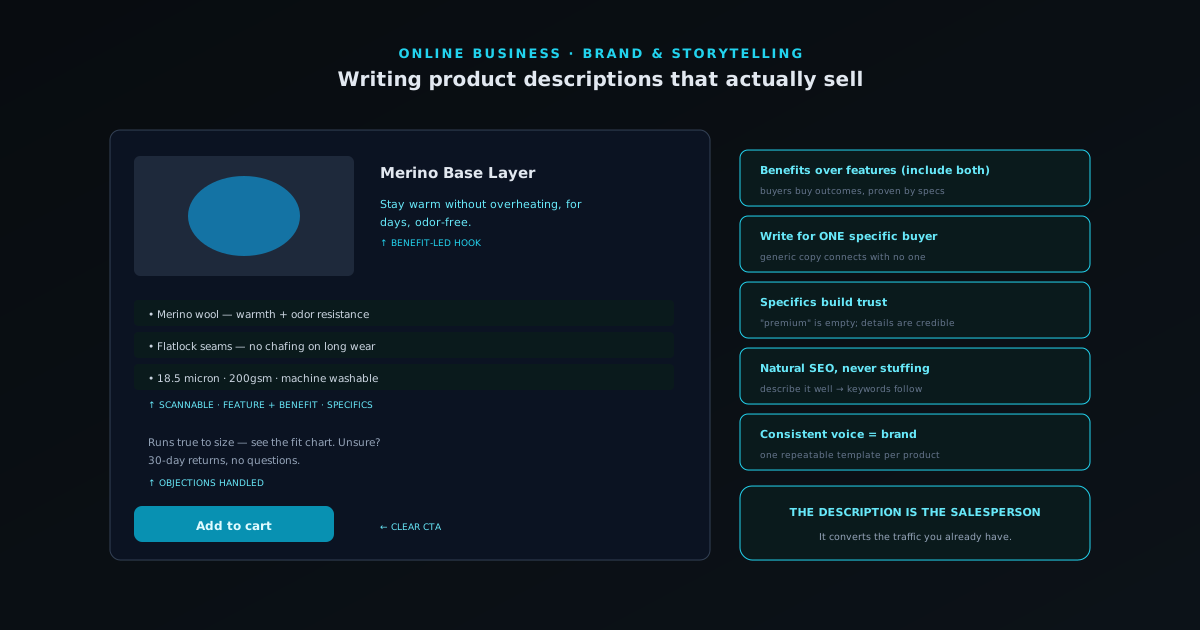
The most important principle in product copywriting is to lead with benefits rather than just features, because features describe what the product is while benefits describe what the product does for the buyer, and the buyer cares about the latter. A feature is "made of merino wool"; the benefit is "stays warm without overheating and resists odor, so you can wear it for days." Buyers do not buy features in the abstract; they buy the outcomes features deliver, so connecting each feature to the benefit it provides for the buyer is what makes a description persuasive rather than merely informative. The feature is the proof; the benefit is the reason to care.
This does not mean omitting features (buyers need the concrete specifications to trust the claims and judge the product) but rather pairing them: state the benefit and back it with the feature that delivers it. "Stays warm without overheating (merino wool)" gives the buyer both the reason to want it and the proof that it is true. A description that is all benefits with no features feels like empty marketing; one that is all features with no benefits leaves the buyer to figure out why they should care. The combination (benefits that connect to the buyer's desires, backed by the features that substantiate them) is what persuades while building the trust that concrete specifics provide. Leading with the benefit and supporting it with the feature is the core move of a description that sells.
Know who you are writing for
A description that sells is written for a specific buyer, because the benefits that matter, the language that resonates, and the questions that need answering all depend on who the buyer is. Writing for "everyone" produces generic copy that connects with no one; writing for the actual target buyer (understanding what they want, what they worry about, how they talk, what would make them choose this product) produces copy that speaks directly to them. The same product sold to different buyers warrants different descriptions, because what a gift-buyer cares about differs from what a serious enthusiast cares about, even for the identical item.
Knowing the buyer means understanding their motivations and objections: why they would want this product, what would stop them from buying, what they need to know to feel confident, and what language and tone fit them. This understanding shapes everything: which benefits to lead with, which objections to preempt, what tone to strike, what details to emphasize. It comes from genuinely knowing your customers, which the companion practice of customer research supports, and it is what lets a description connect rather than just inform. The most persuasive descriptions read as if written specifically for the person reading them, because they were written for that buyer's actual wants and worries. Starting from a clear picture of who the description is for is the foundation that makes every other choice (benefits, language, structure) land with the buyer it is meant to convert.
Structure for scanning, not reading
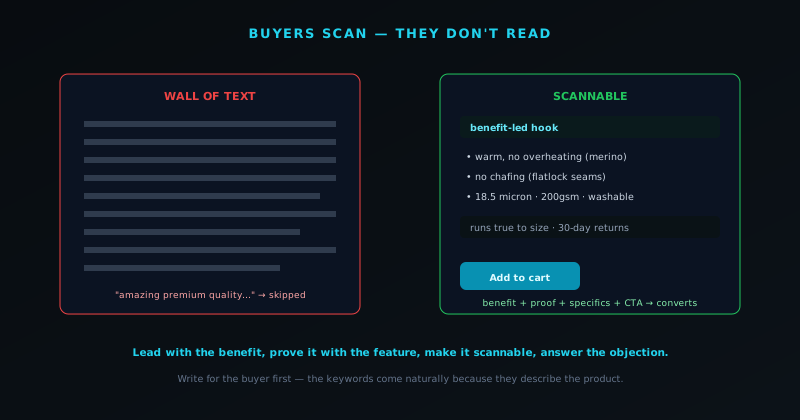
Buyers do not read product descriptions top to bottom like an article: they scan, looking for the information that matters to them, so a description has to be structured for scanning rather than as a wall of text. This means short paragraphs, bullet points for key features and specs, clear subheadings or visual breaks, and the most important information positioned where a scanning eye will catch it. A description that is one dense block of text buries its persuasion in a format buyers will not read, while one that is scannable (with benefits and key details visually accessible) lets a buyer quickly find what they care about and absorb the case for buying.
The practical structure that works is typically: an opening that hooks with the main benefit and what the product is, a scannable list of key features-and-benefits (often bullets), the specifications and details a buyer needs, and a close that reinforces the value. Bullets are especially effective for the concrete features and specs, since they are exactly what scanning buyers look for and they break up the text. The goal is a description where a buyer scanning for thirty seconds gets the essential case, and one reading more thoroughly gets the full picture, serving both the scanner and the reader. Formatting for how buyers actually consume descriptions, rather than writing prose they will skip, is what ensures the persuasion in the description actually reaches the buyer, since the best copy fails if its format makes buyers bounce off it.
Specifics build trust
Vague descriptions full of superlatives ("amazing quality," "the best," "premium") build no trust, because buyers have learned to discount empty marketing language; specifics are what build credibility, because concrete details are verifiable and show the seller actually knows the product. "High-quality leather" is empty; "full-grain Italian leather that develops a patina over time" is specific, credible, and informative. The dimensions, materials, origins, measurements, and concrete characteristics of a product do more to build trust and inform the decision than any amount of superlative praise, because they give the buyer real information to judge rather than claims to take on faith.
Specifics also preempt the questions and uncertainties that stop purchases: a buyer who can see the exact dimensions, materials, and details does not have to wonder or message to ask, which removes friction from the decision. The discipline is to replace vague praise with concrete detail: instead of saying the product is great, show why it is great through specifics that let the buyer conclude it for themselves. This is more persuasive precisely because it respects the buyer's skepticism of marketing language and gives them the real information they need to trust the product. Specifics are the substance behind the benefits: the benefit says why to care, and the specific feature proves it is real. A description rich in concrete, verifiable detail builds the trust that converts, while one full of empty superlatives reads as the marketing buyers have learned to ignore.
Natural SEO in descriptions
Product descriptions are also an SEO opportunity, since they are content that can help a product page rank for the terms buyers search, but the SEO has to be natural (woven into genuinely useful description) rather than keyword stuffing that degrades the copy. The terms buyers use to search for a product are usually the same terms a good description would naturally include, because describing the product clearly means using the words people use for it. So writing a thorough, specific, benefit-rich description naturally incorporates the relevant search terms, which is the right way to do product-description SEO: write for the buyer, and the keywords follow because they are how the product is genuinely described.
The mistake to avoid is the old keyword-stuffing approach: cramming search terms into descriptions unnaturally, which produces awful copy that neither sells nor ranks well, since search has long penalized stuffing and rewards genuinely useful content. The companion principle at Writing for humans first and still ranking applies directly: write for the human buyer first, naturally including the terms they would search because those terms genuinely describe the product, and the SEO benefit comes as a byproduct of a good description rather than at the expense of one. A description that thoroughly and specifically describes the product, written for the buyer, will naturally rank for relevant searches while also converting, which is the alignment that makes product-description SEO sustainable. The goal is a description that sells to the buyer and happens to contain the words searchers use, not one contorted to chase keywords at the cost of persuasion.
Handle objections before they stop the sale
A description that sells anticipates and addresses the objections and hesitations that would otherwise stop a buyer, because in a store a salesperson would answer these in conversation, and online the description has to do it preemptively. The common objections (will it fit, is it worth the price, will it do what I need, what if it is not right, how does it compare) are predictable for any product, and a description that addresses them removes the friction they create. A buyer with an unanswered worry often does not ask; they just leave, so preempting the worry in the description is what keeps them moving toward purchase.
Addressing objections means identifying the likely hesitations for your specific product and buyer, and answering them within the description: sizing guidance for fit worries, the value justification for price concerns, the use cases for "will it work for me," the return policy for "what if it is wrong," the comparison points for "how does it stack up." This does not mean a defensive list of disclaimers but a confident, helpful anticipation of what the buyer needs to know to feel safe buying. Knowing the buyer (covered earlier) is what tells you which objections to address, and handling them in the description is what converts the hesitant buyer who would otherwise drift away. The companion guide at Refunds, guarantees, and chargebacks: policy design that protects margin and trust covers how clear guarantees reduce purchase hesitation, which is one of the objections a description and policy together can resolve. Preempting objections is the part of a description that closes the buyers who are interested but uncertain.
Voice and brand consistency
Beyond the content of a description, its voice (the tone and personality of the writing) does brand work, and a consistent voice across all of a store's descriptions reinforces the brand the way consistent photography or design does. A playful brand and a serious one should write descriptions differently, and whatever the chosen voice, applying it consistently across every product makes the store feel cohesive and intentional. Descriptions written in wildly different voices (one stiff and corporate, the next casual and jokey) make a store feel disjointed, while a consistent voice ties the catalogue together and reinforces the brand identity with every product the buyer reads.
The voice should fit both the brand and the buyer: it is how the brand sounds, tuned to resonate with the target customer. A consistent, fitting voice also builds familiarity and trust as a buyer moves through a store, since the writing feels like one coherent brand speaking rather than a collection of unrelated product entries. Establishing the voice (deciding how the brand sounds in writing) and then applying it consistently across descriptions is part of what turns a set of product pages into a branded shopping experience. This is the same consistency principle that runs through product photography and all repeated content: a defined approach applied uniformly produces a cohesive whole. The voice is the writing's contribution to brand consistency, and maintaining it across the catalogue is part of writing descriptions that not only sell individual products but build the brand that makes the whole store more compelling.
Common product-description mistakes
A handful of recurring mistakes undermine product descriptions, and avoiding them is half the battle. The most common is listing features with no benefits, a dry spec sheet that tells the buyer what the product is but never why they should care. Close behind is the opposite, all vague superlatives with no specifics, which reads as empty marketing and builds no trust. A third is the wall of text: a dense, unscannable block that buyers bounce off regardless of how good the writing is. And a fourth is generic copy written for no one in particular, which connects with no one because it speaks to everyone.
Other frequent mistakes include keyword-stuffed copy that reads badly and ranks poorly, descriptions that leave obvious buyer questions unanswered (so the buyer leaves rather than asks), and copy that is all about the product with nothing about the buyer's outcome. Each of these is the inverse of a principle covered above: feature-only copy ignores benefits, vague copy ignores specifics, walls of text ignore scannability, generic copy ignores the buyer, and stuffed copy ignores that SEO should be natural. Running a description against this list of mistakes (does it have benefits, specifics, scannable structure, a clear buyer, answered objections, and natural language) catches the typical failures. The mistakes are predictable, which means they are avoidable, and a description that sidesteps all of them while applying the positive principles is one that actually does the selling a product description is meant to do.
A repeatable approach for every product
Writing descriptions that sell becomes sustainable when it follows a repeatable approach rather than starting from scratch each time, because a consistent structure ensures every description does the necessary jobs and a consistent voice builds the brand. A workable template: open with a benefit-led hook stating what the product is and why it matters; present the key features-and-benefits in a scannable format; provide the specifics and specifications that build trust and inform; address the likely objections; and close with a confident reinforcement of the value and a clear path to purchase. Running every product through this structure ensures none of the persuasive elements is missed and produces a consistent, professional set of descriptions across the catalogue.
The repeatable approach also makes the writing faster and the catalogue more consistent, since you are executing a known structure tailored to each product rather than reinventing the format every time, and a consistent voice and structure across descriptions reinforces the brand the way consistent photography does. This is the same principle that governs consistency in product photos or any repeated content: a standardized approach applied across the catalogue produces both quality and consistency efficiently. For a seller with many products, this is what makes writing genuinely good descriptions for the whole catalogue feasible rather than a per-product struggle. A description template grounded in the principles (benefits, buyer focus, scannability, specifics, objections) turns description-writing from a creative burden into a repeatable process that reliably produces copy that sells, which is what lets the quality scale across every product a store offers.
Frequently asked questions
Quick answers to common questions about this topic.
How do I write a product description that sells?
Lead with benefits (what the product does for the buyer) backed by features, write for a specific buyer, structure it to be scannable, build trust with concrete specifics rather than vague superlatives, preempt objections, and close with a clear case to buy. Write for the buyer, and natural SEO follows.
What is the difference between features and benefits?
A feature is what the product is ("merino wool"); a benefit is what it does for the buyer ("stays warm without overheating, resists odor"). Buyers buy benefits, so lead with them, but include the features as the proof that backs the benefit up.
Should product descriptions be optimized for SEO?
Yes, but naturally. A thorough, specific description written for the buyer naturally includes the terms people search, because those terms are how the product is genuinely described. Avoid keyword stuffing, which produces bad copy that neither sells nor ranks well.
Why do vague, superlative descriptions not work?
Buyers discount empty marketing language like "amazing" or "premium" because it is unverifiable. Specifics (exact materials, dimensions, and characteristics) build credibility and answer questions, which is what actually persuades and builds the trust that converts.
Related troubleshooting
Was this page helpful?
Your answer stays in this browser, it is not sent anywhere and no account or cookie is involved.