2026 · Novus Stream Solutions (hub)About 10 min readNovus Stream Solutions
Packaging and unboxing on a small budget
For an online product business, the package is the only physical thing the customer ever touches, which makes it a rare and valuable moment of brand. The good news is that a memorable unboxing is made of cheap, deliberate touches far more than expensive materials — and the common mistake is spending on the wrong half of it. Here is how to do packaging well on a small budget.
Contents
Overview
When you sell something online, almost the entire relationship with your customer is digital — a website, a checkout, a confirmation email — except for one moment. The package that arrives at their door is the single physical, tangible thing your brand ever puts in their hands, and that rarity is exactly what makes it valuable. It is the one point where a customer experiences your business with all their senses instead of through a screen, the moment when an abstract online purchase becomes a real object on a kitchen table. Treating that moment as nothing more than a way to stop the product breaking in transit is a missed opportunity; treating it as a chance to require an expensive custom box is an overcorrection. The sweet spot, and the subject of this article, is making that moment genuinely good on a small budget.
The encouraging truth is that a memorable unboxing is built far more from thought than from money. The packaging that delights customers and earns the photos they share is usually a stack of inexpensive, deliberate touches arranged with care, not a single costly material, and the most common mistake small sellers make is spending on the wrong half of the problem — pouring money into a fancy box while neglecting the cheap details that actually create the feeling. We will work through what packaging is really for, the budget touches that punch well above their cost, where overspending is simply wasted, how to think about packaging as a recurring per-order cost rather than a one-time aesthetic decision, and how to keep it from quietly eating the margins it is supposed to support.
What packaging is actually for
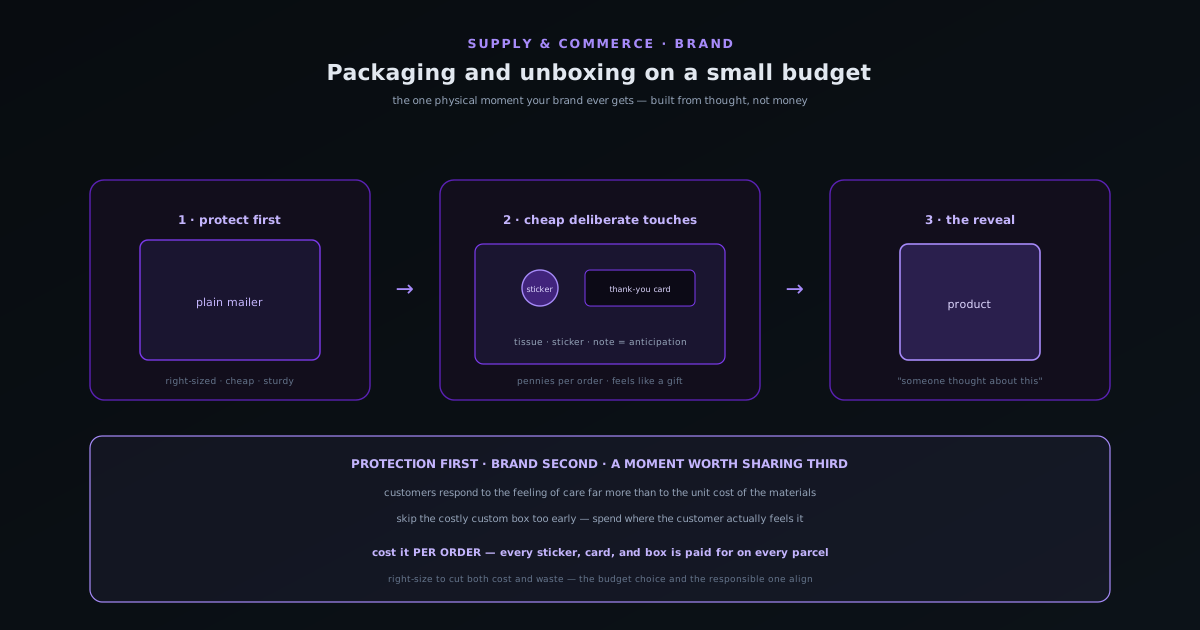
Before spending a cent it pays to be clear about packaging’s jobs, in order, because confusing their priority is how budgets get misallocated. The first and non-negotiable job is protection: the package has to get the product to the customer intact, because no amount of branding rescues the experience of opening a damaged item. A beautiful box around a broken product is worse than a plain box around a sound one, so the foundational spend — adequate protection for how your product travels — is the one place frugality is false economy. Get protection right first, always, and only then think about anything else, because everything else is built on the assumption that the product arrives in one piece.
The second job, once protection is assured, is to express the brand — to make opening the package feel like it came from you specifically rather than from an anonymous warehouse. The third, which only the best packaging achieves, is to create a small moment worth sharing: an experience pleasant or surprising enough that a customer photographs it, mentions it, or simply remembers it warmly enough to buy again. These second and third jobs are where deliberate, inexpensive touches do their work, and crucially they are far more about consideration than cost. A package can nail all three jobs cheaply, or fail the second and third while spending heavily on the first — which is exactly the trap of the expensive box around a forgettable interior.
The cheap touches that punch above their cost
The disproportionate returns in packaging come from small, low-cost additions that signal care, and a handful of them reliably transform a plain shipment into something that feels considered. A branded sticker is the workhorse here: stickers are inexpensive in bulk and instantly turn a generic mailer, a sheet of tissue, or a plain box into something that looks intentional and yours. A short, genuine thank-you note — even a printed card, better still a line of real warmth — costs almost nothing and lands emotionally, because it converts a transaction into a small human exchange. Wrapping the product in tissue and sealing it with that sticker adds a beat of anticipation between opening the outer package and reaching the item, and anticipation is most of what makes unboxing feel special.
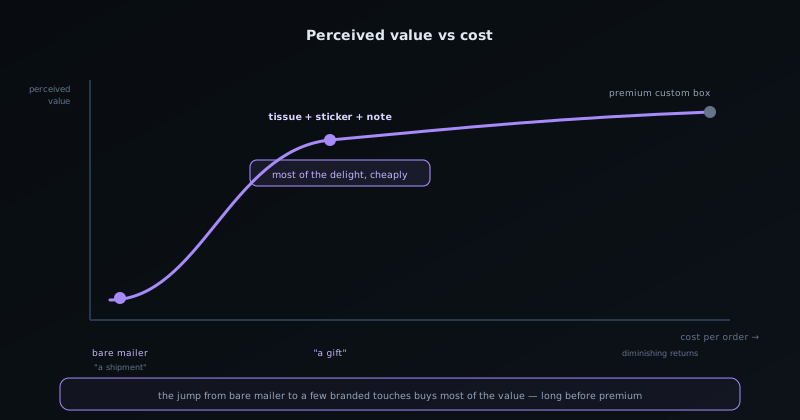
The principle uniting these is that they manufacture a sense of care and a small sequence of reveals, neither of which depends on premium materials. A customer who opens a parcel to find the product bare at the bottom feels like they received a shipment; a customer who opens the same parcel to find tissue, a sticker, and a note feels like they received a gift, even though the cost difference is trivial. You can extend the idea cheaply in whatever way fits your product and brand — a small unexpected extra, a tidy insert, packaging that is right-sized so the product is not rattling in a half-empty box. The throughline is deliberateness: every cheap touch should feel chosen, because the feeling you are creating is "someone thought about this," and that feeling is almost free to produce and disproportionately valuable to receive.
- A branded sticker: cheap in bulk, instantly makes a plain mailer or box look intentional and yours.
- A genuine thank-you note or card: nearly free, and converts a transaction into a human moment.
- Tissue and a seal: adds a beat of anticipation and a reveal between opening and reaching the product.
- Right-sized packaging: the product fits snugly instead of rattling in a half-empty oversized box.
- A small, fitting extra: an unexpected token that suits your product and brand without adding real cost.
Where not to overspend
Just as important as knowing where cheap touches pay off is knowing where money tends to be wasted, because the budget you save on the wrong things is the budget that funds the right ones. The classic overspend is the fully custom, heavily printed box ordered in a large minimum quantity before the business has the volume to justify it — a big up-front commitment to a single design, in a quantity you may not sell through, that ties up cash and locks you into choices you might want to change as the brand evolves. For most small sellers, a plain, quality box or mailer dressed with inexpensive branded elements achieves nearly all of the effect at a fraction of the cost and with none of the inventory risk, and it keeps you nimble while you are still learning what your customers respond to.
The deeper point is that customers respond to the feeling of care far more than to the unit cost of the materials, and they cannot tell — and do not reward — the difference between an expensive custom box and a plain one with a thoughtful interior. Money spent on premium packaging that the customer experiences as merely "a nice box" is money that bought less delight than the same sum spread across a sticker, a note, and tissue would have. So the discipline is to spend where the customer feels it — the touches that create care and anticipation — and to economise ruthlessly on the things that flatter the seller’s sense of polish without changing the customer’s experience. Premium materials are a fine investment once volume and brand maturity justify them, but they are the wrong first purchase, and treating them as table stakes is how packaging budgets balloon without improving the moment they were meant to serve.
Packaging is a per-order cost, not a one-time decision
A shift that separates sellers who stay profitable from those who quietly bleed margin is learning to see packaging not as an aesthetic choice made once but as a cost incurred on every single order, forever. The sticker, the tissue, the note, the box, the filler — each one has a per-unit price, and that price is paid again for every parcel you ship, which means a packaging decision that feels small per order compounds into a real line on your costs across hundreds or thousands of shipments. A touch that adds a seemingly trivial amount to each order can add up to a meaningful sum over a year, so the right way to evaluate any packaging element is to multiply its unit cost by your order volume and ask whether the delight it creates justifies that recurring total. Some will; some will not; the discipline is doing the multiplication.
This per-order lens is also what keeps packaging from silently eroding the profitability of the product it surrounds, which is a genuine risk because packaging is one of the per-unit costs that determines whether a product actually makes money. It is entirely possible to design an unboxing experience so generous that it consumes the margin on the item inside, turning a profitable product into a break-even one in the name of delight — a trap precisely because the spending feels like brand-building rather than cost. The fix is not to skimp but to budget: decide what packaging should cost per order as a deliberate fraction of the product’s economics, design the best experience you can within that figure, and revisit it as volumes and prices change. Packaging that is costed as carefully as it is designed can be both delightful and sustainable; packaging that is only designed tends to be one expensive surprise away from undermining the margins it was meant to support.
Start minimal and let the experience earn its upgrades
A practical way to keep packaging both delightful and affordable is to treat it the way you would treat any other part of the business: start lean, then invest where the evidence says it pays. Begin with the cheap, high-impact essentials — protection that works, a right-sized mailer, a sticker, a note — and resist the urge to buy the premium version of anything before you know it matters to your customers. As orders grow and you start to hear what people actually notice and mention, you earn the right to upgrade specific touches deliberately, putting money into the one or two elements that genuinely move the experience rather than spreading it thinly across a redesign nobody asked for.
This staged approach also protects you from the most common budget mistake, which is committing cash to elaborate packaging before the business can tell you whether it returns anything. Early on, every dollar spent on packaging is a dollar not spent on the product, the inventory, or simply staying solvent, so the discipline of starting minimal is also a cash-flow discipline. Let the unboxing grow up alongside the business — modest and considerate at first, more generous as volume and margin allow — and you capture the compounding brand benefit of a good unboxing without ever betting money you do not yet have on a flourish you have not yet validated.
Consistency, fit, and a quiet word on waste
Two final considerations make budget packaging work harder without costing more. The first is consistency: a recognisable, repeated approach — the same sticker, the same note style, the same tissue — turns individual nice parcels into a coherent brand experience, so a returning customer recognises the unboxing as yours and a customer who sees several of your parcels online perceives a real identity rather than a one-off flourish. Consistency is free; it is simply the decision to do the same considered thing every time rather than improvising, and it converts scattered good moments into a brand customers can actually remember. Fit matters alongside it: the packaging and its touches should suit the product and the customer, because a flourish that feels right for one kind of product can feel incongruous for another, and the goal is coherence, not borrowed cleverness.
The last word is about waste, which is increasingly part of how customers judge a package and conveniently aligns with frugality. Right-sized packaging that does not drown a small product in an oversized box and excessive filler is cheaper for you, cheaper to ship, and visibly more considerate to a customer who increasingly notices and dislikes excess, so the budget choice and the responsible choice point the same way. Recyclable, sensible materials and a package no larger than the product needs read as thoughtful rather than cheap, and they spare the customer the small irritation of dealing with a pile of unnecessary packaging. Put together, the picture of good budget packaging is clear and reassuringly achievable: protect the product properly, add a few deliberate inexpensive touches that create care and anticipation, stay consistent, right-size to cut both cost and waste, and cost the whole thing per order so the moment that delights your customer never quietly undermines the business that created it.
Frequently asked questions
Quick answers to common questions about this topic.
How can I make packaging memorable without spending much?
A memorable unboxing comes from deliberate, inexpensive touches more than premium materials: a branded sticker, a genuine thank-you note, tissue and a seal that add a beat of anticipation, and right-sized packaging. These manufacture a sense of care and a small sequence of reveals cheaply — a customer who finds tissue, a sticker, and a note feels they received a gift rather than a shipment, at trivial extra cost.
What is the most important job of packaging?
Protection comes first and is non-negotiable — the product has to arrive intact, because no amount of branding rescues a damaged item. Only once protection is assured should you invest in expressing the brand and creating a moment worth sharing. A beautiful box around a broken product is worse than a plain box around a sound one, so protection is the one place frugality is false economy.
Should a small business buy custom printed boxes?
Usually not as a first purchase. Fully custom, heavily printed boxes require large minimum orders and lock up cash in a single design before you have the volume to justify it. A plain quality box or mailer dressed with inexpensive branded touches achieves nearly all of the effect at a fraction of the cost and keeps you nimble. Premium packaging is a fine investment once volume and brand maturity justify it.
How do I keep packaging from eating my profit?
Treat packaging as a per-order cost, not a one-time aesthetic choice: every sticker, card, and box is paid for on every parcel, so multiply each element’s unit cost by your order volume to see the real annual total. Decide what packaging should cost per order as a deliberate fraction of the product’s economics, design the best experience within that figure, and revisit it as volumes and prices change.
Does eco-friendly packaging cost more?
Often the opposite for a small seller. Right-sizing packaging so a small product is not drowned in an oversized box and excess filler is cheaper for you, cheaper to ship, and reads as more considerate to customers who increasingly dislike waste. Recyclable, sensible, appropriately-sized materials let the budget choice and the responsible choice point the same way.