2026 · Novus SupplyAbout 10 min readNovus Stream Solutions
Returns and reviews for a small product brand
Field notes from running a small Canadian brand: how to handle returns and refunds without resentment, turn honest reviews into trust, and ask for them without being a pest.
Contents
- 1.Overview
- 2.A return is a moment of truth, not a loss
- 3.Make returns easy on purpose
- 4.What returns actually teach you
- 5.Reviews are the trust a small brand cannot buy
- 6.Asking for reviews without being a pest
- 7.When a review is negative
- 8.The loop: returns and reviews feed each other
- 9.Honesty as the small brand’s real advantage
- 10.Sizing, fit, and the listing that prevents returns
- 11.What "small and Canada-only" actually means here
Overview
Novus Supply sells one thing well: Zubiflex ankle socks, shipped within Canada. It is a small brand, which means there is no returns department, no reviews team, and no buffer between a customer with a problem and the person who has to solve it. That smallness is the whole context for these notes. Returns and reviews are not abstract retail topics here; they are the moments where a tiny brand either earns trust or quietly loses it, handled by one person who feels every one.
What follows is honest. Returns are not fun, asking for reviews feels awkward, and a bad review stings more than it should when the product is something you chose and stand behind. But both turn out to be among the most useful things that happen to a small brand, if you handle them like feedback rather than threats. These are field notes on doing exactly that.
A return is a moment of truth, not a loss
The instinct when a return request comes in is to feel it as a loss — a sale undone, money going back out, the product coming home. That framing makes you defensive, and defensiveness is exactly the wrong posture, because the return is the moment the customer learns what you are actually like. They already know what you are like when everything goes right; the return is when they find out what you are like when something goes wrong, and that is the impression that sticks.
Handled well, a return often builds more loyalty than a smooth sale ever could. A customer who asks to send socks back and gets a fast, friendly, no-fight resolution walks away thinking better of the brand than one whose order simply arrived as expected. The goal in a return is not to minimize the refund; it is to make the person feel they were treated fairly by someone who cared, because that feeling is what brings them back and what they tell other people about.
Make returns easy on purpose
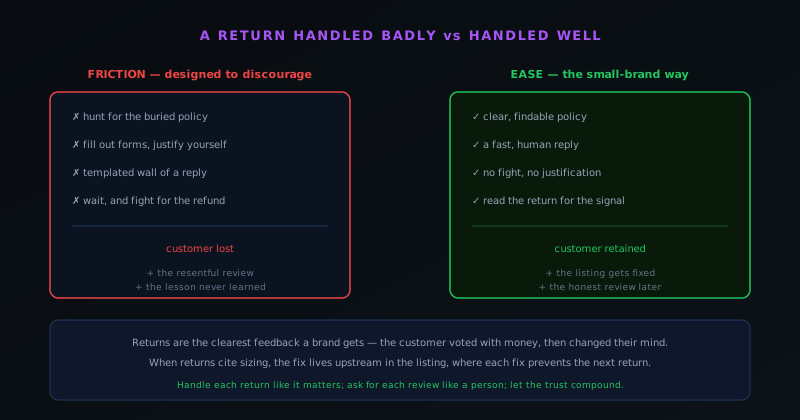
The single biggest decision in returns is how much friction to put in the path, and for a small brand the answer is almost always less. A returns process that makes the customer hunt for the policy, fill out forms, justify themselves, and wait is a process designed to discourage returns — and it works, but it also discourages repeat business and produces the resentful reviews that do real damage. Easy returns cost something in the moment and save more over time.
In practice, easy means a few concrete things: a clear, findable policy; a human reply quickly; and a resolution that does not require the customer to fight. You do not need an elaborate system for this at small scale — you need the intent to make it painless and the discipline to actually do so when a request lands, even on a day when you would rather not.
- A clear, findable returns policy stated plainly.
- A fast, human reply — not a templated wall.
- A resolution the customer does not have to fight for.
What returns actually teach you
The hidden value of a return is the information in it. A return is the clearest, most honest feedback a brand gets, because the customer voted with their money and then changed their mind — and the reason they changed it is something you need to know. For socks, the reasons cluster: sizing ran off, the fit was not what the listing implied, the photos set the wrong expectation, the package went astray. Each return is a small report on where the gap is between what you promised and what arrived.
Treated as feedback, returns stop being purely a cost and become a source of improvement. A run of returns citing sizing tells you to fix the size guide, not to blame the customers. A pattern of "not as pictured" tells you the photos or the description are overselling. The brands that get better are the ones that read their returns for the signal and act on it; the ones that stay stuck are the ones that file returns under "loss" and never ask what the returns were trying to tell them.
Reviews are the trust a small brand cannot buy
A small, Canada-only brand selling socks has no famous name to lean on, which means trust has to come from somewhere else, and reviews are where it comes from. A prospective buyer who has never heard of Novus Supply is making a small leap of faith, and the thing that most reduces the size of that leap is seeing that other real people bought the same product and were glad they did. Reviews are the substitute for the reputation a big brand already has.
This is why reviews matter disproportionately at small scale. The big brand can afford a few bad reviews against a backdrop of recognition; the small brand is being judged almost entirely on the handful of reviews it has. That makes each genuine, positive review valuable out of proportion to its number, and it makes the honest handling of the occasional negative one important too, because a prospective buyer reads both.
Asking for reviews without being a pest
The awkward truth is that good products do not automatically generate reviews; happy customers mostly just go quiet. So you have to ask — but the way most brands ask is exactly what makes asking feel gross. The cure is restraint: ask once, at the right moment, make it genuinely easy, and accept silence gracefully. A single well-timed, low-pressure request earns more real reviews than a sequence of nagging emails, which mostly teach people to ignore you.
Timing is most of it. Asking the moment the order ships is too early — they have not used the product. Asking after they have actually worn the socks for a week or two means the request lands when they have something to say. Make it a one-click path to the review, keep the tone human, and do not chase the people who do not respond. The point is to invite a genuine reaction, not to extract a rating, and the difference between those two intentions is felt by the customer.
- Ask once, after they have used the product — not at shipping.
- Make it one click; a direct link, not a maze.
- Accept silence as an answer; do not nag.
When a review is negative
A negative review feels personal when the brand is small and the product is yours, but the right response is not to take it personally — it is to read it for the signal and respond like a grown-up. Most negative reviews contain a fair point even when the tone is harsh, and the point is usually the same kind of information a return carries: a gap between expectation and reality. The first job is to extract what is true from it, separate from how it stung.
The second job is the public response, which matters more than the review itself because future buyers read it. A defensive or dismissive reply confirms the worst about the brand; an honest one — acknowledging the issue, explaining what you are doing about it, offering to make it right — often does more to build trust than the negative review cost. Prospective customers are not looking for a brand with zero complaints, which they do not believe exists; they are looking for evidence of how a brand behaves when there is one. A fair, calm response is that evidence.
The loop: returns and reviews feed each other
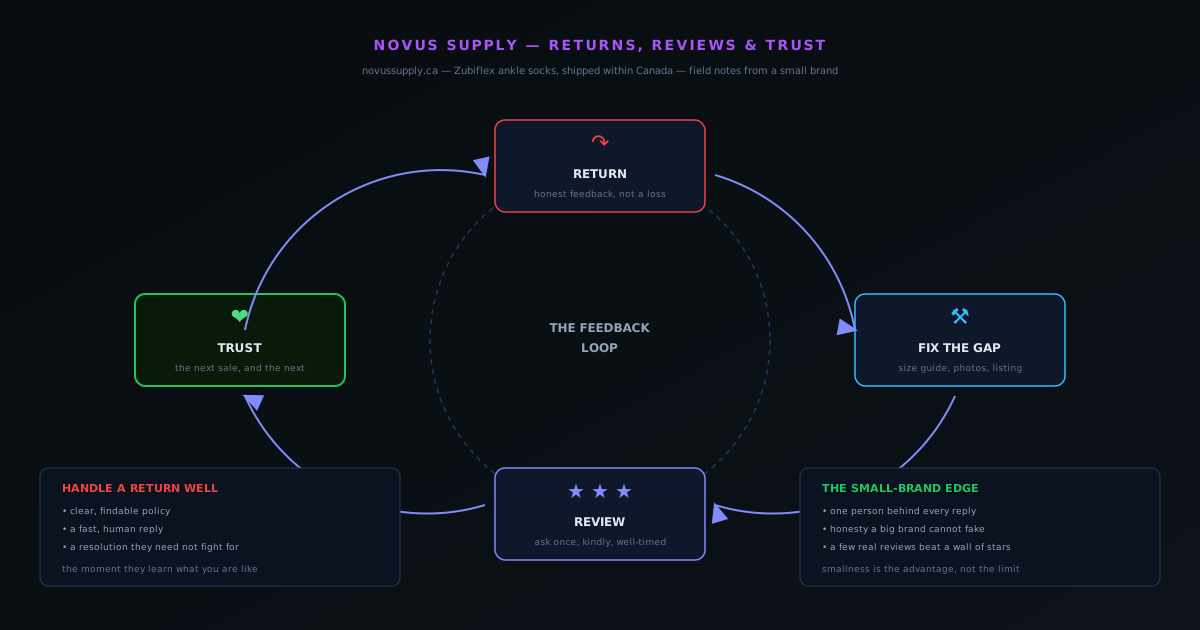
Returns and reviews are not two separate chores; they are two halves of one feedback loop. Returns tell you privately where the product or the listing is falling short, you fix those things, the fixes reduce the next batch of returns and improve the experience, and the improved experience produces the genuine positive reviews that earn the trust that drives the next sale. Run well, the loop tightens over time: fewer returns, better reviews, more trust, repeat.
The brands that thrive at small scale are the ones that close this loop deliberately rather than treating each return and each review as an isolated event. A return is an input to product improvement; a review is an output of how well you handled the whole experience, returns included. Seeing them as connected — that the way you handle returns shows up later in your reviews — is what turns the unglamorous work of customer service into the engine of a brand’s reputation.
Honesty as the small brand’s real advantage
Underneath all of this is a single advantage a small brand has that a large one struggles to match: it can be genuinely honest, because one person stands behind every interaction. The returns are handled by someone who actually cares whether the customer is treated fairly; the review requests come from a real person, not a marketing automation; the response to a complaint is a human reply, not a department’s template. That authenticity is felt, and it is exactly what a sock from an unknown brand needs to overcome the buyer’s reasonable caution.
This is why the worst move a small brand can make is to imitate the impersonal machinery of a big one — the friction-laden returns, the nagging review campaigns, the canned responses. Those are the things a big brand does because it has to operate at scale, and copying them throws away the one thing a small brand has that the big one does not. Leaning into honesty instead — easy returns because it is the right thing, review requests that invite rather than pester, responses that sound like a person who built the thing — is how a small brand turns its smallness from a disadvantage into the source of the trust that lets it grow.
Sizing, fit, and the listing that prevents returns
Many returns are not really about the product at all; they are about the expectation the listing set, which means the cheapest return to handle is the one the listing prevented. For something fit-dependent like ankle socks, the size guide and the description do enormous work: a vague or optimistic listing produces a steady stream of "did not fit" returns, while a precise, honest one filters out the buyers who would have been disappointed before they order. Improving the listing is often the highest-return response to a pattern of returns.
This is where the returns feedback closes its loop most directly. When returns cite sizing, the fix is not in customer service but upstream in the listing — a clearer size chart, honest photos that show the real fit, a description that does not oversell. Each such fix is paid for by the returns it prevents, and the prevented returns are also prevented disappointments, which means prevented negative reviews. A small brand that treats its product pages as living documents, refined by what returns reveal, steadily lowers both its return rate and its complaint rate at the same time, which is the most leveraged use of the feedback returns provide.
What "small and Canada-only" actually means here
It is worth being concrete that the constraints — small, one product line, Canada-only — are not limitations to apologize for but the context that makes this approach right. A focused brand selling one well-chosen product to one country can know its customers, its shipping realities, and its return patterns in a way a sprawling catalog cannot, and that knowledge is what makes the personal handling of returns and reviews feasible at all. You can afford to treat each return as feedback and each review as a relationship precisely because there are few enough of them to treat that way.
The Canada-only scope in particular keeps the operation honest and manageable: predictable shipping, one set of consumer expectations, no tangle of cross-border returns to mishandle. Rather than stretching thin to serve everywhere poorly, the brand serves one market well, which is exactly the posture that lets returns be graceful and review requests be genuine. The lesson generalizes to any small operation: the path to trust is not to act bigger than you are but to do the small, honest things that being small lets you do well — handle each return like it matters, ask for each review like a person, and let the resulting trust compound. That is the whole field-notes takeaway, and it is available to any small brand willing to take its returns and reviews seriously.
Frequently asked questions
Quick answers to common questions about this topic.
How should a small brand handle a return request?
Make it easy and fast, respond like a person rather than a policy, and resolve it without making the customer fight for it. A graceful return often does more for trust than a sale that went perfectly, because it is the moment the customer learns what you are like when something goes wrong.
How do I ask for reviews without being pushy?
Ask once, at the right moment — after the customer has had time to actually use the product — make it genuinely easy with a direct link, and accept silence as an answer. A single honest, well-timed request earns more real reviews than repeated nagging, which tends to annoy more than it persuades.
Are returns bad for a small product business?
Returns cost money in the moment, but they are also the clearest feedback you get about your product and your sizing. A return handled well retains a customer and teaches you something; a return handled badly loses the customer and the lesson. Treated as feedback, returns are one of the most useful signals a small brand has.
What do you do with a negative review?
Read it for the signal, respond honestly and without defensiveness, and fix what it points to if the point is fair. A thoughtful public response to a fair criticism often builds more trust than the criticism costs, because it shows future buyers how you behave when something is wrong.
How many reviews does a small brand actually need?
Fewer than people assume. A handful of honest, specific reviews from real customers does more than a wall of generic five-star ratings, because specificity reads as real. The goal is genuine reviews that tell a prospective buyer something useful, not a high count for its own sake.