2026 · NSS Background RemoverAbout 14 min readNovus Stream Solutions
Etsy product photos that convert
On Etsy, the first photo is the thumbnail that earns the click, and the set that follows is what closes the sale. Here is what converts on Etsy, the specs to hit, and how to prep a set for free.
Contents
- 1.Overview
- 2.What Etsy buyers respond to
- 3.Etsy image specs worth hitting
- 4.The first photo is the thumbnail that earns the click
- 5.The mix of shots that converts
- 6.Backgrounds: clean, styled, or both
- 7.Lighting and authenticity
- 8.Consistency across the whole shop
- 9.Showing texture and materials on handmade goods
- 10.Use every photo slot with intent
- 11.Prepping a converting set for free, on-device
Overview
Etsy is a visual marketplace, and on a platform built around browsing handmade and unique goods, the photos do most of the selling. Unlike Amazon's strict white-background rules, Etsy gives sellers far more creative freedom, which is both an opportunity and a trap: the freedom lets you show a product's character and context, but it also means the difference between a shop that converts and one that does not often comes down to photo quality, since there is no spec forcing a baseline. The first photo is the thumbnail that earns the click in a crowded search grid, and the set that follows is what turns a click into a sale. This guide covers what Etsy buyers actually respond to, the image specs worth hitting, the mix of shots that converts, and how to prep a strong, consistent set for free on your own device.
The reason photos matter even more on Etsy than on some marketplaces is the nature of what sells there: handmade, vintage, and unique items where the buyer is often making an emotional, aesthetic decision rather than a purely functional one. They are imagining the item in their life, judging its craftsmanship and character, and trusting a small independent seller, all of which the photos have to convey. A converting Etsy photo set does more than show the product clearly; it communicates quality, context, and authenticity in a way that builds the trust and desire that close a handmade sale. Getting the photos right is therefore one of the highest-leverage things an Etsy seller controls, and it is entirely achievable without a studio.
What Etsy buyers respond to
Etsy buyers are shopping for character, quality, and a sense of the item in their life, which shapes what photos convert. They respond to images that show craftsmanship (close detail that reveals the quality of materials and making) and to lifestyle context that helps them imagine owning and using the item. They respond to authenticity, since part of Etsy's appeal is buying from a real maker rather than a faceless brand, so photos that feel genuine and show the item honestly build more trust than overly slick, generic product shots. And they respond to a cohesive aesthetic, since a shop whose photos share a consistent style reads as a considered, trustworthy brand.
This is a different buyer psychology than a purely functional purchase, and it means the converting photo set has to do emotional and aesthetic work, not just informational work. A clear shot of the product is necessary but not sufficient; the set also needs to convey the item's character, its scale and context, and the care behind it. Detail shots that show texture and craftsmanship, lifestyle shots that place the item in an appealing setting, and a consistent style that signals a real brand are what move an Etsy buyer from browsing to buying. Understanding that Etsy buyers are making a partly emotional decision about a unique item is the foundation for a photo set that actually converts, rather than one that merely documents the product.
Etsy image specs worth hitting
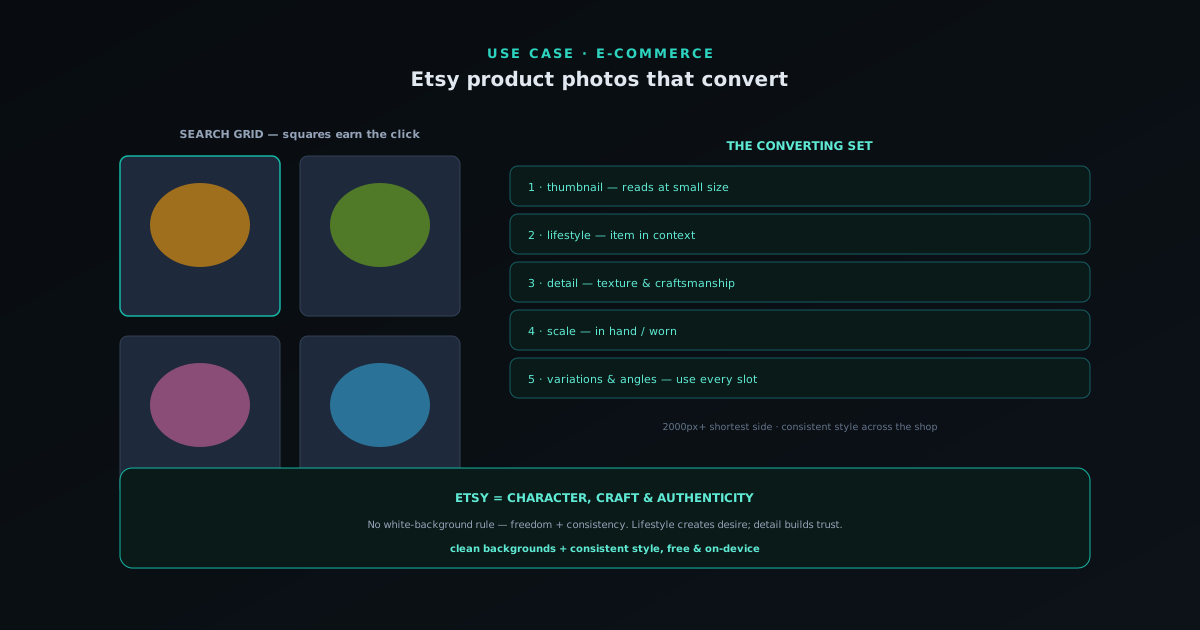
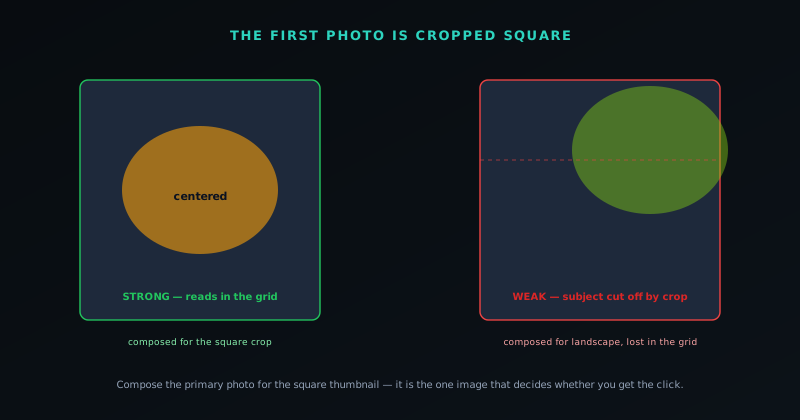
Etsy is less prescriptive than Amazon, but there are specs worth hitting for the best results. Etsy recommends images at least 2000 pixels on the shortest side, which gives enough resolution for Etsy's zoom and for the image to look sharp on high-resolution screens, and since Etsy displays the primary thumbnail as a square, composing with that square crop in mind ensures the most important part of the image is not cut off in the grid. Etsy supports multiple photos per listing (it allows a generous number of slots), and using them all with a deliberate sequence is part of converting, since each additional photo is a chance to answer a buyer's question or show another angle.
The square-thumbnail point is worth dwelling on, because the thumbnail is what appears in search and the shop grid, and it is cropped square regardless of your photo's aspect ratio. A photo composed without the square crop in mind can have its key element cut off in the thumbnail, weakening the most important image. Composing the primary photo so it reads well as a square (the product centered and clear within the square crop) ensures the thumbnail is strong. Hitting the resolution recommendation and composing for the square thumbnail are the two technical specs that most affect how Etsy photos perform, and both are easy to satisfy once you know them, which is why they are worth getting right deliberately rather than discovering after a listing underperforms.
The first photo is the thumbnail that earns the click
The single most important image in an Etsy listing is the first one, because it is the thumbnail shown in search results and the shop grid, and it alone determines whether a buyer clicks into the listing at all. In a grid of competing listings, the thumbnail is competing for attention against dozens of others, so it has to be clear, appealing, and distinctive at small size: the product readable, the composition strong, the image standing out. A weak first photo means the listing never gets the click, no matter how good the product or the rest of the photos are, which makes the thumbnail the highest-stakes single image in the listing.
Designing the first photo as a thumbnail means optimizing for small-size impact: a clear, well-lit product, a composition that reads instantly, and enough distinctiveness to stand out in the grid. Whether that is a clean product shot or an appealing lifestyle image depends on the product and what stops the scroll for your category, but it must work at thumbnail size, since that is where it does its job. Some sellers test different first photos to see which earns more clicks, since the thumbnail's effect on click-through is direct and measurable. Treating the first photo as the click-earning thumbnail it actually is (rather than just the first image in a set) focuses attention on the image that most determines whether the listing gets seen at all.
The mix of shots that converts
A converting Etsy listing uses its multiple photo slots as a deliberate sequence that answers a buyer's questions and builds desire, rather than as a pile of similar shots. A strong mix typically includes: the attention-earning thumbnail first; lifestyle or in-context shots that help the buyer imagine the item in their life; detail and close-up shots that reveal craftsmanship, texture, and quality; a scale reference (the item in hand, worn, or beside a known object) so size is unambiguous; and shots of any variations, angles, or features the buyer needs to see. Each photo has a job, and the sequence walks the buyer from "that's interesting" to "I can see myself with this" to "I understand exactly what I'm getting."
The lifestyle-plus-detail combination is especially important for Etsy, because it serves both the emotional and the practical sides of the decision: lifestyle shots create desire by showing the item in an appealing context, while detail shots build trust by showing the quality up close. Many Etsy listings underperform because they show only flat product shots, missing the lifestyle context that creates desire, or only styled shots, missing the detail that builds confidence in the craftsmanship. A set that deliberately includes both, plus a clear scale reference, covers what an Etsy buyer needs to feel confident buying a handmade item sight unseen. Planning the full sequence (what each slot should accomplish) before shooting is what produces a converting set rather than a collection of pictures.
Backgrounds: clean, styled, or both
Unlike Amazon's mandatory white background, Etsy lets you choose your backgrounds, and the right choice depends on the product and the shop's aesthetic, but consistency matters more than any single choice. Some products and shops look best with clean, simple backgrounds (white or neutral) that keep the focus entirely on the item; others benefit from styled, contextual backgrounds that convey a mood and aesthetic fitting the handmade character. Many successful shops use a mix: a clean shot or two for clarity and a styled lifestyle shot or two for desire. What unifies a converting shop is not a single background choice but consistency: a coherent visual style across listings that makes the shop look intentional and trustworthy.
Background flexibility is where a background-removal tool becomes valuable even though Etsy does not require white backgrounds, because removing the original background at bgremover.novusstreamsolutions.com/background-remover gives you the freedom to place the product on a clean background for clarity or composite it into a styled scene for context, from the same source photo. The image editor at bgremover.novusstreamsolutions.com/editor lets you drop a cutout straight onto a styled background when you want context without a photoshoot. A cluttered or inconsistent background is a common reason Etsy photos look amateur; cleaning it up (whether to a simple background or a deliberately styled one) is what makes the set look considered. The ability to control the background, rather than being stuck with whatever was behind the product when you shot it, is what lets a seller achieve the consistent, intentional look that signals quality, which is why clean background control is as useful on flexible Etsy as it is on strict Amazon.
Lighting and authenticity
Good lighting is the foundation of any product photo, and on Etsy it does double duty: it makes the product look its best and it conveys the authenticity that Etsy buyers value. Soft, even, natural-looking light (daylight from a window is ideal) shows a product's true colors and texture without harsh shadows or blown highlights, which is exactly what a buyer needs to judge a handmade item. Harsh or uneven lighting hides detail and makes colors inaccurate, undermining both the appeal and the trust. The good news is that good lighting on Etsy does not require studio equipment; soft daylight and a clean setup produce photos that look both professional and genuine.
The authenticity dimension is particular to Etsy, where part of the appeal is buying from a real maker, so photos should look genuine rather than over-processed into something slick and impersonal. This does not mean low quality. It means honest: accurate colors, true representation of the item, and a style that feels like a real maker rather than a faceless brand. Over-editing that distorts colors or makes a handmade item look mass-produced works against Etsy's appeal, while clean, well-lit, accurate photos that show the item honestly build the trust that converts. The balance to strike is professional quality with genuine character, which good natural lighting and honest editing achieve, making the product look its best while keeping the authenticity that brought the buyer to Etsy rather than a big-box retailer.
Consistency across the whole shop
A converting Etsy shop is more than a collection of good individual listings: it is a cohesive whole, where a consistent photographic style across all listings signals a considered, trustworthy brand. When a buyer lands on a shop and every listing shares a similar look (comparable backgrounds, lighting, framing, and aesthetic), the shop reads as professional and intentional, which builds the trust that makes a buyer comfortable purchasing. An inconsistent shop, where each listing looks different, reads as amateur even when individual photos are good, because the lack of a unifying style signals a lack of care. Consistency is a shop-level conversion factor that individual-listing quality cannot substitute for.
Achieving consistency across a shop is, as with any repeated image task, a matter of fixing your approach once and applying it across every listing: the same background treatment, the same lighting setup, the same framing and editing style. Processing your photos with consistent settings (and batching them where possible) produces the uniform look that makes the shop cohesive, with consistency as a byproduct of the standardized process rather than an effort on each listing. For a shop with many items, this is also what makes maintaining quality sustainable, since you are applying a known process rather than re-deciding the look for each product. The companion guide at Prepping a whole product catalog, solo covers the batch workflow, but the principle is that shop-wide consistency, built through a repeatable process, is what turns good individual photos into a shop that converts as a whole.
Showing texture and materials on handmade goods
Handmade and craft goods sell on their materials and workmanship, so the photos that convert on Etsy often hinge on close detail shots that let a buyer see and almost feel the texture: the weave of a fabric, the grain of wood, the glaze on ceramics, the finish on metal. These detail shots do trust work that no description can: they prove the quality of the materials and the care of the making, which is exactly what an Etsy buyer is paying a premium for over a mass-produced equivalent. A listing that shows only the whole product from a distance misses the chance to demonstrate the craftsmanship up close, leaving the buyer to take the quality on faith.
Capturing texture well is mostly about light and focus: soft, slightly angled light reveals texture by creating gentle shadows across a surface, where flat front-on light flattens it, and sharp focus on the detail area is essential since the whole point is to let the buyer scrutinize the material. A macro or close-up shot of the most material-rich part of the product (the stitching, the joint, the surface finish) gives the buyer the evidence of quality they are looking for. For handmade goods especially, these texture and detail shots are not optional extras but central converting images, because they are how a photo communicates the craftsmanship that justifies a handmade item's price and distinguishes it from a factory product. Including deliberate detail shots that show the materials honestly is part of what turns an Etsy browser into a buyer.
Use every photo slot with intent
Etsy gives each listing a generous number of photo slots, and a common reason listings underperform is simply not using them: a listing with two photos leaves most of its persuasive capacity unused, while a listing that fills its slots with a deliberate sequence answers more of the buyer's questions and builds more confidence. Each unused slot is a missed chance to show another angle, another detail, the scale, a variation, or a lifestyle context, so the baseline discipline is to fill the available slots with images that each do a job, rather than stopping at the minimum. More good photos, each with a purpose, consistently convert better than fewer.
The key word is intent: filling slots with near-duplicate shots adds little, while filling them with a planned progression (thumbnail, lifestyle, detail, scale, variations, and any context the buyer needs) covers the full decision. Think of the slots as a sequence that walks the buyer from attention to desire to confidence, and assign each slot a role before shooting so none is wasted on a redundant image. For products with options (colors, sizes, variations) using slots to show those reduces the questions and hesitation that lose sales. Etsy effectively gives sellers a generous canvas to sell on; using all of it deliberately, with each image earning its place, is a straightforward lever on conversion that many sellers leave on the table by under-filling their listings. A complete, purposeful photo set simply gives the buyer more reasons and fewer doubts, which is what closes the sale.
Prepping a converting set for free, on-device
All of the editing that produces a converting Etsy set (cleaning up or replacing backgrounds, compositing products into styled scenes, adjusting lighting and color, ensuring consistent framing, and resizing to Etsy's recommended 2000px dimensions with the image resizer at bgremover.novusstreamsolutions.com/tools/image-resizer) can be done for free in the browser without uploading your photos. The NSS Background Remover at bgremover.novusstreamsolutions.com handles the background work and image editing on your device, so your product photos never leave your machine and the output is free of watermarks and per-image limits. For a small independent seller watching costs, free on-device editing means professional-quality photo prep without a subscription or a per-photo fee.
The on-device workflow is what makes consistent, high-quality photos sustainable for an Etsy shop with many listings. Rather than paying a service per photo or wrestling with limited online tools, a seller can process their whole shop's photos (removing backgrounds, standardizing the look, resizing for Etsy) in one place, for free, with the images staying private on their device. This turns the photo prep from a cost and a chore into a routine part of listing, which is what lets a seller maintain the consistent, converting photo quality across a growing shop. Good Etsy photos are within reach of any seller willing to learn what converts and apply a consistent process, and doing the editing free and on-device removes the cost barrier that might otherwise stand in the way.
Frequently asked questions
Quick answers to common questions about this topic.
What size should Etsy product photos be?
Etsy recommends at least 2000 pixels on the shortest side for sharpness and zoom. Compose the primary photo with Etsy's square thumbnail crop in mind, so the key element is not cut off in the search grid where the thumbnail appears.
Does Etsy require a white background like Amazon?
No. Etsy gives sellers creative freedom on backgrounds: clean, styled, or a mix all work. What matters most is consistency across your shop, since a cohesive visual style signals a trustworthy, professional brand more than any single background choice.
What photos should an Etsy listing include?
A click-earning thumbnail first, then lifestyle shots that show the item in context, detail shots that reveal craftsmanship, a scale reference so size is clear, and any variations or angles. Use the multiple slots as a deliberate sequence that builds desire and trust.
How can I edit Etsy photos for free?
Use the NSS Background Remover at https://bgremover.novusstreamsolutions.com to clean up or replace backgrounds, composite into styled scenes, and standardize your set: free, no watermark, and on-device so your photos stay private. It is ideal for processing a whole shop consistently.
Related workflow
Product photo to a transparent image every channel accepts
One photograph, cut out once, then re-encoded for a storefront, a marketplace listing and a social post without redoing the cutout each time.
- Cut the background out and check the edgesNSS Background Remover: Hair, glass and drop shadows are where automatic cutouts fail. Fix them once, on the master, before anything downstream copies the mistake.
- Re-encode and resize per destinationNovus Convert: Transparency survives PNG and WebP and dies in JPEG. Convert validates the file it hands back, so a listing never rejects a silently broken upload.
Related troubleshooting
Was this page helpful?
Your answer stays in this browser, it is not sent anywhere and no account or cookie is involved.