2026 · NSS Background RemoverAbout 13 min readNovus Stream Solutions
Automating alt text and image metadata at scale
Every image on a site wants alt text, a meaningful filename, and clean metadata, and at a few hundred images that work is too tedious to do by hand and too important to skip. The answer is to automate the mechanical parts of it while keeping a human on the parts that need judgement, and to know exactly where that line falls.
Contents
- 1.Overview
- 2.What "metadata" actually covers
- 3.Alt text is for humans first, machines second
- 4.The case for automating, and against doing it blindly
- 5.Build a pipeline, not a one-off script
- 6.Generate alt-text drafts, but have a human approve them
- 7.Filenames and the boring metadata that still matters
- 8.Strip what should never have shipped
- 9.Let the build enforce it
- 10.Automate the toil, keep the judgement
- 11.Re-run the pipeline when the standard changes
Overview
Image metadata is the work nobody wants to do and everybody knows they should. Every image on a site ideally wants a few things: alternative text that describes it for people who cannot see it, a filename that means something, a caption where one helps, and clean technical metadata that does not leak private information. For one image this is a minute of care. For a site with hundreds of images (a tool that processes them in bulk, a blog with an illustration on every post, a catalog of products) that minute multiplies into hours of tedium that is far too easy to skip, which is exactly why so many sites ship with empty alt attributes and camera-default filenames.
The honest answer is not to grind through it by hand and it is not to ignore it; it is to automate the mechanical parts while keeping a person on the parts that genuinely need a human, and to be precise about which is which. Some of this work (stripping technical metadata, generating sensible filenames, checking that nothing is missing) is pure mechanism and should be fully automated. Some of it (writing alt text that is actually accurate and useful) needs judgement that automation can assist but should not replace. This article is about building that split: a pipeline that does the toil and a human who does the thinking, so a few hundred images get proper metadata without anyone losing a day to it.
What "metadata" actually covers
It helps to be concrete about what we are even talking about, because "image metadata" is a vague phrase covering several distinct things with different audiences and different stakes. Lumping them together is how teams end up automating the wrong parts and neglecting the rest, so it is worth separating them before deciding what to automate. Each piece serves a different reader (a person using a screen reader, a search engine, a future maintainer of the site, or the privacy of whoever took the photo) and each has its own right answer for how much a machine should be trusted with it.
Pulling the pieces apart makes the automation decisions obvious, because some are mechanical and some are editorial. The mechanical ones can be handled end to end by a script with no judgement required; the editorial ones need a human in the loop. Here is the rough taxonomy:
- Alt text: a short description for people who cannot see the image, also read by search engines: editorial, needs judgement.
- Filename: the name of the file itself, which carries meaning for both maintainers and image search: mechanical, can be generated.
- Caption: visible text accompanying the image where one adds value: editorial, often optional.
- Structured data: machine-readable image metadata for search engines: mechanical, derived from the other fields.
- EXIF and embedded data: camera, location, and timestamp data baked into the file: mechanical, and usually should be stripped before publishing.
Alt text is for humans first, machines second
The most common mistake with alt text is treating it as an SEO field to be stuffed with keywords rather than what it actually is: a description for a person who cannot see the image, most often someone using a screen reader. That framing changes everything about what good alt text looks like. It should convey what the image communicates in its context, not a literal inventory of every pixel, and not a keyword list, but the meaning the image is carrying on that particular page. The same photograph might warrant different alt text in different contexts, because what it is "for" changes with where it sits.
Getting this right matters because alt text is one of the few places where doing the accessible thing and doing the SEO thing are genuinely the same thing, as long as you optimise for the human. Search engines reward alt text that accurately describes the image because that is what serves their users too, so honest, descriptive alt text written for a person is also the alt text that helps the image be found. The trap is inverting that priority: writing for the search engine and producing something a screen-reader user finds useless or insulting. Keep the human first and the machine benefit follows; do it the other way around and you serve neither well. The fuller case is in Image SEO: alt text, file names, and getting images indexed.
The case for automating, and against doing it blindly
The argument for automation is simply scale: at a few hundred or a few thousand images, the per-image work that is trivial in isolation becomes a wall that guarantees the work gets skipped, and skipped metadata means inaccessible images, missed discovery, and leaked private data. Automation is what makes the right thing achievable at volume rather than aspirational. A pipeline that handles every new image consistently is far better than a good intention that is honoured for the first ten images and abandoned by the hundredth, which is the realistic alternative when the work is manual.
But there is an equally real argument against automating it blindly, and it centres on the editorial pieces. Alt text generated and published with no human review will sometimes be confidently wrong: describing the wrong subject, missing the point of the image in its context, or producing fluent nonsense that is worse than nothing because it actively misleads a screen-reader user who has no way to know it is inaccurate. The resolution is not to choose between automation and quality but to automate the mechanical parts completely and to use automation as a drafting assistant, not a final author, for the editorial parts. The whole design below follows from that single distinction.
Build a pipeline, not a one-off script
The durable form of this is a pipeline that every image passes through on its way into the site, not a heroic one-time script you run once and never again. A one-off cleanup of existing images is worth doing, but if new images keep arriving without going through the same treatment, the library rots again immediately and you are back where you started within months. A pipeline (a defined sequence of steps applied to each new image consistently) is what keeps the whole library in a good state permanently, because correctness is maintained continuously rather than restored periodically.
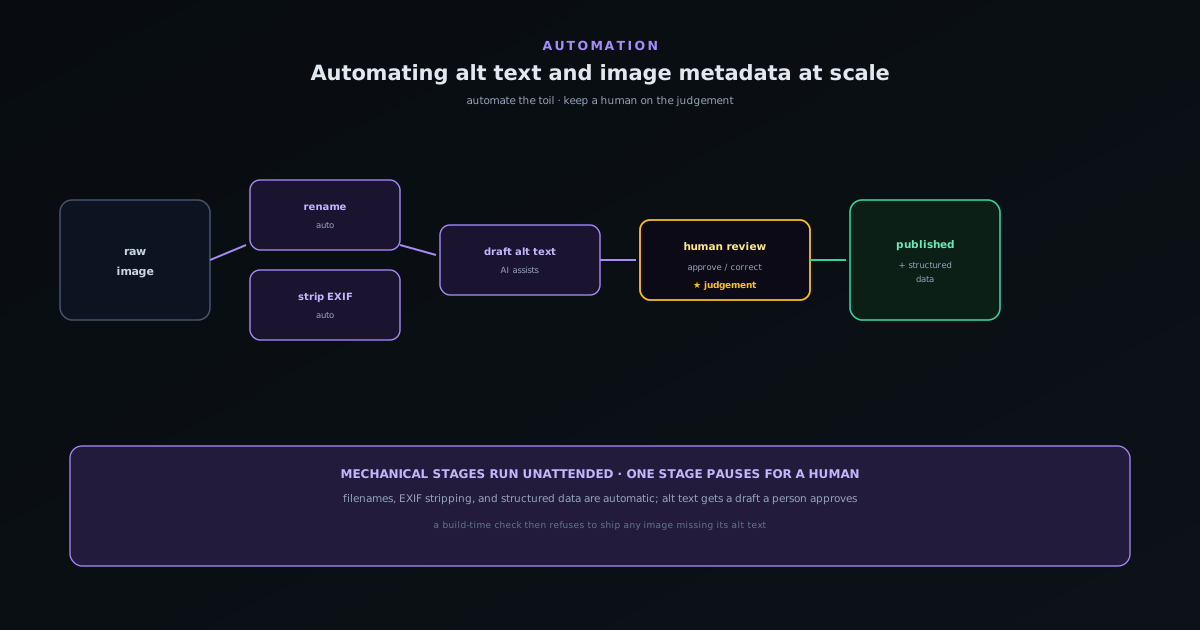
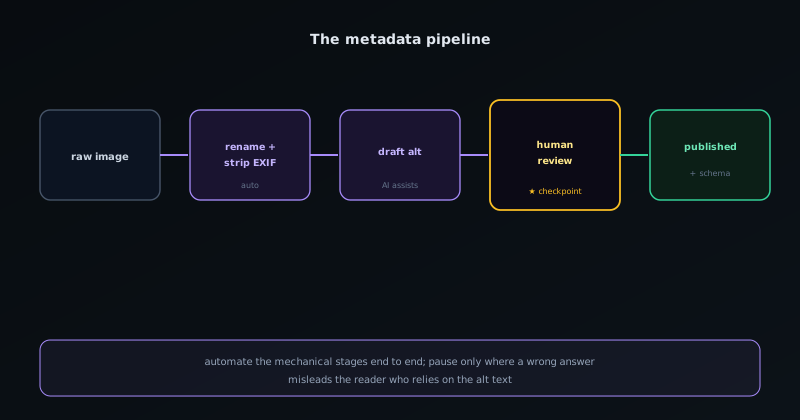
Framed as a pipeline, the work decomposes into ordered stages, each doing one job: derive a meaningful filename, strip the technical metadata that should not ship, generate a draft of the alt text, present that draft for human approval, and emit the structured data from the approved fields. The mechanical stages run unattended; the one editorial stage pauses for a person. Structuring it this way is the same discipline that applies to any automation worth keeping: defined steps, clear inputs and outputs, and a human checkpoint placed exactly where judgement is required rather than everywhere or nowhere. It is the image-metadata instance of the broader pattern in Automation & AI.
Generate alt-text drafts, but have a human approve them
This is the heart of doing it well: use a model to draft the alt text, and use a person to approve or correct it before it ships. A modern image model can produce a serviceable first description of most images, which removes the blank-page tax that is the real reason alt text gets skipped: it is far easier and faster to approve or lightly edit a decent draft than to write each one from scratch. The automation does the tedious eighty per cent; the human supplies the judgement and the accountability for the part that actually reaches a reader.
The reason the human checkpoint is non-negotiable is that the cost of a wrong alt text is borne entirely by the person least able to catch it. A sighted maintainer skimming the page will never notice that an auto-generated description is subtly wrong, but a screen-reader user relying on it is actively misled, with no way to know. So the draft is a starting point, never the published artifact, and the review step is where a person confirms the description is true and useful in context. This is the human-in-the-loop principle applied precisely: let the machine remove the drudgery, and keep the human exactly where being wrong would hurt someone, which is the same logic that governs where to place a person in any automated flow.
Filenames and the boring metadata that still matters
Filenames are the easiest win and among the most neglected. An image called by a camera-default string of digits tells nobody anything: not a maintainer scanning a folder, not an image search engine trying to understand the file, not a future you trying to find it. Generating a meaningful filename from the image’s context or its approved description is pure mechanism with no downside, and it pays back every time someone has to work with the file later. This is the kind of stage that should run automatically on every image without anyone thinking about it, because there is no judgement involved and the consistent result is strictly better than the default.
The same goes for the structured data that lets search engines understand an image as more than an opaque file. Once the alt text is approved and the filename is set, emitting the machine-readable image metadata is a derivation, not a decision: it falls out of fields you already have. Treating it as an automatic output of the pipeline rather than something maintained by hand per image means it is always present and always consistent with the human-readable fields, which is exactly the kind of correctness-by-construction that structured data should have. The boring metadata matters precisely because it is boring: it is the stuff that is easy to skip and quietly compounds when you do.
Strip what should never have shipped
Photographs in particular arrive carrying technical metadata the photographer never meant to publish: the camera and lens, the precise timestamp, and often the GPS coordinates of where the picture was taken. Publishing an image with its location data intact is a genuine privacy leak, and it is the kind that happens silently because nobody sees the embedded data in normal use: it just rides along inside the file, available to anyone who looks. For a site that handles user images or its own photography, stripping this data before publishing is not optional hygiene, it is a basic privacy obligation, and it is the kind of thing that should never depend on someone remembering to do it by hand.
Because it is purely mechanical, EXIF stripping is an ideal automatic pipeline stage: every image passes through it, the sensitive embedded data is removed, and nothing private ships by accident. The manual version of this (opening each image and clearing its metadata) is exactly the sort of step that gets skipped under time pressure, with consequences that only surface when someone notices a location pin in a published photo. Automating it removes both the toil and the risk in one move. The single-image, by-hand version of this task is covered in How to remove EXIF metadata from your photos (and why); at scale, it simply becomes a stage in the pipeline that runs on everything, every time.
Let the build enforce it
A pipeline ensures new images are handled well, but the backstop that keeps the whole library honest is a build-time check: a rule that refuses to ship if any image is missing the metadata it should have. The most valuable single check is that every image has non-empty alt text, because an empty alt attribute is both the most common failure and the most consequential for accessibility. Wiring that into the build, as described in A build-time validation gate: catching content errors before deploy, turns "we try to remember alt text" into "the site cannot deploy with a missing one", which is a far stronger guarantee than discipline alone.
This is where automation and validation reinforce each other. The pipeline does the work; the gate confirms the work was done. Even if someone adds an image outside the normal flow, or a pipeline stage silently fails, the build-time check catches the gap before it reaches a reader, and it does so by naming the specific image so the fix is immediate. Together they mean image metadata stops being a thing the team hopes is handled and becomes a thing the system guarantees is handled: the toil automated, the judgement preserved at the review step, and the result enforced at the gate. That combination is what lets a library of hundreds of images stay accessible and clean without anyone heroically maintaining it.
Automate the toil, keep the judgement
Step back and the principle generalises far beyond images. The reason this pipeline works is that it draws a clean line between the parts of the task that are mechanical and the parts that require a human to be accountable, automates the first completely, and assists rather than replaces the second. Filenames, EXIF stripping, structured data, and the validation check are pure mechanism and run unattended; the alt text, where a wrong answer misleads a real person, keeps a human at the wheel with a draft to react to rather than a blank page to fill. Neither extreme (all manual or all automatic) gets this right.
That split is the durable lesson for any repetitive content task that mixes toil and judgement. Fully manual does not scale and quietly gets abandoned; fully automatic ships confident errors in exactly the places where errors hurt. The sweet spot is a pipeline that removes the drudgery and a human checkpoint placed precisely where judgement and accountability are required, so the team’s scarce attention is spent only where it actually matters. Applied to image metadata, it means a few hundred images can have proper alt text, clean files, and complete structured data without anyone losing a day, and it means the next few hundred will too, because the system, not anyone’s willpower, is what keeps it that way.
Re-run the pipeline when the standard changes
A pipeline keeps new images in good shape, but the standard for what "good shape" means tends to rise over time, and the value of automating the work is that raising the bar across the whole back catalogue becomes feasible rather than fantastical. When you decide that every image should now carry a richer caption, or a new structured-data field, or that the alt text should follow a sharper convention, a manual library would simply never be brought up to the new standard: the old images would stay as they were forever, because nobody is going to hand-edit hundreds of files. With a pipeline, the same automated stages can be pointed at the existing library to backfill the mechanical fields and surface the editorial ones for review.
This is the compounding payoff of having built the work as a repeatable process rather than a one-time effort. The pipeline is not just how new images are handled; it is a lever you can pull over the entire catalogue whenever the bar moves, so the library trends toward consistency instead of accumulating layers of whatever the standard happened to be when each image was added. The editorial parts still need human review on the backfill (you do not auto-publish a thousand new alt texts unread) but the drudgery of renaming, re-stripping, and re-deriving structured data across the whole set is one command, not one image at a time. Automation turns "we should really fix the old images" from a perennial guilt into a Tuesday afternoon.
Frequently asked questions
Quick answers to common questions about this topic.
Should I just auto-generate alt text and publish it?
No. Generate a draft automatically, but have a human approve or correct it before it ships. A model removes the blank-page tax that makes alt text get skipped, but it will sometimes be confidently wrong in ways a sighted maintainer never notices and a screen-reader user is actively misled by. Use automation to draft and a person to take responsibility for what actually reaches a reader.
What should good alt text actually say?
What the image communicates in its context, written for a person who cannot see it, not a keyword list and not a literal pixel inventory. The same image can warrant different alt text on different pages because its meaning changes with context. Optimise for the human and the SEO benefit follows, because search engines reward accurate descriptions; optimise for the search engine and you serve neither.
Which parts of image metadata are safe to fully automate?
The mechanical parts: generating meaningful filenames, stripping EXIF and embedded location data, and emitting structured data derived from the approved fields. These need no judgement and the automated result is strictly better than the default. Reserve the human checkpoint for the editorial part (the alt text) where being wrong misleads a real person.
Why strip EXIF data from images before publishing?
Because photos carry embedded technical data (camera, timestamp, and often GPS coordinates) that the photographer never meant to publish, and shipping it is a silent privacy leak. It is invisible in normal use, so it only surfaces when someone notices a location pin in a published image. Stripping it is purely mechanical, which makes it an ideal automatic pipeline stage that runs on every image.
How do I stop images from shipping without alt text?
Add a build-time check that fails the deploy if any image is missing non-empty alt text, naming the specific image so the fix is immediate. The pipeline handles new images well, but the gate is the backstop that catches anything added outside the flow or any stage that silently failed, turning “we try to remember alt text” into “the site cannot deploy without it.”
Related workflow
Product photo to a transparent image every channel accepts
One photograph, cut out once, then re-encoded for a storefront, a marketplace listing and a social post without redoing the cutout each time.
- Cut the background out and check the edgesNSS Background Remover: Hair, glass and drop shadows are where automatic cutouts fail. Fix them once, on the master, before anything downstream copies the mistake.
- Re-encode and resize per destinationNovus Convert: Transparency survives PNG and WebP and dies in JPEG. Convert validates the file it hands back, so a listing never rejects a silently broken upload.
Related troubleshooting
Was this page helpful?
Your answer stays in this browser, it is not sent anywhere and no account or cookie is involved.