2026 · Novus Stream SolutionsAbout 12 min readNovus Stream Solutions
Turning a changelog into content: a repeatable system
Most teams ship updates and let the changelog sit unread. But a changelog is a goldmine of content: every real feature is a potential article. Here is a repeatable system for turning releases into posts.
Contents
- 1.Overview
- 2.The changelog is a content goldmine
- 3.Why most changelogs are wasted
- 4.From release note to article
- 5.The repeatable system
- 6.Keeping it honest: real features only
- 7.Linking changelog to blog to docs
- 8.Cadence: shipping content with releases
- 9.Documentation is the other harvest
- 10.Automating the boring parts and compounding the value
Overview
Most teams treat the changelog as an obligation: a terse list of what shipped, written for the few users who read changelogs, and then forgotten. But a changelog is one of the most underused content assets a product team has, because every real feature in it is the seed of an article. The work of building the feature already produced the substance; the changelog entry already summarized it; turning that into a genuine piece of content is mostly a matter of expansion and a repeatable system. This is that system: how to turn a changelog into a steady stream of content without inventing topics from scratch, because the topics are already there in what you actually shipped.
The insight that makes this work is that the hardest part of content (having something real and specific to say) is already solved by the act of building. A team that ships features has, in each release, genuine material: a real capability, built for a real reason, solving a real problem, with real decisions behind it. That is exactly what good content is made of, and it is already documented in the changelog. The changelog-to-content system is a way of harvesting the content that your development work already generated, turning the record of what you built into the substance of what you publish. The features are the topics; the system is just how you expand and connect them.
The changelog is a content goldmine
A changelog is a chronological record of real things you built, each with genuine substance behind it, which makes it a goldmine of content topics that require no invention. Every feature entry answers questions a piece of content could explore: what is this capability, why did you build it, what problem does it solve, how does it work, who is it for, what decisions shaped it. Those are exactly the questions a useful article answers, and the changelog has already identified the topic and summarized the substance. Instead of staring at a blank page wondering what to write about, you have a list of real features you shipped, each a ready-made topic with real material behind it.
This is especially valuable because the topics are inherently genuine and specific rather than invented and generic. Content created by harvesting real features is grounded in things you actually did, which means it has the specificity and authenticity that generic content lacks: you are writing about a real capability you built, not a topic you researched superficially. The changelog guarantees that your content is connected to reality, because each piece springs from something real you shipped. The goldmine is not just that the changelog provides topics, but that it provides genuine, specific, substantive topics, which are exactly the kind that make good content and the kind that are hardest to come up with from nothing.
Why most changelogs are wasted
Despite this potential, most changelogs are wasted, sitting as terse, unread lists that capture none of the content value in what they record. The typical changelog entry is a single line ("added X," "fixed Y") written for the narrow audience that reads changelogs, with no expansion, no explanation of why, no exploration of the problem solved. The substance behind the feature, which the team understands deeply, never makes it into the changelog beyond a summary, and certainly never into content that a wider audience could find and benefit from. The value is there, recorded but undeveloped, and then forgotten as the next release piles on top.
The waste happens because the changelog is treated as a record rather than a source. A record's job is to note what happened concisely, so the changelog stays terse and complete; but that terseness means the rich substance behind each feature is compressed out and never recovered. Teams that see the changelog only as a record leave all that substance on the table, publishing nothing about features they spent real effort building and understanding. The shift is to see the changelog as a content source as well as a record (a list of topics to expand into genuine content), which unlocks the value that the terse-record view leaves buried. Most changelogs are wasted simply because no one treats them as the goldmine they are.
From release note to article
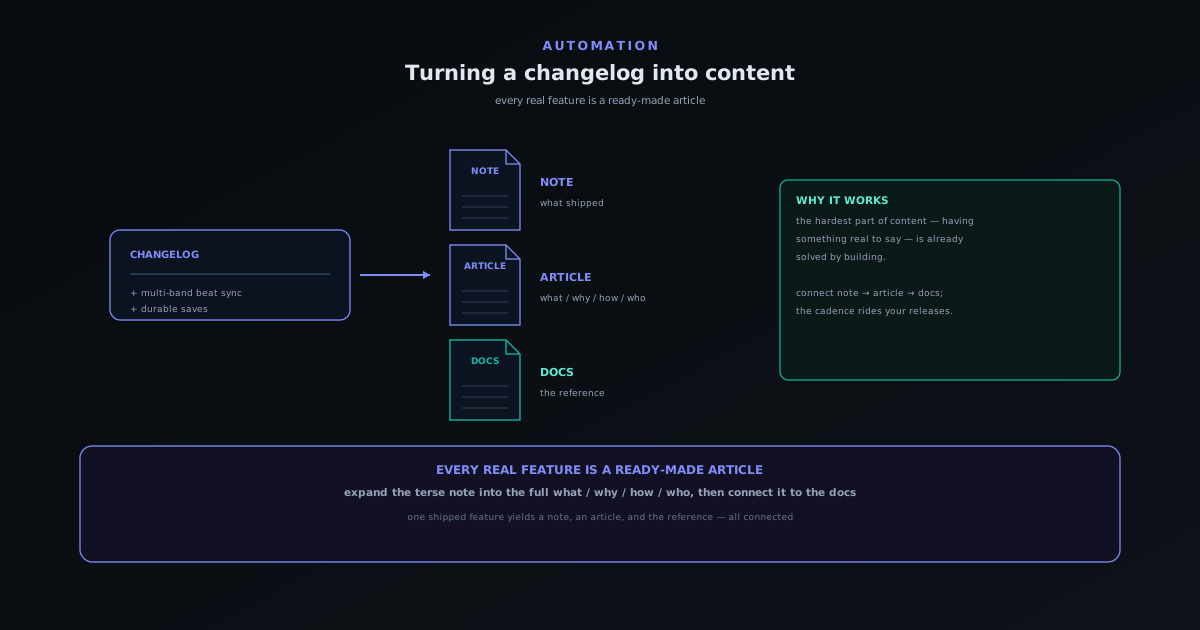
The core move is expanding a terse release note into a genuine article by answering the questions the note compresses out. Take a feature entry and develop it: what is this capability in full, not just in summary; why did you build it, what problem or need drove it; how does it actually work, in enough detail to be genuinely informative; who is it for and how do they use it; what decisions or trade-offs shaped it. Each of these questions, answered with the real understanding the team already has, expands a one-line note into a substantive article. The note is the seed; the answers are the content; and the team already knows the answers because they built the thing.
This expansion is genuinely valuable content rather than padding, because it surfaces the real substance that the terse note compressed. A reader does not benefit from "added multi-band beat sync," but they benefit a great deal from an article explaining what multi-band beat sync is, why it matters, how it works, and what it lets a creator do, and all of that is real, specific, and grounded in the actual feature. The expansion turns the team's internal understanding of a feature into public content that explains and showcases it, which serves users, supports search, and demonstrates the product. From release note to article is the central transformation of the system, and it works because the substance is already there, waiting to be expanded.
The repeatable system
To make this sustainable rather than occasional, turn it into a repeatable system tied to your release cadence. When you ship a release, identify which features in the changelog have enough substance to warrant content, and for each, run the same expansion: answer the standard questions, write the article, connect it to related content and documentation, and publish. Because the process is the same each time and the topics come from what you shipped, it becomes a routine rather than a creative struggle, and it produces content in step with your development. The system turns "what should we write about" from an open question into a defined process: ship features, expand the substantial ones, publish.
The repeatability is what makes this a content engine rather than a one-off. A defined process (identify content-worthy features, expand them with the standard questions, connect and publish) can be run every release, by anyone who understands the features, with predictable output. It removes the hardest part of maintaining a content cadence, which is constantly generating topics, by tying content to the steady stream of real work the team is already doing. The system runs as long as you keep shipping features, which means it produces content as a natural byproduct of building, sustained by the development you would be doing anyway. That coupling of content to real work is what makes the cadence sustainable.
Keeping it honest: real features only
A crucial discipline in this system is that the content must track real, shipped features rather than overclaiming or inventing, because the value of changelog-derived content is precisely its grounding in reality. Write about what you actually built and shipped, describe it accurately, and do not dress up minor changes as major features or claim capabilities that are not real. The honesty is not just ethical but practical: content grounded in real features is specific and credible, while content that overclaims is generic and eventually exposed. The changelog keeps you honest by tying content to the record of what actually shipped, and you should preserve that honesty rather than inflating it.
This honesty discipline also shapes which features warrant content. Not every changelog entry deserves an article (minor fixes and small tweaks usually do not have enough substance to expand into something genuinely useful), so the system includes the judgment of which features are content-worthy. Expanding a trivial change into a full article produces thin content that helps no one, so the discipline is to write about the features that genuinely have substance and to describe them accurately. Keeping it honest means both not overclaiming about the features you do write about and not manufacturing content from features that do not warrant it. The result is content that is genuinely informative because it tracks real, substantial work, which is exactly the quality that makes it worth reading.
Linking changelog to blog to docs
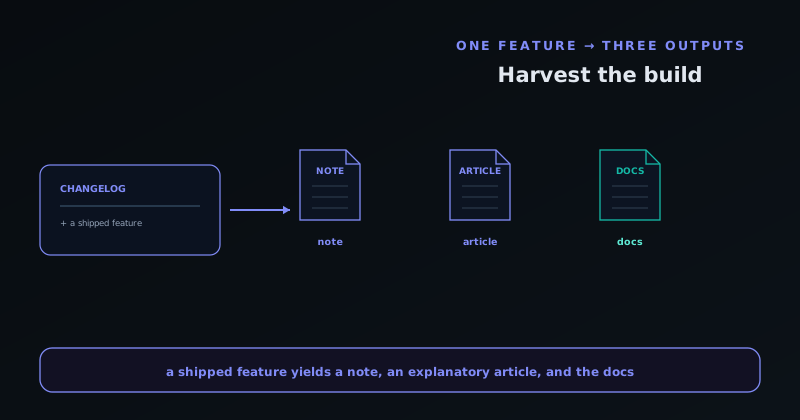
Changelog-derived content works best when it is connected to the rest of your content ecosystem: the changelog entry, the article expanding it, and the documentation covering the feature should link to each other, forming a connected web rather than isolated pieces. The changelog notes what shipped and can link to the article that explains it; the article explores the feature in depth and can link to the documentation for the full reference; the documentation provides the authoritative detail. This linking turns a single feature into a connected set of content serving different needs (the quick note, the explanatory article, the reference) all reinforcing each other.
This connection also fits the feature-derived content naturally into a topic-cluster structure. A feature article is a spoke that links to the product's pillar and to related feature articles, slotting into the cluster for that product, while also connecting to the changelog and docs. Over many releases, this builds a rich, interconnected body of content where each feature is covered from multiple angles and connected to everything related, which serves readers and demonstrates depth. The changelog-to-content system is most powerful when it feeds a connected structure rather than producing isolated posts, because the connections multiply the value of each piece and build the topical authority that comes from comprehensive, linked coverage.
Cadence: shipping content with releases
One of the best things about a changelog-driven content system is that it naturally produces a content cadence tied to your development cadence, which solves the perennial problem of sustaining regular publishing. If you ship features regularly and expand the substantial ones into content, you publish regularly as a consequence, without having to manufacture a separate content schedule. The content cadence rides on the development cadence, which means it is sustained by the work you are already doing rather than requiring separate willpower. Shipping content with releases turns your development rhythm into a publishing rhythm.
This coupling makes the cadence both sustainable and meaningful. It is sustainable because it does not depend on constantly generating unrelated topics (the topics come from the releases) and meaningful because the content tracks real product progress, so your publishing reflects genuine development rather than filler produced to hit a schedule. A site whose content cadence is driven by real releases stays current and substantive automatically, because it is publishing about real things as they ship. The changelog-to-content system thus solves two problems at once: it provides the topics and it provides the cadence, both derived from the development you are doing anyway, which is exactly why it is such an efficient way to sustain a content operation.
Documentation is the other harvest
The changelog is not the only place a shipped feature generates content; it also generates documentation, and the two harvests reinforce each other. When you build a feature, it needs to be documented (explained authoritatively in the product's reference material), and that documentation work overlaps substantially with the content work, since both draw on the same understanding of what the feature is and how it works. A team that harvests both gets two connected assets from one feature: an article that explains and showcases it for a general audience, and documentation that provides the authoritative reference for users who need the detail. The same substance feeds both, which makes producing both efficient.
Treating documentation as a parallel harvest also improves the product, not just the content. Documentation forces a clear, complete account of how a feature actually works, which surfaces gaps and ambiguities while they are still easy to fix, and it gives users the reference they need to actually use what you shipped. A feature that is built, changelogged, written up as an article, and properly documented is a feature whose value is fully realized (announced, explained, and made usable) rather than one that shipped and was forgotten. The discipline of harvesting documentation alongside content, both derived from the same shipped feature, is part of what turns the act of building into a fully exploited source of value, where each feature yields the announcement, the explanatory content, and the authoritative reference, all connected and all drawn from the work you already did to build the thing.
The interlinking between the three (changelog note, explanatory article, and documentation) is what turns them from three separate outputs into a connected whole greater than its parts. The changelog points to the article for the story, the article points to the documentation for the detail, and the documentation anchors the authoritative reference, so a reader entering at any point can find the others. This is the same connected-content principle that makes topic clusters work, applied to the outputs of a single feature: each piece serves a different need and reinforces the others, and the links make the set navigable. Harvesting all three from one feature, and connecting them, is how a team extracts the full content value from the work of building, turning each shipped feature into a small, connected body of content rather than a single forgotten line in a list.
Automating the boring parts and compounding the value
The system has repetitive elements (expanding notes, wiring articles into the content structure, generating supporting assets), and these are exactly the parts that benefit from automation and AI assistance. The judgment of which features warrant content and whether the expansion is accurate stays human, but the mechanical work of drafting expansions from the substance, connecting articles to clusters and docs, and producing supporting graphics can be assisted, which makes running the system fast enough to sustain. Automating the boring parts of the changelog-to-content system is what turns it from a good idea into a practical engine a small team can actually run every release.
And the value compounds, which is the final reason the system is worth adopting. Each feature article is a durable asset that keeps being found and read, each connection strengthens the content structure, and over many releases the accumulated content becomes a comprehensive, interconnected resource covering your product deeply. The compounding comes from the system running consistently over time: every release adds content, every addition strengthens the structure, and the whole thing grows in coverage and authority. A changelog that was being wasted becomes, through this system, the engine of a compounding content operation, turning the record of what you built into a growing body of content that serves users, supports search, and showcases the product. The features were always there; the system is just how you stop wasting them.
Frequently asked questions
Quick answers to common questions about this topic.
How do you turn a changelog into content?
Treat each meaningful update as the seed of a post: explain the why and how, not just the what. A changelog entry becomes a blog post, a social update, and a docs change from one piece of source material.
Why repurpose updates into content?
Because the work is already done: you shipped the feature. Expanding it into content compounds its value, builds your blog's cadence, and gives search engines fresh, specific pages to index.
How do you keep changelog-driven content from being dry?
Focus on the user benefit and the story behind the change, not a bare feature list. The decision and the problem solved are what make an update worth reading.
Related troubleshooting
Was this page helpful?
Your answer stays in this browser, it is not sent anywhere and no account or cookie is involved.