2026 · Novus Stream SolutionsAbout 13 min readNovus Stream Solutions
Building a marketing site with Claude Code: the honest workflow
AI coding tools are oversold and underspecified in equal measure. Here is the honest version of building and running a real marketing site with Claude Code: what it does well, what still needs a human, and how the division of labor actually works.
Contents
- 1.Overview
- 2.What "building with Claude Code" actually means
- 3.Code-as-content: the architecture that fits
- 4.Where AI assistance genuinely shines
- 5.Where it still needs a human
- 6.Reviewing what the AI produces
- 7.Keeping a consistent voice across AI-assisted content
- 8.Speed without slop: the quality guardrails
- 9.What this does and does not replace
- 10.The skill that matters most is direction
- 11.The workflow, end to end
Overview
AI coding tools attract two equally unhelpful kinds of commentary: breathless claims that they replace developers entirely, and dismissive claims that they produce nothing but slop. Neither matches the reality of using one to build and run a real marketing and content site day after day. The honest version is more interesting and more useful: AI assistance genuinely changes the economics of building and maintaining a site, but only within a specific division of labor where the human and the tool each do what they are good at. This is that honest version: what building a marketing site with Claude Code actually looks like, where it helps, where it does not, and how the work is really divided.
The reason this is worth writing down plainly is that the hype and the dismissal both lead people astray. Believe the hype and you ship unreviewed slop and wonder why the site is mediocre; believe the dismissal and you forgo a genuine productivity gain out of misplaced purism. The truth is in the middle and is entirely workable: with the right architecture, the right division of labor, and real quality guardrails, AI assistance lets a small operation build and maintain a substantial site that it could not otherwise sustain, without sacrificing quality, provided the human stays genuinely in the loop. The key is understanding exactly what that division of labor is.
What "building with Claude Code" actually means
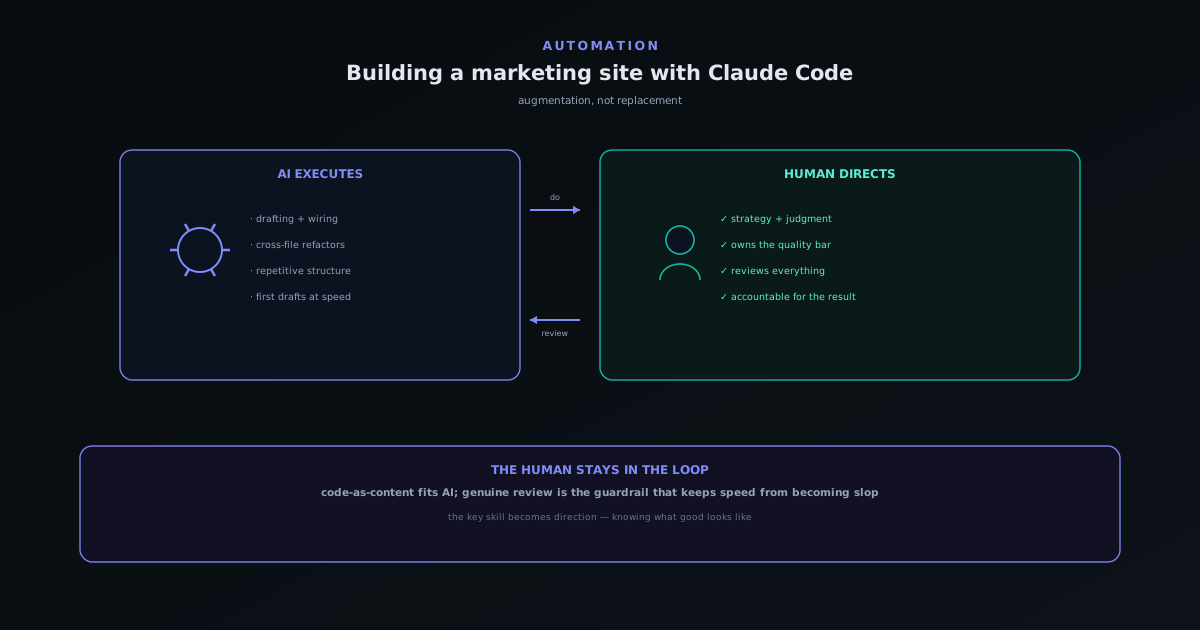
It helps to be concrete about what the workflow is, because "building with AI" is vague enough to mean almost anything. In practice it means using Claude Code as a capable assistant that can read the codebase, make changes across files, write and refactor code, draft and edit content, run scripts, and handle the mechanical parts of building and maintaining a site, while the human directs the work, makes the decisions, reviews the output, and owns the result. It is not the AI autonomously building a site from a one-line prompt; it is a collaboration where the AI does a great deal of the actual typing and the human does the directing and judging.
This framing matters because it sets correct expectations on both sides. The AI is genuinely capable of substantial work (implementing a feature, restructuring data, drafting a long article, wiring up a system) at a speed no human matches, which is the real productivity gain. But it works within direction and under review, not as an autonomous replacement, which is the real limit. "Building with Claude Code" means having a fast, capable collaborator that handles much of the execution while you handle the direction and the judgment, and the productivity comes precisely from that division rather than from the AI doing everything or the human doing everything.
Code-as-content: the architecture that fits
A specific architectural choice makes AI-assisted site building work far better, which is treating content as code rather than managing it in a separate system. When blog posts, documentation, and structured data live as typed code in the repository (rather than in a database or a content management system), the AI can read, write, and modify them with the same tools it uses for everything else, the build validates them like any other code, and the whole site is one coherent codebase the assistant can reason about. This code-as-content architecture turns content work into the same kind of work as code work, which is exactly where AI assistance is strongest.
The benefits compound. Typed content means errors are caught at build time rather than discovered later, so the AI cannot silently break a post; the unified codebase means the assistant has full context rather than working blind against an opaque CMS; and the same review and deployment process applies to content and code alike. This architecture is partly why a small operation can sustain a large content site with AI assistance: the content is in a form the assistant can work with safely and the build can validate, so producing and maintaining a lot of it is tractable. The architecture and the AI workflow reinforce each other: code-as-content is what makes AI-assisted content production both fast and safe.
Where AI assistance genuinely shines
There are specific kinds of work where AI assistance is transformatively helpful, and recognizing them is how you get the real value. It excels at the mechanical and repetitive: implementing a known pattern across many files, wiring new content into the registries and indexes that need updating, refactoring, generating boilerplate, and handling the tedious wiring that is necessary but not intellectually demanding. It is fast at drafting substantial content from a clear direction, at translating a described feature into working code, and at the kind of careful, repetitive execution where humans get bored and make mistakes. In all of these, the AI does in minutes what would take a human much longer, with consistent quality.
It also shines at the work of keeping a large, structured codebase coherent: the kind of cross-cutting changes that are conceptually simple but tedious and error-prone by hand, like adding a new category and wiring it through every place that references categories. A human doing this manually is slow and prone to missing a spot; the AI can do it comprehensively and quickly because it can hold the whole structure in view. This is where the productivity gain is most real: not in replacing the creative or strategic work, but in executing the large amount of careful, repetitive, structural work that a substantial site requires, freeing the human to focus on the parts that genuinely need judgment.
Where it still needs a human
Just as important is knowing where the human is genuinely necessary, because pretending otherwise is how you get slop. The strategic decisions (what to build, what to write about, how to position things, what the site should be) are human work, because they require judgment about goals, audience, and trade-offs that the AI cannot make for you. The quality bar is human-owned: deciding whether a draft is actually good, whether a piece of content is genuinely useful, whether the work meets the standard, is a judgment the human must make rather than delegate. And the accountability is human: the result is yours, which means you have to actually understand and stand behind what ships.
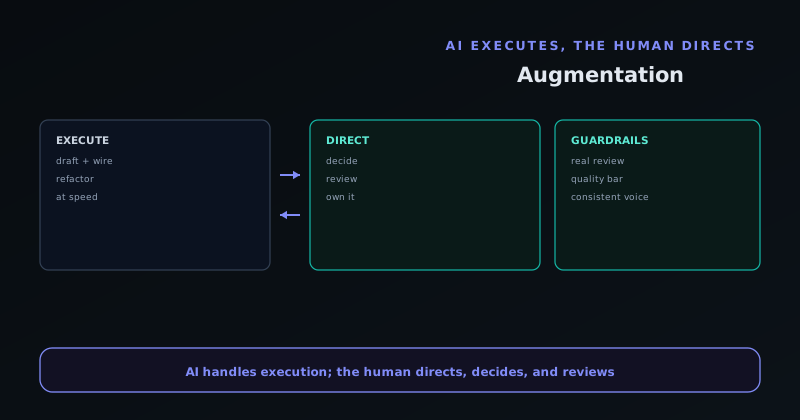
The human is also necessary for the things that require taste, genuine understanding, and verification. The AI can draft, but the human decides whether the draft says something true and worth saying; the AI can implement, but the human verifies it actually works and does the right thing; the AI can produce volume, but the human ensures the volume is genuinely valuable rather than filler. The division is roughly that the AI handles execution and the human handles judgment, direction, and verification, and the judgment, direction, and verification are not optional add-ons but the essential human contribution that keeps the AI's speed from becoming a fast way to produce mediocrity. Where it needs a human is precisely where quality and accountability live.
Reviewing what the AI produces
The single most important discipline in AI-assisted work is genuine review, because the gap between AI assistance that produces good work and AI assistance that produces slop is almost entirely whether the human actually reviews the output. AI-generated code can be subtly wrong; AI-drafted content can be plausible but vacuous, inaccurate, or off-voice; AI-made changes can have unintended effects. None of this is a reason not to use the assistance, but all of it is a reason to review what it produces with the same care you would apply to your own work, because once it ships, it is your work, and the AI's mistakes become your mistakes.
Real review means actually reading the content for substance and accuracy, actually checking that the code does what it should, actually verifying that changes have the intended effect and no unintended ones, not skimming and trusting. This is where the time the AI saves on execution gets partly reinvested, and it should be: the productivity gain is real even after accounting for thorough review, but only if the review actually happens. The failure mode of AI-assisted work is skipping review because the output looks plausible, which is exactly when subtle problems slip through. Treating the AI as a fast first-draft generator whose output always gets genuinely reviewed is the discipline that keeps the speed from becoming a liability.
Keeping a consistent voice across AI-assisted content
A specific challenge in AI-assisted content is maintaining a consistent voice and quality across a lot of material, because AI drafts can drift toward a generic register if not directed and reviewed for voice. The solution is partly direction (giving the AI clear guidance on the voice, the standards, and the kind of content you want) and partly review, reading drafts not just for accuracy but for whether they sound like the genuine voice of the site rather than generic AI prose. Consistency of voice is a quality signal readers notice, and keeping it across AI-assisted content requires the human to actively maintain it rather than assuming the AI will.
In practice, this means establishing what the voice and standards are, directing the AI toward them, and editing drafts to match, treating the AI's output as a draft to be brought into voice rather than a finished piece. Over time, with consistent direction and review, the AI-assisted content can hold a genuine, consistent voice, but it does not happen automatically; it happens because the human enforces it. The content on a well-run AI-assisted site reads as coherent and intentional because someone is actively maintaining the voice across all of it, not because the AI naturally produced consistency. Voice is one more place where the human's judgment and editing are what turn AI assistance into genuine quality rather than generic volume.
Speed without slop: the quality guardrails
The whole question of AI-assisted site building comes down to whether you can capture the speed without producing slop, and the answer is yes, but only with deliberate guardrails. The guardrails are the ones already described, applied consistently: a clear human-owned quality bar that every piece of output must meet; genuine review of all AI-produced work; the human owning strategy, judgment, and accountability; and an architecture (like code-as-content with build-time validation) that catches errors mechanically. Together these let you take the AI's speed on execution while keeping the human's judgment on quality, which is the combination that produces fast, good work rather than fast slop.
The guardrails are not bureaucracy; they are the thing that makes the speed worth having. AI assistance without guardrails is a fast way to fill a site with mediocre, error-prone content that damages rather than builds: speed in service of slop. AI assistance with guardrails is a genuine productivity gain that lets a small operation produce and maintain substantial, high-quality work: speed in service of quality. The difference is entirely in whether the human stays genuinely in the loop on judgment and review, which is why the honest workflow emphasizes the human role so heavily. The speed is real, the slop is avoidable, and the guardrails are what separate the two.
What this does and does not replace
It is worth being clear about what AI-assisted building actually replaces, because the honest answer disappoints the hype and reassures the skeptics. It does not replace the human's judgment, strategy, taste, or accountability: those remain essential and human. It does replace a large amount of the mechanical execution: the typing, the wiring, the repetitive implementation, the first drafts, the structural changes. The effect is not that the human is removed but that the human is freed from the execution grind to focus on direction and judgment, while the AI handles the volume of careful work that would otherwise consume all the time. It replaces toil, not judgment.
This is why the realistic framing is augmentation rather than replacement. A small operation with AI assistance can do what previously required a larger team, not because the AI replaced the people but because it amplified the people they have: one person directing AI assistance can produce and maintain what would have taken several people doing the execution by hand. The judgment, the strategy, the quality ownership still require a human, and the more of those there are to do, the more the human is occupied with exactly the work that matters. AI-assisted building changes the leverage of a small operation dramatically, but it changes it by amplifying human judgment with machine execution, not by removing the human from the work that requires judgment.
The skill that matters most is direction
If AI handles much of the execution, the human skill that becomes most valuable is direction: knowing what to build, what to write, and what good looks like, and being able to communicate that clearly enough for the AI to execute well. This is a genuine shift in where the leverage sits: the bottleneck moves from the ability to execute (which the AI supplies) to the ability to direct (which the human must supply). A person who can clearly articulate what they want, recognize whether the output meets the bar, and guide revisions effectively gets enormous leverage from AI assistance; a person who cannot direct well gets mediocre output fast, which is not an improvement. Direction becomes the differentiating skill.
This is worth internalizing because it tells you where to invest your own development as an operator working with AI assistance. The valuable things to get good at are the things the AI cannot do for you: knowing your audience and goals well enough to direct content and features toward them, developing the taste to recognize genuine quality, and learning to communicate intent clearly. These are the skills that turn AI assistance from a fast slop generator into a genuine force multiplier, because they are what make the direction good, and good direction is what makes the AI's execution worth having. The future of working effectively with tools like this is not learning to prompt cleverly in some narrow sense, but developing the judgment and clarity of direction that let you point a capable executor at the right things and recognize when it has done them well.
The workflow, end to end
Put together, the end-to-end workflow looks like this: the human decides what to build or write and why, gives the AI clear direction, and the AI executes: drafting the content, implementing the feature, wiring it through the codebase, running the scripts. The human then genuinely reviews the output for substance, accuracy, voice, and correctness, directs revisions, and ships only what meets the bar. The architecture validates the mechanical correctness, the human validates the judgment-dependent quality, and the result is work produced far faster than by hand but held to the same standard. The loop repeats, with the human always owning direction, review, and accountability, and the AI always handling the execution within that frame.
This workflow is what lets a small operation build and run a substantial marketing and content site sustainably, and it is neither the magic of the hype nor the slop of the dismissal. It is a genuine, workable division of labor that captures real productivity gains while keeping quality human-owned. The honest summary is that AI assistance like Claude Code is a powerful collaborator that handles much of the execution and frees the human for the judgment, but only produces good results when the human stays genuinely in the loop on direction and review. Used that way, it changes what a small operation can sustain, and used carelessly, it just produces faster slop. The workflow is the difference, and the workflow is mostly about keeping the human doing the human parts.
Frequently asked questions
Quick answers to common questions about this topic.
Can you build a real marketing site with Claude Code?
Yes. This site is one. The workflow is prompt, plan, then build with the agent doing most of the typing while you review and approve. The result is ordinary code in version control, not a black box.
What does the AI handle and what stays human?
The agent handles scaffolding, components, content wiring, and repetitive edits; the human owns architecture, design decisions, and reviewing every change. See The approver model: running a build pipeline where AI writes and you review.
Is an AI-built site good for SEO?
It can be excellent: the same workflow that ships pages fast also adds structured data, metadata, and internal links systematically. Quality comes from the review and the plan, not from the tool alone.
Related troubleshooting
Was this page helpful?
Your answer stays in this browser, it is not sent anywhere and no account or cookie is involved.