2026 · Novus Stream Solutions (hub)About 10 min readNovus Stream Solutions
Naming a business and picking a domain you won't outgrow
Naming feels like the fun part of starting something and is really one of its highest-stakes early decisions, because a name is expensive to change once it is on a domain, an email, a logo, and in people’s heads. The names that age worst are the ones that describe exactly what you do today, and then trap you when tomorrow looks different. Here is how to choose one with room to grow.
Contents
Overview
Naming a business feels like the creative, enjoyable part of starting something (the brainstorming, the wordplay, the moment a candidate clicks), and that pleasure disguises how high the stakes actually are. A name is one of the stickiest decisions you make early, because the moment you commit to it, it propagates: it becomes your domain, your email addresses, your logo, your social handles, the word customers type and tell their friends, and the thing search engines slowly come to associate with you. Changing it later is not impossible, but it is genuinely expensive: lost recognition, broken links, the cost of rebuilding awareness from a name people had finally learned. That stickiness is exactly why a little discipline at the naming stage pays off for years.
The specific failure this article is about is not picking an ugly name; it is picking a name that fits perfectly today and traps you tomorrow. The most common version is naming yourself too narrowly (around the single product you are launching with, or the single city you are in), so that the name becomes a cage the moment you want to add a second product or sell beyond your town. We will work through the trade-off between descriptive and distinctive names, the boxed-in trap and how to avoid it, the practical availability and confusion checks that should happen before you fall in love with a candidate, and how to choose a domain that leaves you room to become whatever the business turns into.
A name is a long commitment, so choose like it
The first mental adjustment is to treat naming as a long-horizon decision rather than a launch-week errand, because the asymmetry of outcomes is stark. A good-enough name chosen with foresight costs you a few extra days now; a name you outgrow costs you a painful rebrand later, at exactly the moment success is straining the old name and your attention is most scarce. So the right question is not only "do I like this name today?" but "will this name still fit the business I might plausibly be running in five years?" You cannot predict the future, but you can avoid names that only work if the future looks identical to the present, which is the cheapest insurance available.
This does not mean agonising for months or chasing the perfect name: perfect names are rare and the search has diminishing returns. It means applying a short list of durable criteria and accepting the first strong candidate that clears them, rather than either grabbing the first cute idea or polishing forever. The criteria that matter most are room to grow, availability, and freedom from confusion; cleverness and beauty are nice but secondary. A plain, roomy, available name beats a brilliant one that is taken, legally risky, or describes a business you are about to outgrow. Choose for the decade, not the launch.
Descriptive vs distinctive: the core trade-off
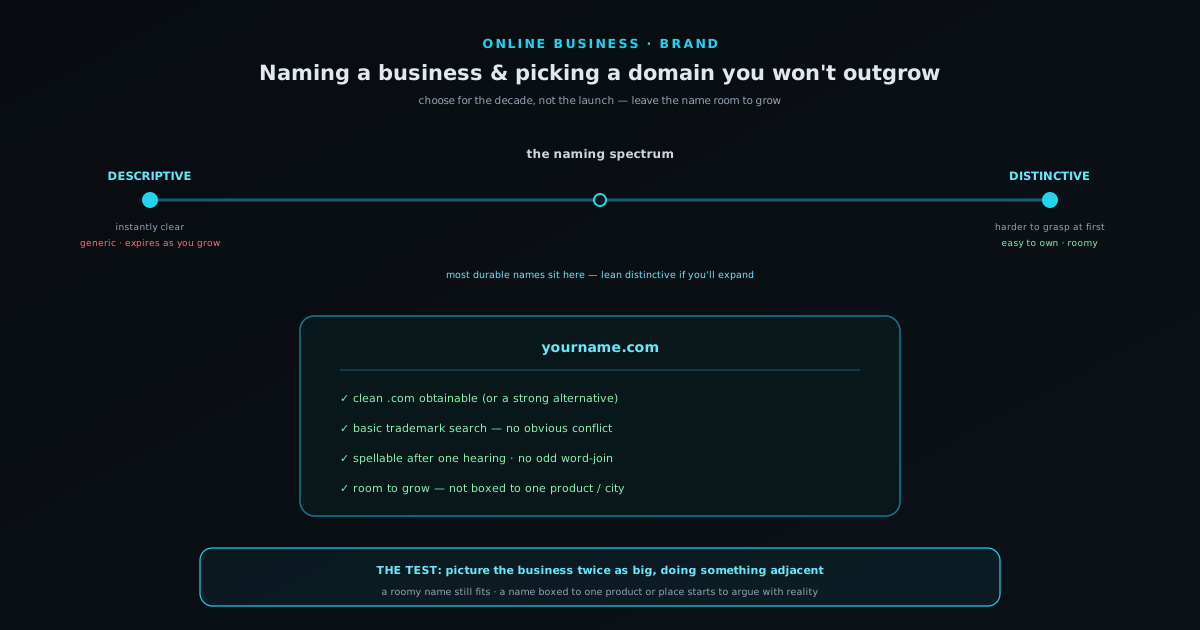
Business names sit on a spectrum between two poles, and understanding the trade-off between them is most of the decision. At one end are descriptive names that say plainly what you do: they have the real advantage that a stranger instantly understands your business, which helps in early word of mouth and can even align with what people search for. The cost is that descriptive names are generic, hard to protect, easy to confuse with competitors using the same obvious words, and (crucially for this article) prone to becoming inaccurate as you grow. A name that spells out a single product or service is informative right up until you offer a second one, at which point it actively misleads.
At the other end are distinctive, "brandable" names: invented, abstract, or evocative words that mean nothing specific until you give them meaning. They are harder to grasp at first hearing and take more effort to establish, because you have to teach people what they stand for, but they have two compounding strengths: they are far easier to protect and own, and they are roomy by nature. A coined or abstract name carries no built-in limitation, so it travels with you into new products, new categories, and new places without ever becoming wrong. Most durable businesses live somewhere in the middle (distinctive enough to own and to grow into, with enough suggestion of warmth, quality, or domain to not feel arbitrary), but if you must lean one way for a business you hope will expand, lean toward distinctive, because descriptiveness is the quality most likely to expire.
The boxed-in trap: naming too narrowly
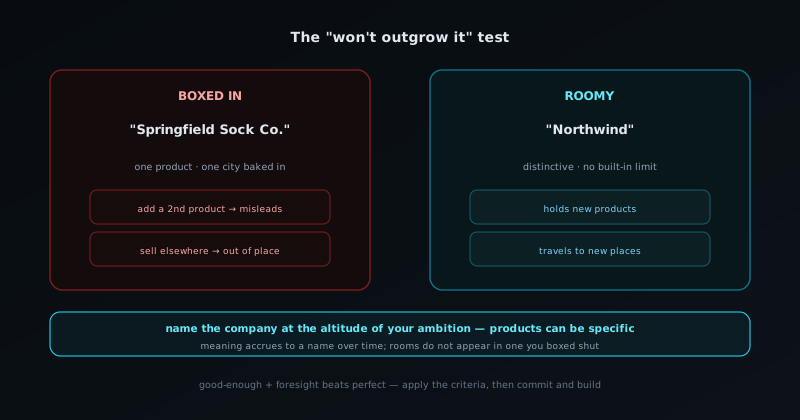
The single most common and most regretted naming mistake is encoding a current limitation into the permanent name, and it comes in two flavours that are worth naming explicitly. The first is the single-product trap: naming the company after the one thing you sell at launch, so the business is called, in effect, "The One Product Company." It feels clarifying on day one and becomes a straitjacket the day you want to add a second product, because now your name advertises a focus you have outgrown and either misrepresents you or has to be abandoned. The second is the geographic trap: baking a city or region into the name, which is reassuring locally and quietly fatal to any ambition of serving customers elsewhere, since "Springfield Whatever" sounds out of place the moment a customer two states over considers you.
The deeper lesson is to separate the name of the company from the name of the product, and to name the company at the altitude of your ambition rather than your launch. Individual products and services can and should have descriptive, specific names (that is where clarity helps), but the parent brand they sit under should be roomy enough to hold products you have not invented yet. If there is any chance you will broaden your offering or your geography, choose a name that does not encode either, so the name grows with the business instead of arguing with it. The test is simple and worth applying to every candidate: imagine the business twice as big and doing something adjacent you cannot yet picture: does the name still fit, or does it now describe only a corner of what you have become?
The practical checks before you commit
Before a name graduates from favourite to final, it has to survive a handful of unromantic checks, and doing them early saves the heartbreak of falling in love with a name you cannot actually use. The first is availability across the surfaces that matter: is a sensible domain obtainable, are the social handles you would want free or close to it, and is the name not already crowded with other businesses in your space? You do not need a flawless sweep, but you do need to avoid choosing a name that is already strongly owned by someone else online, because you will spend years fighting them for recognition and search results. Run these checks while you still have alternatives, not after you have printed business cards.
The second check is legal sanity and the third is human confusion, and both are about avoiding predictable pain. On the legal side, a basic trademark search in the markets you will operate in tells you whether a name is already registered by someone in a related field, a check that is no substitute for proper legal advice on anything serious, but that catches the obvious collisions cheaply before you build on sand. On the human side, say the name out loud and hand it to someone who has never heard it: can they spell it after hearing it, does it sound like an existing brand, does it carry an unfortunate meaning or an awkward abbreviation, does it become something unintended when you remove the spaces for a domain? Names that are hard to spell, easy to mishear, or quietly embarrassing create friction every single time the business is mentioned, and that friction compounds over years.
- Availability: a workable domain and the social handles you want are obtainable, and the name is not already crowded online.
- Trademark sanity: a basic search shows no obvious registered conflict in a related field (not a substitute for legal advice).
- Spelling and sound: people can spell it after hearing it once and it does not sound like an existing brand.
- No hidden meaning: it carries no awkward second meaning, abbreviation, or unfortunate run-together when spaces are removed.
- Room to grow: it survives the "twice as big, doing something adjacent" test without becoming inaccurate.
Picking the domain itself
The domain is where the name meets reality, and a few practical principles keep you from a choice you will quietly resent. The classic advice still holds where you can manage it: a short, memorable domain that matches your name and is easy to say and type is worth real effort, because it is the address you will repeat out loud, put on everything, and hope people remember. The dot-com remains the default people assume and type by reflex, so if a clean dot-com of your exact name is available it is usually worth taking; that said, the landscape has loosened, and a strong name on a respectable alternative extension, or a slightly modified but still clean dot-com, can absolutely work and is far better than contorting the name itself to force an exact match.
The pitfalls to avoid are the ones that create lifelong friction. Be wary of domains that rely on creative misspellings, dropped letters, or hyphens to be available, because you will spend the life of the business spelling them out and losing traffic to the obvious version someone else owns. Watch for unfortunate word-joins when the spaces come out; the classic cautionary tales are real and worth a thirty-second sanity check. And carry the room-to-grow principle into the domain itself: a domain as roomy as the name, not one that re-encodes the single-product or single-city limitation you were careful to keep out of the name. The domain should be a clean, durable home the business can live in for years, not a clever string you have to apologise for every time you read it aloud.
Good enough, chosen with foresight, beats perfect
It is worth ending on a release valve, because naming anxiety stops more projects than bad names do. There is no perfect name, the search for one has sharply diminishing returns, and many businesses you admire are built on names that were ordinary or even slightly awkward at the start and became strong purely because the business behind them did. A name does not have to be brilliant; it has to be roomy enough not to trap you, available enough to actually use, clear enough not to cause confusion, and then carried by a business worth remembering. Meaning accrues to names over time (you make the name good by being good) far more than names confer meaning at birth.
So the practical posture is to apply the durable criteria, run the unromantic checks, lean toward room to grow when you have to choose, and then commit and move on to building the thing the name will eventually stand for. The discipline this article argues for is not perfectionism; it is foresight: spending a few deliberate days now to avoid a rebrand later, and refusing to encode today’s single product or single city into a name you hope to outgrow. Choose a name with space in it, give it a clean domain, and then let the work fill that space with meaning. That is how you end up, years from now, with a name that still fits, not because you predicted the future, but because you left it room.
Frequently asked questions
Quick answers to common questions about this topic.
Should a business name be descriptive or distinctive?
Descriptive names explain instantly but are generic, hard to protect, and prone to becoming inaccurate as you grow. Distinctive (brandable) names take more effort to establish but are easier to own and roomy by nature, so they travel into new products and places. Most durable names sit in the middle, but if you expect to expand, lean distinctive: descriptiveness is the quality most likely to expire.
What is the most common business-naming mistake?
Naming yourself too narrowly (around the single product you launch with, or the single city you are in) so the name becomes a cage the moment you add a second product or sell beyond your town. Separate the company name from product names: products can be specific, but the parent brand should be roomy enough to hold things you have not invented yet.
How do I check if a business name is available?
Before committing, check that a sensible domain and the social handles you want are obtainable, that the name is not already crowded online in your space, and run a basic trademark search in the markets you will operate in for obvious conflicts (not a substitute for legal advice). Also say it out loud to someone new to confirm they can spell it and it does not clash with an existing brand.
Do I still need a .com domain?
A clean .com of your exact name is still worth taking if it is available, because people type it by reflex. But the landscape has loosened: a strong name on a respectable alternative extension, or a slightly modified clean .com, works fine and beats contorting the name to force an exact match. Avoid domains that rely on misspellings or hyphens, which cause lifelong spelling friction.
How much time should I spend choosing a name?
Enough to apply durable criteria (room to grow, availability, no confusion) and then commit to the first strong candidate that clears them. There is no perfect name and the search has sharply diminishing returns; meaning accrues to names over time as the business succeeds. Spend a few deliberate days to avoid a costly rebrand later, then move on to building what the name will stand for.
Related troubleshooting
Was this page helpful?
Your answer stays in this browser, it is not sent anywhere and no account or cookie is involved.