2026 · Novus VisualizersAbout 13 min readNovus Stream Solutions
Building a consistent visual brand (without a designer)
Recognition comes from consistency, not a fancy logo. The few decisions that make everything you publish look like the same brand, and how to apply them for free.
Contents
- 1.Overview
- 2.The three decisions that matter
- 3.Consistency beats novelty
- 4.Apply it everywhere, for free
- 5.Let it compound
- 6.Why recognition is built on repetition
- 7.The palette decision, in depth
- 8.The font decision
- 9.The logo and its placement
- 10.Consistency across every surface
- 11.The discipline of not redesigning
- 12.How a brand kit automates the consistency
- 13.Why a solo creator can out-consist big brands
- 14.The cost of all this is nothing
- 15.Telling whether your brand is landing
- 16.When it is finally right to evolve
Overview
A recognizable visual brand is not about an expensive logo; it is about consistency. When everything you publish shares a small set of visual choices, people start recognizing your work before they read your name. The good news for a solo creator or small shop: that consistency is free, and it comes from decisions, not design budget.
The three decisions that matter
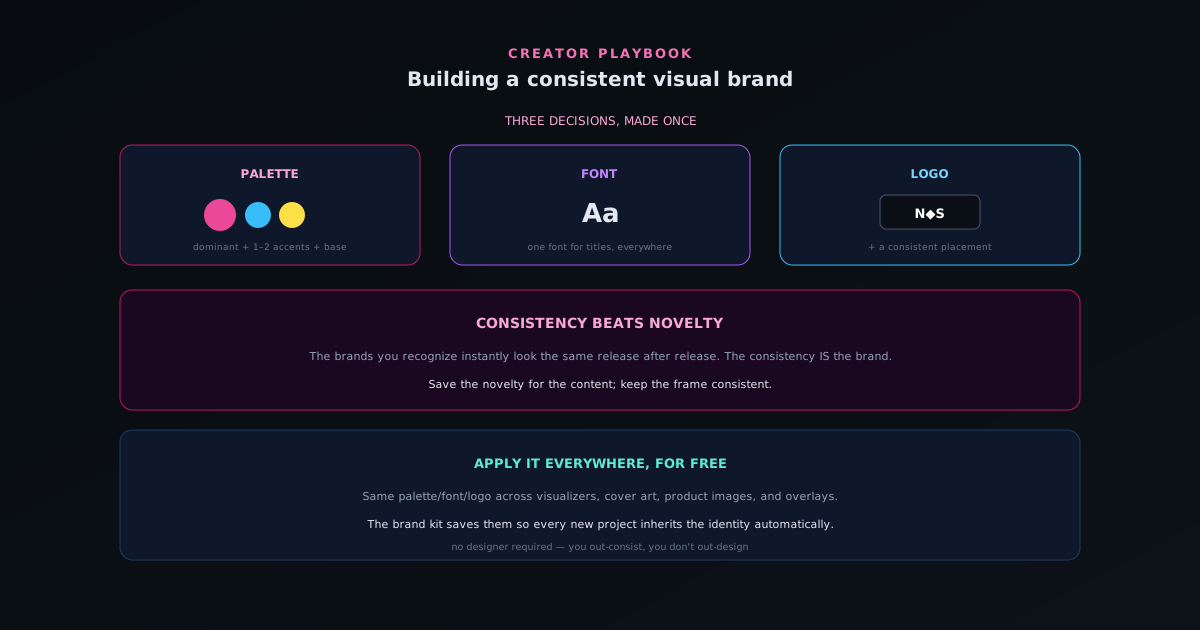
Pick a palette (a dominant color, one or two accents, and a dark or light base), a font (one for titles, used everywhere), and a logo treatment (the mark and where it sits). That is most of a visual brand. The specific choices matter less than the fact that you make them once and then keep them.
You do not need a designer for this. You need to choose three things and resist changing them every project.
- A palette: dominant + 1–2 accents + a base.
- One font for titles (used consistently).
- A logo and a consistent placement.
Consistency beats novelty
The temptation, especially when you are creative, is to make every release look new. That instinct works against recognition. The brands you recognize instantly are the ones that look the same release after release; the consistency is the brand. Save the novelty for the content; keep the frame consistent.
Placement is a surprisingly strong signal: when your name or logo appears in the same spot every time, viewers learn where to look without being told.
Apply it everywhere, for free
Run the same palette, font, and logo through your visualizers, your cover art, your product images, and your overlays. In Novus Visualizers, the brand kit in visualizers.novusstreamsolutions.com/creator-studio saves these so every new project inherits them automatically; in NSS Background Remover, you place your subject on your brand colors with bgremover.novusstreamsolutions.com/tools/add-background. Both are free and browser-based, so applying your brand costs nothing per asset.
The cross-surface consistency (a viewer sees your streaming thumbnail and recognizes your visualizer and your live overlay as the same brand) is what compounds into real recognition.
Let it compound
A visual brand is a long game. No single post makes you recognizable; a year of consistent posts does. The mechanism is simple repetition of the same small choices, which is exactly why it is achievable for a solo operator: you are not out-designing anyone, you are out-consisting them.
Decide your three things, apply them every time, and let the recognition build on its own.
Why recognition is built on repetition
The mechanism behind a recognizable brand is not aesthetic excellence but repeated exposure to a consistent signal, and understanding that reframes the whole task as achievable rather than artistic. People come to recognize a brand because they have seen the same colors, the same typeface, the same mark, the same placement, again and again, until those elements become associated with the source. Recognition is a learned association built through repetition, which means the path to it is not a stroke of design genius but the patience to keep presenting the same cues consistently over time.
This is liberating for a solo creator because it removes the excuse that you are not a designer. You do not need to design something brilliant; you need to choose something workable and then repeat it faithfully, which is a discipline anyone can practice. The brands you recognize instantly earned that recognition not by being the most beautifully designed but by being relentlessly consistent, so that their cues became familiar. Repetition is the engine, consistency is the fuel, and both are available to anyone willing to make a few choices and stick to them. The barrier to a recognizable brand is not talent but the discipline to not keep changing things.
The palette decision, in depth
Color is the fastest-acting brand cue, often recognized before a logo or a name registers, which makes the palette the most important of the few decisions to get settled. A workable palette is small and structured: a dominant color that becomes "your" color, one or two accents for contrast and emphasis, and a base of dark or light that everything sits on. The specific colors matter far less than choosing a set and committing to it, because the recognition comes from consistency, not from the colors being objectively the best ones.
The discipline with a palette is restraint and repetition. The temptation to reach for a different color scheme because a particular release "feels" like a different mood is exactly what prevents a brand from forming, because it resets the association each time. A consistent palette applied across your videos, covers, product images, and overlays trains viewers to recognize your work by its color signature alone, which is a powerful and effortless-to-apply form of recognition. Pulling the palette from a signature element (your cover art, a logo color) and then using it everywhere is how a single color decision becomes a thread that ties your entire body of work together visually.
The font decision
Typography is a quieter brand cue than color but a cumulatively powerful one, and the decision is simpler than it seems: pick one typeface for your titles and use it everywhere, every time. Consistent type across your thumbnails, your video titles, your captions, and your graphics creates a subtle through-line that viewers absorb without consciously noticing, contributing to the sense that everything you publish belongs together. As with color, the particular font matters less than the consistency of using it, so the goal is to choose something legible and fitting and then stop reconsidering it.
The mistake to avoid is treating type as a per-project creative choice, switching fonts to match the vibe of each release. That variation, like changing the palette, dissolves the recognition that consistency would build. A single committed typeface, used in the same way across surfaces, is one of those small repeated choices that compounds: invisible in any one instance, unmistakable across a body of work. For a solo creator, settling the font once and applying it faithfully is a low-effort, high-return contribution to a coherent brand, requiring only the discipline to resist the urge to redecorate with every new piece.
The logo and its placement
A logo or wordmark is the most explicit brand cue, but its power comes as much from consistent placement as from the mark itself, which is a detail many creators overlook. When your name or mark appears in the same position every time (the same corner of every thumbnail, the same spot in every video), viewers learn where to look for it and come to expect it there, so its presence becomes a reliable signature. The placement consistency is doing as much work as the mark, training the audience to associate that position with you.
This means the logo decision is really two decisions: what the mark is, and where it goes, with the second mattering more than people assume. A mark that floats to a different place each time loses much of its recognition value, while a simple mark in a consistent spot becomes a dependable signal. The discipline is to fix both the mark and its placement and then apply them unchanged across everything, so that the corner of your thumbnail becomes as recognizable as the mark in it. For building recognition efficiently, a consistent mark in a consistent place beats an elaborate logo used inconsistently every time.
Consistency across every surface
The real recognition payoff comes not from consistency within one type of asset but from consistency across all the surfaces a viewer encounters, so that they perceive your video, your cover, your product image, and your live overlay as the same brand. When someone sees your streaming thumbnail and then your visualizer and then your social post and recognizes them all as yours, the cross-surface coherence is what cements the brand in their mind. This is where a small set of repeated choices, applied everywhere, compounds into genuine recognition rather than a look that exists in isolation on one platform.
Achieving this is a matter of running the same palette, font, and logo treatment through every tool and every output, which the free, on-device apps make easy by carrying a saved identity across projects; even your live overlays at visualizers.novusstreamsolutions.com/overlays draw on the same brand. The viewer does not consciously catalog the consistency; they simply develop a growing familiarity that resolves into recognition. A brand that is consistent on one surface and scattered across others never reaches that threshold, because the cues conflict. Applying the same identity across the whole range of what you publish (video, image, overlay, social) is the move that turns a set of choices into a brand a viewer can recognize anywhere they meet it.
The discipline of not redesigning
The hardest part of building a consistent brand, especially for someone creative, is resisting the urge to redesign, because the creative instinct that makes good content actively works against the consistency that builds recognition. Every release tempts you to try a new look, freshen the palette, switch the font. And each time you do, you reset the recognition that repetition was building. The discipline is to channel the desire for novelty into the content itself while keeping the frame around it stubbornly consistent, so the brand cues stay stable even as what they wrap changes.
This restraint is counterintuitive and worth stating plainly: keeping things the same is the work. It can feel like stagnation to use the same palette and type release after release, but that sameness is precisely what the audience learns to recognize, and abandoning it for variety is abandoning the recognition. The brands that feel established are the ones that held their cues steady long enough for them to register. For a creator, accepting that the visual frame should be boringly consistent while the content stays fresh is the key mental shift: the novelty goes into what you make, not into how you brand it, and that division is what lets recognition accumulate.
How a brand kit automates the consistency
The practical obstacle to consistency is that applying the same choices by hand every time invites drift (a slightly different shade here, a different placement there), so the tools that save and reapply your identity automatically are what make consistency reliable rather than effortful. A brand kit that stores your palette, font, and logo and starts every new project from them removes the per-project decision and the per-project drift, so each piece begins on-brand without you re-choosing or risking inconsistency. The automation turns consistency from a discipline you must remember into a default you cannot easily break.
This is a meaningful help for a solo creator, because relying on memory and manual application across many releases is exactly where consistency erodes over time. A saved identity that every new project inherits means the hundredth release is as on-brand as the first, without the cumulative slippage that manual repetition tends to produce. The tool holds the consistency so you do not have to, which both saves effort and improves the result. Combined with the discipline of not redesigning, an automated brand kit is what makes a consistent visual brand sustainable across a long body of work rather than something that holds for a few releases and then drifts.
Why a solo creator can out-consist big brands
There is a genuine competitive advantage hidden in this for small operators: consistency is one of the few brand dimensions where a solo creator can match or beat a large organization. Big brands struggle with consistency precisely because many hands touch their output: different people, teams, and agencies produce assets, and keeping them all perfectly aligned requires elaborate guidelines and enforcement that often slips. A solo creator has exactly one hand on everything, which makes perfect consistency not just possible but natural, since the same person makes every asset with the same choices.
This is worth recognizing because it reframes consistency from a constraint into a strength a small operator should lean into. You cannot outspend a large brand on production value, but you can absolutely out-consist them, presenting a more coherent identity across everything you publish than a fragmented large operation manages. That coherence reads as professionalism and reliability, qualities that a small creator is not otherwise assumed to have. Where the big brand has resources, you have unity of vision, and unity of vision is exactly what builds a recognizable brand. Playing to that strength (being relentlessly, effortlessly consistent in a way large organizations find hard) is how a solo creator competes on brand despite the resource gap.
The cost of all this is nothing
It is worth stating plainly that building a consistent visual brand this way costs no money, because the barrier people assume exists (a designer, design software, a budget) is not actually required. The decisions that constitute the brand are free to make, and applying them through free, browser-based tools that carry your identity across projects is free to do. There is no per-asset cost, no subscription for the privilege of being consistent, no designer to hire. The only investment is the small discipline of choosing your few elements and applying them faithfully.
This zero cost matters because it removes the last excuse for an inconsistent brand. A creator might reasonably skip an expensive rebrand, but there is no expense here to skip: consistency is a matter of decisions and repetition, both free. For someone funding their own creative work, the fact that the single most effective brand-building practice costs nothing is genuinely empowering: you are not priced out of looking professional. The recognition that compounds from consistent visuals is available to anyone willing to make a few choices and keep them, regardless of budget, which is exactly the kind of high-return, zero-cost practice a bootstrapped creator should seize.
Telling whether your brand is landing
Since a visual brand is a long game, it helps to know how to tell whether the consistency is actually building recognition, even though the signal is slow. The clearest indicators are qualitative and accumulate over time: people start referencing your work by its look, recognizing new pieces as yours before seeing your name, or commenting that something "looks like you." These moments are evidence that the repeated cues have crossed into learned association, which is the whole goal. They arrive gradually, which is why patience and persistence matter more than any single measurement.
It is also important not to misread the slowness as failure, because recognition builds below the threshold of visibility for a long time before it surfaces. The absence of people noticing your consistency early does not mean it is not working; it means the association is still forming through repetition that has not yet accumulated enough exposures. The honest expectation is that a year of consistent output does what no single release can, and the signs of success are the small, qualitative moments of recognition rather than an immediate metric. Trusting the mechanism (that repeated, consistent cues build recognition over time) and persisting through the quiet early stretch is what eventually produces the brand that people know on sight.
When it is finally right to evolve
Consistency does not mean a brand can never change, and the honest guidance includes when evolution is appropriate, because a brand frozen forever can eventually feel dated. The key is that brand evolution should be rare, deliberate, and clean: a considered refresh at a meaningful moment, not the constant per-release tinkering that prevents recognition from forming. When you do evolve, you change deliberately and then commit to the new version consistently, rather than drifting continuously. The distinction is between a punctuated, intentional update and ongoing instability.
The test for whether to evolve is whether the change serves a real purpose (a genuine shift in direction, a brand that has truly outgrown its look) rather than mere restlessness. Most of the time, the urge to change is the creative restlessness that consistency must resist, not a real need to evolve. But when the moment genuinely calls for it, a clean, decisive refresh followed by renewed consistency keeps the brand current without sacrificing recognition. The pattern is long stretches of stability punctuated by rare, deliberate updates, which is how established brands stay both recognizable and fresh. Evolution is allowed; it just should be the exception, made consciously, not the constant churn that never lets a brand take hold.
Frequently asked questions
Quick answers to common questions about this topic.
How do I keep my brand visuals consistent without a designer?
Lock a small system: two or three brand colors, one or two fonts, and a repeatable image treatment (same crop, same background, same cutout style). Reusing that system across every asset is what reads as "branded", not expensive design.
What is the easiest way to make product or content images look cohesive?
Process them the same way every time: consistent backgrounds and clean cutouts. A free tool like the NSS Background Remover lets you put every product or subject on the same background so the set looks like a deliberate brand.
Do I need brand guidelines as a solo creator?
A one-page note is enough: your colors, fonts, and image rules. The value is consistency, not formality: having the rules written down means every new asset matches the last.
Related workflow
A track to a release-ready visualizer, per platform
Render the visual once, then produce the platform masters from it, instead of re-rendering the whole video for every aspect ratio.
- Render the beat-synced videoNovus Visualizers: Pick the engine and mode against your actual track; the analysis is done on your audio, not on a preset preview.
- Trim or upscale the exportNSS Background Remover: The video utilities handle the tidy-up pass so the render does not have to be repeated to fix ten seconds of it.
- Produce the per-platform mastersNovus Convert: Each destination wants a different container and bitrate; converting the finished render is far cheaper than re-rendering it.
Related troubleshooting
Was this page helpful?
Your answer stays in this browser, it is not sent anywhere and no account or cookie is involved.