2026 · Novus Stream Solutions (hub)About 12 min readNovus Stream Solutions
Affiliate disclosure without killing trust (or conversions)
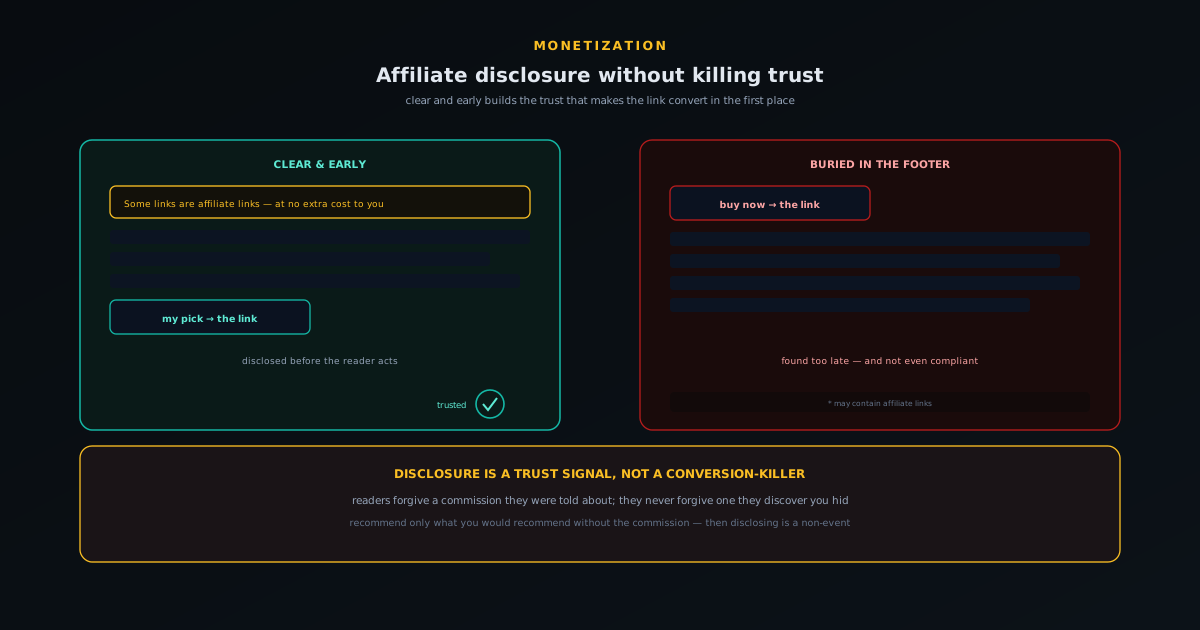
Affiliate disclosure is legally required and widely treated as a conversion-killer to be buried in a footer. It is neither a threat nor a formality. Done right (clear, early, and backed by honest recommendations) disclosure builds the trust that makes the affiliate link convert in the first place.
Contents
- 1.Overview
- 2.Why hidden disclosure costs more than it saves
- 3.Where and how to disclose
- 4.The recommendation discipline that makes disclosure easy
- 5.The legal floor, in plain terms
- 6.Disclosing across formats: video, social, email, audio
- 7.The disclosure mistakes that fail both tests
- 8.Affiliate, sponsorship, and ads each need their own honesty
- 9.When the product is good, disclosure sells
- 10.Write the disclosure you would want to read
- 11.Disclosure as a trust-building feature
Overview
Affiliate disclosure sits in a strange spot in most creators minds: simultaneously a legal box to tick and a thing they would rather readers did not notice. The result is the disclosure you see everywhere: a greyed-out line in the footer, a vague "this post may contain affiliate links" tucked below the fold, a sentence engineered to satisfy the requirement while being as easy to miss as possible. The reasoning is understandable: the fear is that telling readers "I earn a commission if you buy this" will make them trust the recommendation less and click less, so the instinct is to disclose as quietly as the rules allow. That instinct is wrong on both the ethics and, more surprisingly, the economics.
The reframing worth internalising is that disclosure is not a tax on your affiliate revenue; it is part of what makes the affiliate revenue work. An audience recommends you to others, returns repeatedly, and acts on your suggestions because they trust you, and that trust is the actual asset; the affiliate links are just one way of converting it. Hiding the commercial relationship to protect a single click trades the durable asset for a momentary gain, and readers who later discover the hidden relationship feel manipulated in exactly the way that destroys the trust. This guide is about how to disclose clearly and early in a way that protects both the trust and the conversions, because done right, disclosure is not a conversion-killer at all; it is a trust signal.
Where and how to disclose
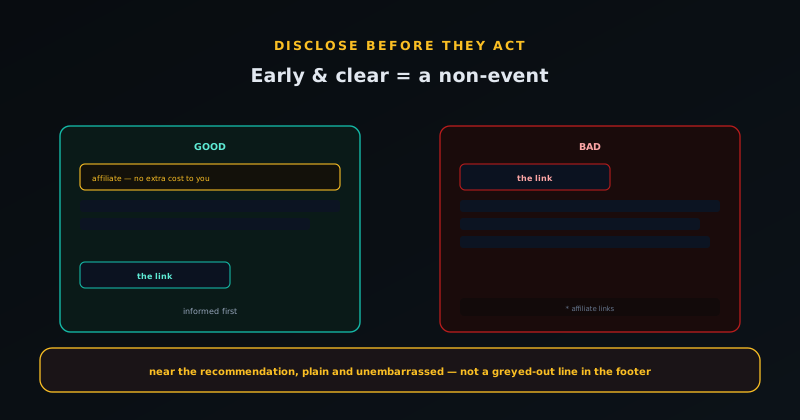
The principle behind good placement is simple: the disclosure should reach the reader before they act on the link and where they will actually see it, which in practice means close to the recommendation and above the fold of it, not in a global footer they will never scroll to. For a post built around recommendations, a short, plain disclosure near the top (before the first link) does the job: the reader is informed before any decision, and you never have to wonder whether they saw it. For a single inline link in a longer piece, a brief note right at the link is even better, because it puts the information exactly where the decision happens.
The wording should be plain and unembarrassed. "Some links below are affiliate links, which means I earn a commission if you buy through them, at no extra cost to you" is clear, honest, and reassuring, and that last clause matters because the reader genuinely-most-common concern is whether your commission costs them anything. Avoid both the legalese that signals you are hiding behind boilerplate and the cutesy evasions that signal you are uncomfortable. The tone you want is matter-of-fact: this is how the site is funded, here is the relationship, now here is my honest take. Said plainly and early, the disclosure becomes a non-event: the reader registers it, appreciates the straightness, and moves on to the recommendation itself.
The recommendation discipline that makes disclosure easy
Disclosure is only painless if the thing you are disclosing is defensible, which points at the real work: recommend only what you would recommend without the commission. The moment your recommendations are driven by which product pays the highest affiliate rate rather than which is genuinely best, no amount of clever disclosure wording will save you, because readers eventually notice when your enthusiasm tracks your commissions rather than the products merits. Conversely, when you recommend the thing you actually believe in and happen to earn a commission on it, disclosure is trivial, because there is nothing to be uncomfortable about: you are getting paid for advice you would have given for free.
A practical test is to ask whether you would still recommend this product, in this way, to a friend who could not earn you anything. If the answer is yes, disclose and proceed with a clear conscience. If the answer is no (if you are recommending it because it pays well, or recommending it more strongly than it deserves) then the problem is not the disclosure, it is the recommendation, and fixing the wording is rearranging the deck chairs. This discipline also makes the disclosure more credible, because readers can tell over time whether your picks hold up, and a track record of honest recommendations is what makes a clear disclosure read as "this person makes money but tells the truth" rather than "this person is selling me something". How affiliate income sits alongside other revenue without compromising this is covered in Affiliate revenue alongside ads: adding a second income stream without selling out.
The legal floor, in plain terms
Before the trust argument, there is a legal floor, and it is worth stating plainly because many creators are vague about it. Across most major jurisdictions, if you have a material connection to a product you recommend (you earn a commission, you were paid, you got it free), you are required to disclose it, and the standard is generally that the disclosure be clear and conspicuous. That phrase has teeth: it means a reasonable person would actually notice and understand it, which rules out burying it, shrinking it, or wording it so vaguely that no one registers what it means.
In practice the floor implies a few concrete things. The disclosure should be near the recommendation, not isolated on a separate page; it should be in plain language a normal reader understands, not legalese; and it should come before or at the recommendation, not after the reader has already clicked. The penalties for getting this wrong range from regulator action to platform removal to reputational damage, and crucially the buried-footer approach often fails the clear-and-conspicuous test, so it does not even buy the compliance it sacrifices trust for. Meeting the legal floor and earning trust turn out to require the same thing: disclose clearly and early.
The disclosure mistakes that fail both tests
A handful of disclosure habits manage to fail both the legal and the trust test at once, and they are worth naming so you can avoid them. The first is vagueness: phrases so woolly that a reader does not realise a commercial relationship is being disclosed; if someone could read it and not understand that you earn money, it is not a disclosure. The second is placement after the action, where the disclosure appears below or after the link, so the reader has already decided by the time they would see it. The third is the single buried hashtag or a note tucked into a profile bio, far from the content it supposedly covers.
What these mistakes share is that they technically gesture at disclosure while engineering it to be missed, which is precisely what the clear-and-conspicuous standard exists to prevent and exactly what readers resent discovering. The irony is that they take real effort to construct (finding the most ignorable place, the vaguest wording) when a plain, early, honest sentence would be easier to write and better on every axis. The fix for all of them is the same: say it clearly, say it where the reader is, and say it before they act.
Affiliate, sponsorship, and ads each need their own honesty
Affiliate links are one kind of commercial relationship, and a creator usually has several at once (display ads, the occasional sponsorship, maybe their own products), each of which deserves its own appropriate disclosure rather than a single catch-all. A sponsorship, where a brand paid you to feature something, is a stronger relationship than an affiliate link and warrants a clearer, more prominent disclosure, because the incentive to shade your judgment is larger. Ads are usually self-evident as ads, but the editorial content around them should not blur into them.
Being precise about which relationship applies is itself a trust signal, because it shows the reader you take the distinctions seriously. A reader who sees you clearly mark a sponsored piece differently from a piece with affiliate links, and both differently from independent coverage, learns that your labels mean something, which makes your unlabelled, independent recommendations more credible, not less. The broader mix of how these revenue streams coexist without compromising trust is covered in Affiliate revenue alongside ads: adding a second income stream without selling out; the disclosure discipline is what keeps each of them honest.
When the product is good, disclosure sells
There is a counterintuitive upside that the fearful framing misses entirely: when you genuinely believe in what you are recommending, disclosing the affiliate relationship can actually strengthen the recommendation rather than weaken it. Saying, in effect, I earn a commission on this and I am recommending it anyway because it is genuinely the best option signals conviction. It tells the reader you are not hiding the incentive because you do not need to: the recommendation stands on its merits, and you are confident enough to make money on it in the open.
This only works if it is true, which loops back to the recommendation discipline: the honesty of the disclosure is only as good as the honesty of the recommendation behind it. But where the recommendation is sound, transparent disclosure becomes part of the persuasion rather than a drag on it, because it removes the suspicion that you might be hiding something. The creators who understand this stop treating disclosure as damage control and start treating it as evidence of integrity, which, over a body of work, is the most valuable thing a recommendation can carry.
Write the disclosure you would want to read
A simple test cuts through most of the agonising over wording and placement: write the disclosure you would want to read as a reader. As a reader, you would want to know plainly that there is a commercial relationship, you would want to know it before you acted on the advice, and you would want to know it did not cost you anything extra, and you would resent discovering any of that after the fact. Holding yourself to the standard you would expect from someone you trust resolves nearly every disclosure question on its own.
This reader-first stance is also the through-line that connects disclosure to everything else that builds an audience worth having. The same instinct that makes you disclose clearly is the one that makes you recommend honestly, write the page people actually trust, and fund the work without dark patterns. Disclosure is not a separate compliance chore bolted onto an otherwise self-interested operation; it is one expression of treating the reader as someone whose trust you intend to keep, which, sustained over time, is the only durable foundation a creator has.
It is worth remembering, too, that the audience you build on that foundation is the asset that outlasts any individual link, program, or platform. Affiliate networks change their terms, products come and go, and the channels you publish on rise and fall, but a readership that trusts your judgment travels with you across all of it. Protecting that trust by disclosing honestly is therefore not a constraint on the business; it is an investment in the one thing that compounds, and the small awkwardness of a clear disclosure is a trivial price for keeping it intact.
Disclosure as a trust-building feature
Once you stop seeing disclosure as a defensive obligation and start seeing it as a trust signal, you can use it actively rather than minimally. Being visibly straight about how you make money (affiliate links, ads, sponsorships, whatever the mix) sets you apart in a landscape where most creators are coy about it, and that contrast is itself an asset. Readers who feel respected by your transparency are the ones who come back, who recommend you, and who give you the benefit of the doubt when you make a mistake, all of which are worth far more over time than the handful of clicks you might lose by being upfront.
This is the same logic that runs through the whole free-first, honest approach the ecosystem takes: do not crippleware the free thing, do not fake the AI result, do not bury the commercial relationship. Each of these trades a small short-term gain for a durable trust dividend, and the dividend compounds because trust is the thing that makes every other part of the relationship work. An audience that trusts you is the most valuable thing a creator or small business can build, and clear affiliate disclosure is one of the cheapest, most direct ways to build it. Treat it not as the line you are forced to write but as one of the places you get to show people you are worth trusting, the same way a genuinely trustworthy about page does, as explored in How to write an About page people actually trust.
Frequently asked questions
Quick answers to common questions about this topic.
Is affiliate disclosure legally required?
In most jurisdictions, yes: disclosing a material commercial relationship is required, and the rules generally call for it to be clear and conspicuous, not buried or vague. A disclosure the reader has to hunt for typically does not satisfy the requirement, so the buried-footer approach is often not even safely compliant.
Will disclosing affiliate links hurt my conversions?
Far less than creators fear, and hiding it hurts more. Most readers already suspect a commercial angle, so a clear disclosure confirms what they expected. What actually destroys trust (and conversions over time) is the discovery that you hid a financial stake. Clear disclosure reads as confidence and integrity.
Where should the disclosure go?
Before the reader acts on the link and where they will actually see it (near the top of a recommendation post (before the first link) or right at an inline link) not in a global footer. The reader should be informed before any decision happens.
How should I word an affiliate disclosure?
Plainly and unembarrassed, for example: "Some links below are affiliate links, which means I earn a commission if you buy through them, at no extra cost to you." The "no extra cost to you" clause addresses the readers most common concern. Avoid both legalese and cutesy evasions; matter-of-fact is the right tone.
How do I keep affiliate recommendations trustworthy?
Recommend only what you would recommend without the commission. A good test: would you still recommend this product, in this way, to a friend who could not earn you anything? If yes, disclose and proceed; if no, the problem is the recommendation, not the wording. A track record of honest picks makes disclosure read as integrity.
Can disclosure actually help my brand?
Yes. Being visibly straight about how you make money sets you apart from creators who are coy about it, and readers who feel respected by your transparency return, recommend you, and extend goodwill. Trust is the durable asset; clear disclosure is one of the cheapest, most direct ways to build it.
Related troubleshooting
Was this page helpful?
Your answer stays in this browser, it is not sent anywhere and no account or cookie is involved.