2026 · Novus Stream Solutions (hub)About 12 min readNovus Stream Solutions
A weekly operating rhythm for a solo operator
When you run everything alone, the urgent constantly crowds out the important and every week feels reactive. A deliberate weekly operating rhythm (themed focus, a planning and review ritual, and protected deep work) restores control.
Contents
Overview
A solo operator running an entire business alone faces a problem that scales painfully with how many roles they hold: with no one to delegate to, every responsibility (building, marketing, support, finances, planning) competes for the same finite hours, and without structure, the most urgent thing always wins, which means the important-but-not-urgent work that actually grows the business perpetually loses. The result is the familiar experience of working hard all week, staying busy every hour, and yet ending the week with the strategic work untouched, because the reactive demands consumed all the time. This is not a personal failing but a structural consequence of running everything alone without a deliberate system to protect the work that matters from the work that merely shouts loudest.
A weekly operating rhythm is the system that solves this, by giving the week a deliberate structure that ensures the important work gets time and attention rather than being endlessly crowded out by the urgent. Instead of facing each week as an undifferentiated mass of competing demands, the operator runs the week to a rhythm (themed focus, protected time for deep work, and a regular ritual of planning and review) that imposes order on the chaos and reserves space for what would otherwise never happen. This guide lays out the components of such a rhythm: why solo operators specifically need it, how to use themed days to batch and focus, how a weekly planning and review ritual provides direction and learning, how to protect deep-work time, and how to leave room for the unexpected so the rhythm survives contact with reality. The goal is a week that feels controlled and intentional rather than reactive and scattered.
Why solo operators drown without a rhythm
The specific reason solo operators are vulnerable to reactive overwhelm is the absence of the structure that an organization with multiple people naturally provides. In a team, different people own different functions, meetings impose a rhythm, and roles create natural boundaries that protect each kind of work; a solo operator has none of this: they hold every role, with no colleague to maintain the marketing while they handle a support fire, no structure forcing attention to the strategic, nothing preventing the urgent from consuming everything. The flexibility of working alone, which is part of its appeal, is also the danger: with no external structure, the week has no shape except the one the operator imposes, and if they impose none, the urgent imposes its own.
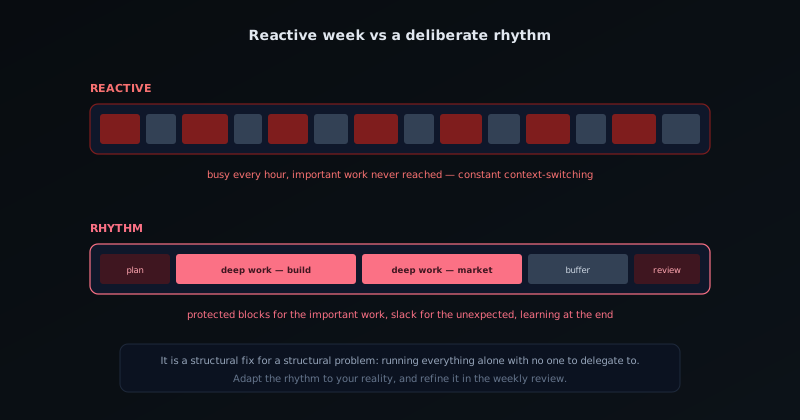
This produces a characteristic pattern where solo operators are perpetually busy yet perpetually behind on what matters, because constant context-switching among all their roles fragments their attention and the loudest demand always preempts the most important one. Answering every support request the moment it arrives, chasing every small fire, reacting to each interruption, the operator fills every hour while the deep work of building and improving the business (which requires sustained, uninterrupted focus the reactive mode never allows) never gets a real block of time. The cost is not just stress but stagnation: the business stays stuck because the work that would advance it keeps yielding to the work that merely sustains it. Recognizing that this is a structural problem requiring a structural solution (not more willpower or longer hours) is the start of fixing it, and the structural solution is a deliberate weekly rhythm that supplies the shape the solo situation otherwise lacks.
Themed days: batch the context
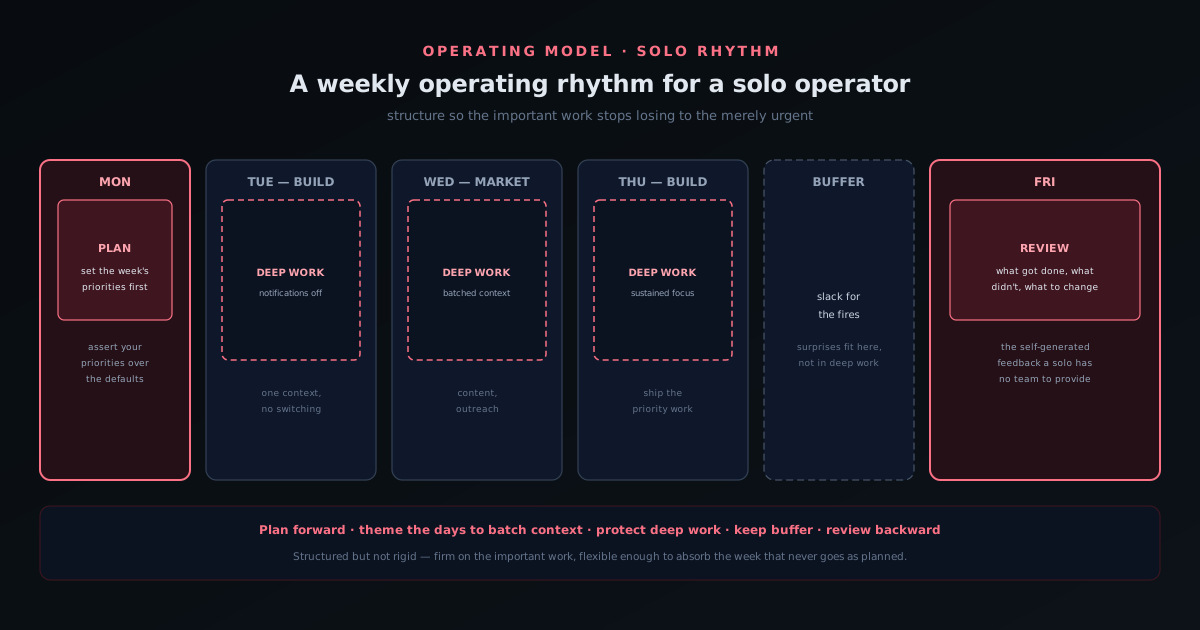
One of the most effective components of a solo rhythm is theming days (dedicating particular days, or parts of days, to particular kinds of work), because it addresses the enormous hidden cost of context-switching that fragments a solo operator's effectiveness. Switching among building, marketing, support, and admin throughout each day means constantly reloading different mental contexts, and each switch carries a cost in focus and time, so a day of jumping between all roles is far less productive than the hours in it suggest. Theming days groups similar work together (a build day, a marketing day, an admin block), so that within each themed period the operator stays in one context, working with the focus and momentum that comes from not switching.
The benefit of theming is both efficiency and depth. Efficiency, because batching similar tasks eliminates the repeated cost of context-switching and lets the operator move through related work in a flow; depth, because staying in one mode long enough allows the deeper engagement that scattered attention prevents: a full build day permits the kind of sustained problem-solving that an hour squeezed between other roles cannot. Theming does not have to be rigid whole days; it can be morning and afternoon themes, or certain days for certain functions, adapted to the business's real rhythm. The principle is to group like work and protect those groupings from intrusion by other kinds of work, so the operator gets meaningful stretches in each mode rather than a constant churn across all modes. For most solo operators, introducing even loose theming produces an immediate gain in both how much they accomplish and how much less scattered the work feels.
The weekly planning and review ritual
At the heart of an effective weekly rhythm is a regular ritual of planning and review: a dedicated time, typically bookending the week, when the operator steps out of execution to set direction and to learn from what happened. The planning half looks forward: deciding what the most important things to accomplish this week are, ensuring they get protected time before the reactive demands can claim it, and entering the week with intention rather than just reacting to whatever arrives. Without this deliberate planning, the week's priorities are set by default (by whatever is most urgent), which is exactly the dynamic that lets the important work get crowded out; the planning ritual is what asserts the operator's priorities over the week's reactive defaults.
The review half looks backward, and it is the part most often skipped and most valuable for a solo operator who has no manager or team providing feedback. Regularly reviewing the past week (what got done, what did not and why, what worked, what to change) is how a solo operator learns and improves, supplying the reflection and course-correction that in a team might come from others but that alone must be self-generated. Without review, the operator repeats the same patterns, including the unproductive ones, with no mechanism to notice and adjust; with it, each week informs the next, and the operating rhythm itself improves over time. The combined planning-and-review ritual is therefore both the steering and the learning of the business, and protecting this time even when it feels like a luxury amid the urgent demands is what keeps the whole operation directed and improving rather than just busy. The parallel to a structured build-ship-measure loop is direct (see How we ship and test small apps without a full team), and the weekly ritual is where that loop's measure-and-adjust step happens for the operator personally.
Protecting deep-work time
The work that grows a business (building the product, creating substantial content, solving hard problems, planning strategy) requires deep, uninterrupted focus, and the defining challenge for a solo operator is that this deep work is exactly what the reactive mode destroys, because deep work cannot survive constant interruption. A block of focused time repeatedly broken by support requests, notifications, and small fires yields almost none of the value that the same time uninterrupted would produce, since deep work depends on sustained concentration that each interruption resets. Protecting deep-work time (deliberately reserving blocks where interruptions are held off) is therefore not a productivity nicety but the precondition for doing the high-value work at all.
Protecting deep work in practice means creating real boundaries around the reserved blocks: turning off notifications, not checking messages, letting non-urgent matters wait, and treating the deep-work time as genuinely unavailable for the reactive demands that otherwise flood in. This feels uncomfortable for a solo operator who is used to being instantly responsive to everything, but the discomfort is the point: the responsiveness that feels necessary is precisely what prevents the deep work, and most of the demands that seem urgent can in fact wait an hour or two without consequence. The operator who protects even a few solid deep-work blocks per week accomplishes the substantive work that the perpetually-interrupted operator never reaches, despite both working the same hours. Combining protected deep-work blocks with themed days is especially powerful: a themed build day with notifications off and interruptions deferred provides the sustained, single-context focus in which the most valuable work actually gets done, which is the whole aim of the rhythm.
Leaving room for the unexpected
A weekly rhythm that is packed solid with no slack will shatter the first time something unexpected happens, which for a solo operator is approximately every week, so a durable rhythm deliberately leaves room for the unexpected rather than scheduling every hour. The reactive demands that a rhythm is meant to contain do not disappear (support issues arise, things break, opportunities and emergencies appear), and a rhythm that pretends they will not is brittle, breaking down as soon as reality intrudes and leaving the operator back in pure reactivity. The resilient approach builds buffer into the week: unscheduled time that absorbs the inevitable surprises without derailing the planned priority work, so that when something comes up, it fits into the slack rather than displacing the deep work.
Leaving room for the unexpected is what makes the difference between a rhythm that survives contact with reality and an idealized schedule that collapses on first contact. The goal of the rhythm is not to eliminate reactivity, which is impossible, but to contain it (to ensure the important work gets protected time while still accommodating the genuine demands that arise), and buffer time is the mechanism that reconciles these. With slack in the week, an unexpected fire is handled in the buffer and the protected priority blocks remain intact; without slack, the fire consumes the priority time and the rhythm fails. Building in this room also reduces the stress of the unexpected, because surprises no longer mean abandoning the plan, only using the slack the plan anticipated. A solo operating rhythm should therefore be structured but not rigid (firm on protecting the important work, flexible enough to absorb the reality that the week never goes entirely as planned) which is what allows it to actually hold up week after week rather than being a system that works only on the rare week nothing goes wrong.
Match the work to your energy, not just the clock
Time is not the only resource a solo operator allocates; energy is, and a rhythm that ignores it schedules demanding work into hours when the operator has nothing left to give. People have fairly predictable energy patterns across a day (periods of sharp focus and periods better suited to routine or low-stakes work), and a rhythm built around those patterns places the deep, demanding work in the high-energy windows and the administrative, low-cognitive work in the troughs. Scheduling a hard build session for a time of day when focus reliably flags wastes both the hours and the work, while reserving that window for email or admin and protecting the peak hours for deep work extracts far more from the same day. Matching the kind of work to the kind of hour is a refinement that compounds with theming and protected blocks.
Matching work to energy also means respecting the limit on how much deep work is genuinely possible in a day, because deep focus is a finite daily resource that cannot be extended indefinitely by force. An operator who tries to fill every hour with high-intensity work produces diminishing returns as fatigue sets in, whereas one who concentrates the deep work into the hours where it is actually productive, and accepts that the rest of the day suits lighter work, accomplishes more of what matters. The weekly rhythm should therefore allocate not just time but energy (the right kind of work in the right kind of hour) which turns a merely structured week into one that works with the operator's natural capacity rather than against it.
Energy management also argues for building genuine rest and recovery into the rhythm rather than treating every waking hour as available for work, because a solo operator who never recovers degrades the quality of their work and their decisions over time. Sustainable output depends on the rhythm including not just protected work but protected rest (the evenings, the days off, the breaks) that let the operator return to the deep work with the energy it requires. A rhythm that maximizes scheduled work at the expense of recovery is self-defeating over any real horizon, because the depleted operator produces worse work and eventually burns out, which is the very outcome the rhythm exists to prevent. The most durable rhythms protect recovery as deliberately as they protect deep work, recognizing that the quality of the focused work depends on the recovery that precedes it.
Adapt the rhythm to your reality
There is no universal correct weekly rhythm, because the right structure depends on the specific business, the operator's energy patterns, the nature of the work, and the rhythm of the demands, so the components in this guide are principles to adapt rather than a template to copy exactly. A business with heavy real-time support needs more reactive accommodation than one with asynchronous demands; an operator who focuses best in the morning should place deep work there; a business with a weekly cycle of obligations should theme around that cycle. The point is not to impose a particular schedule but to apply the underlying principles (themed focus, a planning and review ritual, protected deep work, room for the unexpected) in the form that fits the operator's actual situation.
Adapting the rhythm also means evolving it, because the right structure changes as the business and the operator change, and a rhythm set once and never revisited drifts out of fit. The weekly review ritual is the natural place to notice when the rhythm is not working and to adjust it: to retheme days that are not grouping well, to move deep-work blocks to better times, to add or reduce buffer based on how reactive the weeks have actually been. This makes the rhythm itself something that improves over time, tuned through the regular review to fit the operator and the business more closely. The deepest version of a weekly operating rhythm is therefore not a fixed schedule but a living system the operator deliberately maintains and refines, which is what turns it from a one-time organizational effort into a durable practice that keeps a solo operation directed, focused, and resilient as it grows and changes, the structural answer to the structural problem of running everything alone.
Frequently asked questions
Quick answers to common questions about this topic.
Why do solo operators struggle to get important work done?
With no one to delegate to, every role competes for the same hours, and without structure the most urgent thing always wins, so important-but-not-urgent work that grows the business gets crowded out. It is a structural problem of running everything alone, not a willpower failing, and it needs a structural fix.
What are themed days?
Dedicating particular days or parts of days to particular kinds of work (a build day, a marketing block, an admin period) so you batch similar tasks and stay in one mental context. This eliminates the hidden cost of constant context-switching and allows the deeper focus scattered attention prevents.
What goes into a weekly planning and review ritual?
Planning looks forward: deciding the week's most important priorities and protecting time for them before reactive demands claim it. Review looks backward: reflecting on what got done, what did not and why, and what to change, the self-generated feedback a solo operator has no team to provide.
How do I keep a rhythm from collapsing when things go wrong?
Leave room for the unexpected. Do not schedule every hour; build in buffer time that absorbs the inevitable surprises so they fit into slack rather than displacing your protected priority work. A rhythm should be structured but not rigid: firm on the important work, flexible enough to absorb reality.
Related troubleshooting
Was this page helpful?
Your answer stays in this browser, it is not sent anywhere and no account or cookie is involved.