2026 · Novus SupplyAbout 3 min readNovus Stream Solutions
Seasonal drop forecasting for Novus Supply without stockouts or dead inventory
A practical planning model for retail drops using lead-time buffers, demand bands, and fulfillment constraints.
Overview
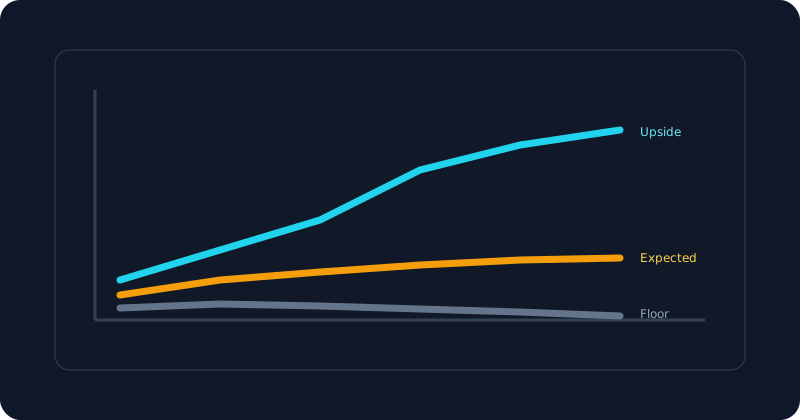
Seasonal drops fail when teams pick a single forecast number and call it a plan. Real operations need a range: conservative, expected, and upside demand. Each range should map to reorder triggers and communication steps.
For Novus Supply style operations, the core variable is lead-time volatility. If supplier or inbound delays are common, your safety stock is an insurance policy, not inefficiency.
Build demand bands before you buy
Use your last three comparable periods and adjust for known campaign intensity. Set a minimum viable buy that preserves margin and a max threshold that protects storage and cash conversion windows.
Do not let marketing promises outpace inventory certainty. Publish “limited run” only when quantities and replenishment policy are actually defined.
Recovery paths when demand misses
If demand is below expectation, activate bundle offers and channel rebalancing instead of panic markdowns. If demand exceeds upside band, shift messaging to waitlist clarity and replenishment windows immediately.
Post-mortem every drop with actuals by channel so your next season starts with data, not memory.
Cross-team planning hygiene
Run a short pre-launch alignment with marketing, operations, and support to confirm inventory assumptions and communication fallback plans. Mismatched assumptions are a common source of avoidable customer friction.
Document trigger thresholds for restock announcements so no one improvises under pressure during high-demand windows.
Communicating inventory constraints to customers
Customers handle inventory limits well when they are informed early and honestly. "Limited quantities available" is more trustworthy than a countdown timer that resets every day. Publish restock timelines when they are confirmed, not when they are hoped for. Customers who receive accurate information about availability — even unfavorable information — are more likely to wait for the restock than customers who feel they were given vague or misleading signals.
When a drop sells faster than the upside demand band predicted, the right move is immediate communication rather than silence. A short update explaining that quantities sold through faster than expected, with a concrete restock timeline or a waitlist option, converts potential frustration into anticipation. Customers who join a waitlist have demonstrated enough interest to follow through on the restock, which gives you a more reliable second-wave demand signal than any pre-launch survey could provide.
Connecting forecast outputs to campaign timing decisions
Forecasting is only useful if its outputs actually influence campaign timing, not just inventory orders. The point where this breaks down most commonly is when marketing and operations teams work from different assumptions about demand — marketing plans a campaign based on hoped-for numbers while operations orders based on conservative ones, and the mismatch surfaces at the worst possible moment. Run a pre-launch alignment where the demand bands from the forecast are shared explicitly with marketing, so campaign intensity decisions are calibrated against what inventory can actually support.
Build trigger thresholds into campaign planning. If the conservative band is 200 units, the campaign should scale to match that number — not the upside band of 500. The additional campaign intensity that would have been needed to push beyond 200 should be held in reserve as a restock campaign once supply is confirmed. This sequenced approach turns a successful drop into a two-wave event with sustained momentum rather than a single peak followed by a long period of "sold out" silence that erodes interest before inventory returns.
Building better historical data for future forecasts
Every drop is a data collection opportunity, but only if you capture actuals systematically rather than relying on memory. After each drop, record actual demand by channel, time-to-sell-out at each demand tier, return rates by product, and any external factors that affected the period — promotional spend, seasonality, a notable mention in external content. This structured post-drop record becomes the input for the next comparable period's forecast. Teams that skip the actuals capture find their forecasts improving slowly or not at all because they are repeatedly estimating from incomplete baseline data.
Data hygiene matters as much as data collection. If your demand figures mix wholesale and direct-to-consumer without distinguishing between them, or if campaign-driven demand is averaged with organic demand, the numbers will mislead the next forecast rather than improve it. Maintain clean attribution on your actuals: which units sold through which channel, driven by which campaign, in which window. The extra effort upfront produces compounding forecast accuracy gains that reduce both stockouts and overstock situations in subsequent seasons.