Field guide
2026 · Field notesAbout 1 min read
Pricing your first digital product: practical frameworks without the MBA
How to price a digital product when you have no market data yet—anchoring, willingness-to-pay signals, and the two mistakes that kill early traction.
Overview
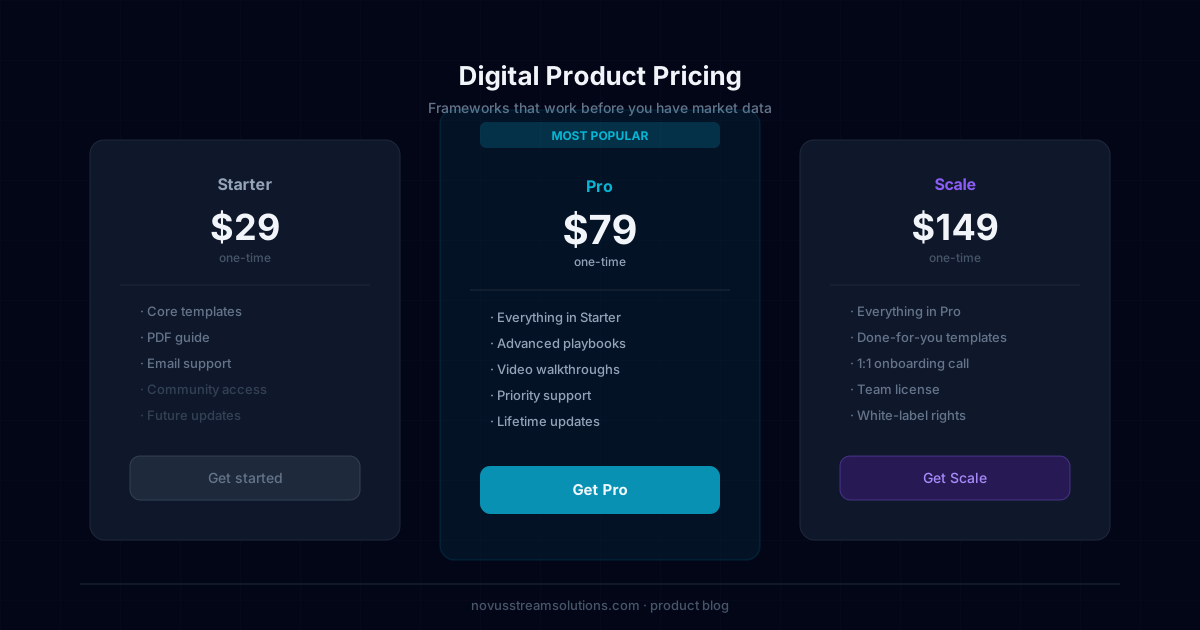
First-time digital product pricing fails in one of two directions: too low because the creator undervalues their work, or too high because they are copying a competitor whose cost structure and audience trust they do not yet have.
The actual question is not "what is this worth?" but "what will someone pay to solve the problem this product solves?" Those two questions have very different answers, and only the second one is actionable before you have sales data.
Anchor to the alternative, not the competition
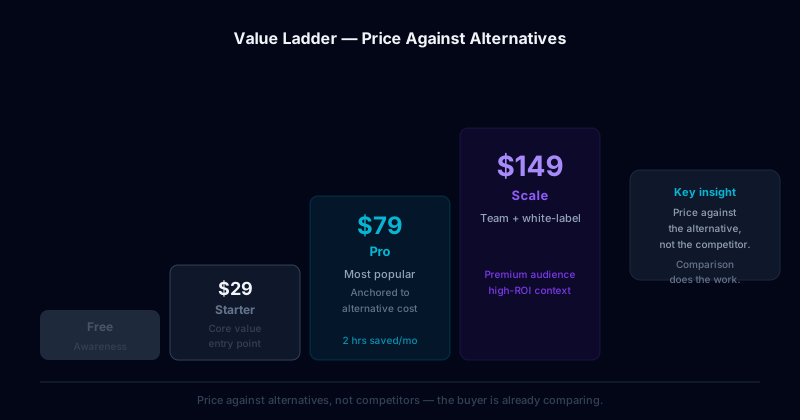
What does your buyer do today without your product? If the answer is "nothing"—there is no current solution—you have an education problem, not a pricing problem. If the answer is a more expensive tool, a consultant, or a DIY process that costs them time, anchor your price to that alternative.
A $49 digital product that saves two hours of manual work per month is not expensive if those two hours bill at $75 each. The comparison does all the work.
The two mistakes that kill early traction
Mistake one: launching at a discount to build momentum. Discounts train buyers to wait. A better early-adopter play is a smaller scope product at a lower price, not a full product at a discount.
Mistake two: not raising prices when demand exceeds supply. If your waitlist is longer than your capacity to serve, the price is too low. In digital products without hard capacity limits, a long backlog is a signal to raise prices, not to rush.