Field guide
2026 · Novus NewsletterAbout 1 min read
Email sequence design that converts: intent signals over blast scheduling
How to design onboarding and nurture sequences that convert without burning your list—using intent signals to trigger the right message at the right moment.
Overview
Most email sequences fail because they are designed around a calendar—send email 1 on day 1, email 2 on day 3—instead of around what the subscriber actually does. A subscriber who clicks every link in your welcome email is not the same person as one who opens once and goes quiet. Treating them identically wastes your best leads and annoys everyone else.
Behavior-triggered sequences shift the logic from "what day is it" to "what did this person just do." They require a little more setup but produce dramatically higher conversion rates because the message arrives when the subscriber is already engaged.
Welcome sequence: the first five days
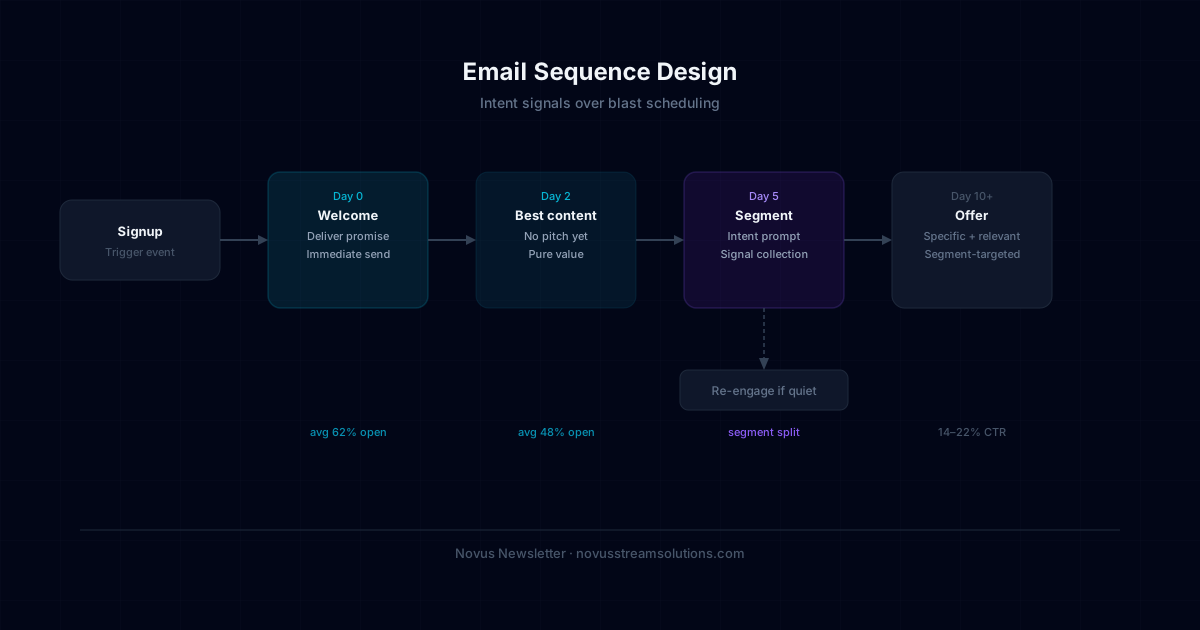
Email 1 (immediate): Deliver whatever you promised on signup—a resource, a discount, access to a community. Do not wait. Delay erodes trust before it has time to form.
Email 2 (day 2): Your best single piece of content. The one thing you would show someone to explain why your newsletter is worth reading. Not a product pitch—the product comes later.
Email 3 (day 5): A light segmentation prompt. A simple question or link choice that lets the subscriber signal their interest area. This data shapes everything that follows.
Offer timing without burning the list
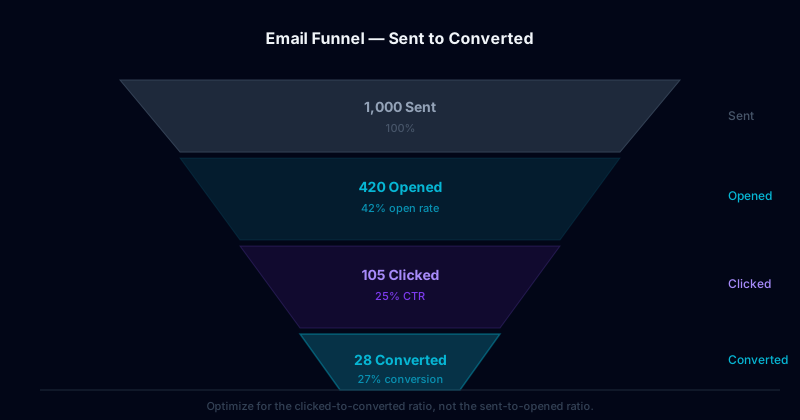
Introduce an offer after you have delivered three to five genuine value emails. The subscriber should feel like you have already given them something before you ask for anything. This is not manipulation—it is the sequence that mirrors how trust actually works.
When you do introduce an offer, make it specific. "Check out our products" converts far below "here is the one thing I think you need based on what you signed up for." Specificity requires that you have segmented your list.