Field guide
2026 · Novus Discord BotsAbout 1 min read
Launch-night Discord operations: a practical runbook for creators using Novus Discord Bots
A real deployment workflow for going-live alerts, role pings, and moderator handoffs using Novus Discord Bots.
Overview
Most launch failures are operations failures, not creative failures. Chat spikes, delayed role pings, and unclear moderator ownership can ruin an otherwise excellent stream. A launch-night runbook gives your team predictable timing and escalation paths before audience load shows up.
Novus Discord Bots can handle repetitive announcements and reminder flows, but the team still needs explicit ownership. This guide maps one practical setup we use for launch nights: one command lane, one moderation lane, and one post-stream recap lane.
Pre-stream setup (T-60 to T-10)
Create a launch-night channel set: #launch-announcements, #mod-ops, and #incident-log. Configure bot output into the announcement channel only. Keep moderator coordination in #mod-ops so member channels stay clean.
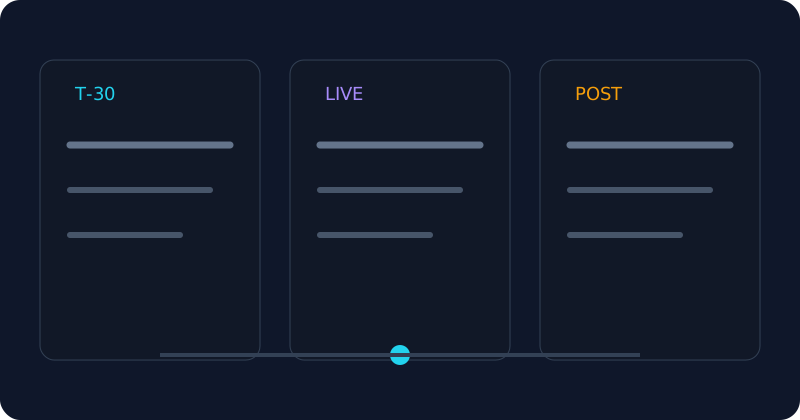
Set reminder cadence before the stream: T-30, T-10, and live-now. For each reminder, define exact copy and mention rules. Avoid @everyone unless your community expects it; use role mentions tied to explicit opt-in roles.
- Freeze announcement copy 30 minutes before go-live.
- Assign one moderator as incident lead and one as community responder.
- Test one dry-run reminder in a private sandbox channel first.
Live incident handling
When spam spikes, do not let everyone improvise in public channels. One moderator handles containment actions, one handles user messaging, and one logs what happened. The bot should continue routine announcements while humans handle exceptions.
After stream end, post a recap in #launch-announcements with final links and next-touch CTA. Then review the incident log and tune filters before the next event.
Post-event scorecard and iteration
Track three numbers after each launch night: reminder click-through, moderation incident count, and average response time for flagged events. This creates a baseline for operational improvement instead of relying on memory.
Keep a reusable checklist template for next events and update it immediately while context is fresh. Compounding small process fixes usually beats one-time tooling changes.