2026 · Novus Stream SolutionsAbout 13 min readNovus Stream Solutions
Getting AdSense approval for a real content site
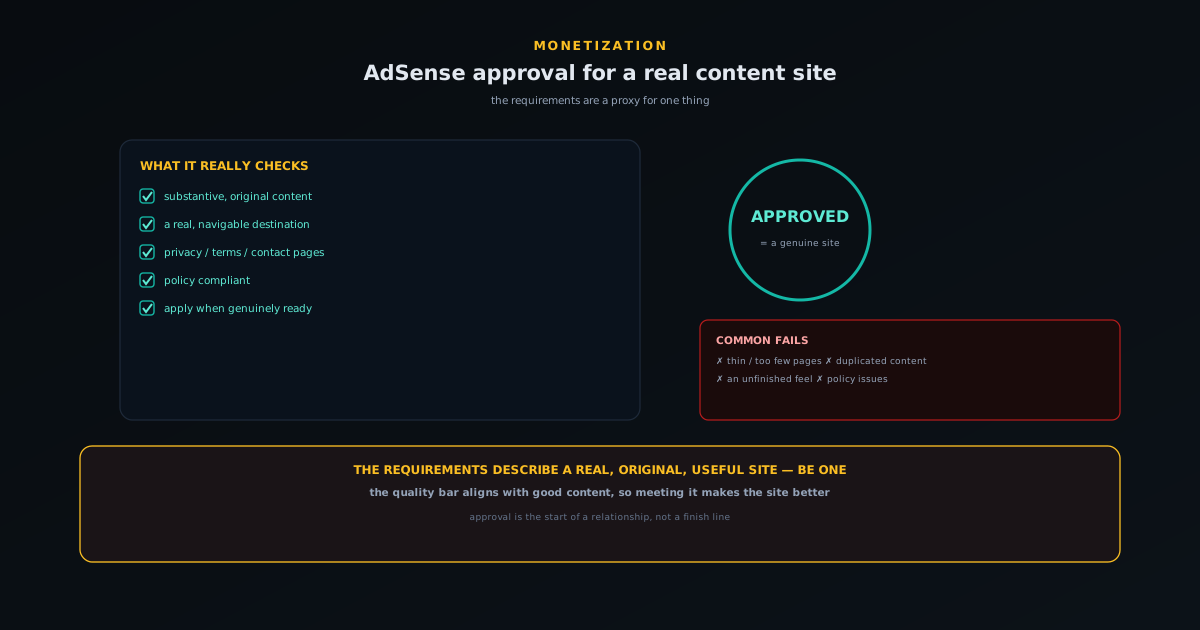
AdSense approval trips up a lot of new sites, but the requirements are mostly a proxy for one thing: genuine, original, useful content. Here is what actually matters and how to clear the bar.
Overview
AdSense approval is a hurdle that frustrates a lot of new site owners, often because they treat it as a mysterious gatekeeping ritual to be reverse-engineered rather than what it actually is: a check that your site is a genuine, useful destination rather than a thin shell built to farm ad clicks. The requirements can feel opaque and the rejections vague, but underneath the specifics there is a single coherent thing being tested — whether your site offers real, original, valuable content that a person would genuinely want to read. Clear that bar and approval follows; fail it and no amount of tactical fiddling helps. This is a guide to clearing it honestly, which is also the only way that lasts.
The reframe that makes AdSense approval straightforward is to stop thinking about it as satisfying a reviewer and start thinking about it as being a real content site. The program exists to place ads on genuine sites that genuinely serve readers, and its approval process is designed to filter out the thin, scraped, or empty sites that would make the ad network worse. If your site is a real content site with substantive, original, useful pages, you are what the program wants; if it is not, the fix is to become one, not to find a trick. Everything below is really about being a genuine content site, with the approval following from that.
What the requirements really test
Strip away the specifics and the AdSense requirements are mostly proxies for one underlying question: does this site offer genuine, original, useful content that serves real readers? The rules about sufficient content, originality, navigation, and policy compliance are all ways of checking that you are a real destination rather than a thin construct built to catch ad revenue. Understanding this is what makes the requirements coherent: they are not arbitrary boxes to tick but a description of what a genuine content site looks like, and meeting them is mostly a matter of actually being one rather than gaming each rule in isolation.
This is why tactical approaches to approval tend to fail while genuine ones succeed. Trying to satisfy each requirement minimally — just enough content, technically original, barely navigable — produces exactly the borderline-thin site the process is designed to catch, because the requirements are testing for genuine quality, not technical compliance. A site that is genuinely substantive, original, and useful satisfies the requirements naturally, because it is the real thing the requirements describe. The most reliable path to approval is therefore to build a real content site and let the requirements be satisfied as a byproduct, rather than to engineer the minimum that might slip through.
Enough genuinely substantive content
A common reason for rejection is simply not enough substantive content, and the fix is to have a real body of genuinely useful pages before applying. This does not mean hitting an arbitrary page count with padding; it means having a meaningful amount of content that genuinely serves readers — enough that the site is clearly a real destination with something to offer. A handful of thin pages is not enough; a substantial set of genuinely useful articles is. The emphasis is on substantive, because a large number of thin pages fails just as surely as too few pages, since the requirement is really about real value, not raw quantity.
The practical implication is to build out genuine content before seeking approval rather than applying with a skeleton and hoping. Write the real, useful articles that serve your audience, accumulate enough of them that the site is clearly a substantive resource, and then apply from a position of genuinely having something. This also aligns with building a real site for its own sake: the content you create to clear the approval bar is the content that serves readers and earns search traffic, so it is not wasted effort spent on approval but foundational work that happens to satisfy approval too. Have a real body of substantive content first, and the "enough content" requirement takes care of itself.
Originality is non-negotiable
Originality is one of the firmest requirements, and for good reason: ad networks do not want to place ads on scraped, duplicated, or spun content, both because it is low value and because it raises legal and quality problems. This means your content needs to be genuinely your own — written by you, offering your own information, analysis, or perspective — rather than copied, lightly reworded, or assembled from others' work. Duplicate and near-duplicate content is exactly what the originality check is designed to catch, and it is a common reason sites fail. The bar is genuine originality, not technical uniqueness achieved by spinning someone else's text.
Meeting the originality requirement is straightforward if you are creating genuine content and a problem only if you are not. Original content comes naturally from actually having something to say — your own knowledge, experience, analysis, or take on a topic — and it is exactly the kind of content that also serves readers and earns rankings. The sites that struggle with originality are usually the ones trying to shortcut content creation by copying or spinning, which fails approval, fails readers, and increasingly fails search too. Create genuinely original content because it is the right way to build a real site, and the originality requirement is satisfied as a matter of course.
Policy compliance and prohibited content
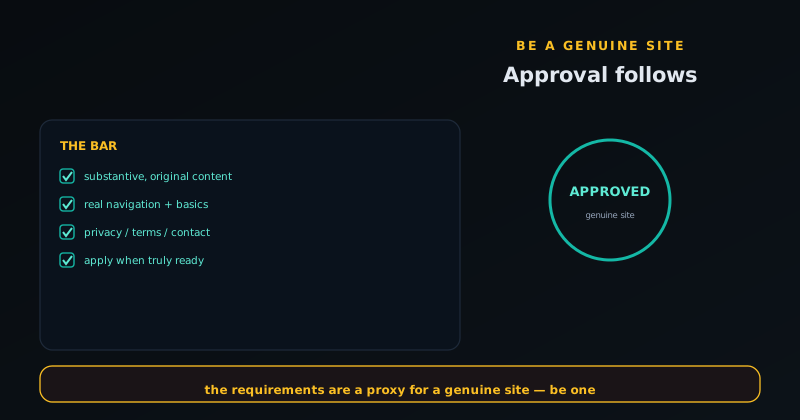
AdSense has content policies, and sites with prohibited or problematic content do not get approved regardless of quality, so it is worth knowing the broad shape of what is not allowed. The specifics matter less for most genuine content sites than the general principle: certain categories of content are off-limits, and a site trafficking in them will not be approved. For the typical useful, original content site, policy compliance is not a concern because the content is nowhere near the prohibited categories, but it is worth confirming your content does not inadvertently run into policy issues before applying.
The broader point is that approval is not just a one-time gate but an ongoing relationship, and maintaining policy compliance and content quality is what keeps the approval rather than just earning it. A site can be approved and later lose its standing by drifting into problematic content or letting quality collapse, so the standards are not a hurdle you clear once but a bar you keep meeting. For a genuine content site committed to quality, this is not a burden — staying compliant and useful is what you would do anyway — but it is worth understanding that approval is the start of a relationship that depends on continuing to be the kind of site the program wants ads on.
Common reasons for rejection
The common rejection reasons cluster around the same theme: the site does not yet look like a genuine, substantive content destination. Insufficient content, thin or low-value pages, duplicated or unoriginal content, poor navigation or an unfinished feel, missing basic pages, and policy issues are the usual culprits, and almost all of them reduce to the site not yet being a real, useful site. The vague rejection messages frustrate people, but the underlying causes are usually one of these concrete, fixable problems, and diagnosing which one applies is mostly a matter of honestly assessing whether the site is genuinely substantive and original.
The encouraging implication is that rejection is almost always fixable by addressing the real problem rather than by finding a trick. If you were rejected for thin content, build more substantive content; if for originality, create genuinely original work; if for an unfinished feel, complete the basic structure and pages. Because the requirements are proxies for being a real content site, the fixes are the things that make your site genuinely better, which means working toward approval is working toward a better site. Treat a rejection as feedback about where your site falls short of being a genuine destination, fix that, and reapply — the path through is to become the real thing the program is checking for.
Why the quality bar helps your content
A genuinely useful reframe is that the AdSense quality bar is not an obstacle to good content but an alignment with it, because the things approval requires — substantive, original, useful content without thin or duplicated pages — are exactly the things good content should be anyway. The requirement to be a genuine content site pushes you to build exactly the kind of site that also serves readers and earns search traffic, which means the monetization requirement reinforces rather than conflicts with content quality. The bar you clear for approval is the same bar you should hold for your own sake, so meeting it is not a tax on your content but a discipline that improves it.
This alignment is one of the better arguments for the ad-supported model. A monetization approach that rewarded thin or duplicated content would pull your content toward junk; the AdSense model instead requires the substance and originality that genuinely useful content already demands, so the incentive points the right way. The requirement to maintain content good enough to keep AdSense is a requirement to maintain content good enough to be worth reading, which is the standard you would want regardless. Far from being a hurdle that degrades your content, the quality bar is a useful constraint that keeps it honest, which is why clearing it the genuine way is both the path to approval and the path to a site worth having.
Approval is the start, not the finish
A mistake that catches some site owners is treating AdSense approval as a finish line — get approved, then stop caring about the standards that earned it — when approval is really the start of an ongoing relationship that depends on continuing to meet those standards. The program can review sites after approval and can pull a site's standing if quality collapses, if content drifts into problematic territory, or if the site stops being the genuine destination it was approved as. The approval is conditional on the site remaining the kind of site the program wants ads on, which means the work of being a genuine content site does not end at approval; it continues for as long as you run ads.
In practice this is not a burden for a site genuinely committed to quality, because the standards that sustain approval — substantive, original, useful content; a real, navigable destination; policy compliance — are exactly what you would maintain anyway for your readers' sake. The site that keeps publishing genuine content, stays compliant, and remains a real resource keeps its standing without special effort, because it keeps being the thing the program approved. The trap is only for sites that treated approval as a hurdle to clear and then let quality slide, expecting the approval to be permanent. Approval is better understood as an ongoing endorsement that you keep earning by continuing to be a genuine content site, which is one more reason the genuine path is the only one that lasts: it is the only one that survives the relationship being ongoing rather than one-time.
A few formal pages to have in place
Beyond content and structure, there are a few formal pages that a site running ads is expected to have, and getting them in place before applying removes an easy, avoidable source of friction. A privacy page is essential, especially for a site running ads, because ad systems involve data and a privacy disclosure is both expected and often required; a terms page sets the basic rules of using the site; and clear contact information signals that the site is a real, accountable operation that can be reached. These pages are quick to create, but their absence is a common and entirely preventable reason a site looks incomplete or non-compliant at review time, so having them ready is simply removing an obstacle.
These formal pages also do quiet trust work beyond satisfying the approval requirements, which is a reason to treat them as genuine rather than perfunctory. A real privacy page, clear terms, and reachable contact information all signal to readers — not just to the ad program — that the site is a legitimate, accountable operation rather than an anonymous content farm, which supports the same trust the rest of the site is trying to build. So while these pages are partly a box to check for approval, they are also part of being a genuine, trustworthy site, and creating them properly serves both purposes at once. Have them in place, make them real, and you both clear a common approval hurdle and reinforce the legitimacy that the whole approval process is checking for.
Apply when you are genuinely ready
The single best piece of tactical advice is to apply when your site is genuinely ready rather than as early as possible, because a premature application on a thin site gets rejected and a well-timed one on a substantive site gets approved. Resist the urge to apply the moment you have a few pages up; instead, build out a real body of substantive, original content, put the basic structure and pages in place, make sure the site genuinely looks and functions like a real destination, and then apply. Applying from a position of genuinely being a real content site is far more reliable than applying early and hoping, and it avoids the discouragement of an avoidable rejection.
This patience also serves the site beyond approval. The work you do to get genuinely ready — building real content, completing the structure, polishing the basics — is the work that makes the site succeed on its own terms, attracting readers and earning search traffic regardless of ads. So waiting until you are genuinely ready is not just an approval tactic but the right way to build the site, with approval following naturally once the site is the real thing it needs to be. Build a genuine content site, get it to where it is substantively useful and properly finished, apply when it is truly ready, and AdSense approval becomes the straightforward confirmation that you have built something real — which is exactly what it is meant to be.